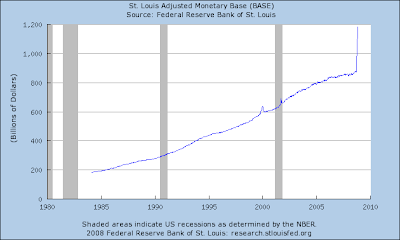
Pretty complex stuff worth reading over a few times, but I think the gist is this: The Fed is paying interest to banks on their reserve holdings. This disincentivizes them from lending out to other banks when they can earn interest on the cash.
So in actuality, the Fed is deliberately freezing the credit markets and not inflating (yet) in exchange for recapitalizing the banks. The minute the fed stops paying interest on reserves, the new money in the system will start sloshing around, credit markets will unlock, and inflation will take off...
http://www.econbrowser.com/archives/2008/10/the_federal_res.html
An interesting comment:
It seems to me that this cannot go on like this.
The Treasury is issuing new debt, and the proceeds from those purchases of debt end up as increases in reserve balances at the Fed, and the Fed is paying interest on reserves in order to keep the funds there and thereby prevent inflation. But by paying interest on reserves, the Fed is shutting down the credit system, because banks no longer lend to each other if they can earn interest on their reserves at the Fed.
It seems to me that the Fed has a choice: it can continue to prop up banks while shutting down the credit system, by paying interest on reserves, or it can restart interbank lending by not paying interest on reserves, at the cost of igniting inflation. I think eventually inflation is inevitable, if phrased in these terms.
So in actuality, the Fed is deliberately freezing the credit markets and not inflating (yet) in exchange for recapitalizing the banks. The minute the fed stops paying interest on reserves, the new money in the system will start sloshing around, credit markets will unlock, and inflation will take off...
http://www.econbrowser.com/archives/2008/10/the_federal_res.html
An interesting comment:
It seems to me that this cannot go on like this.
The Treasury is issuing new debt, and the proceeds from those purchases of debt end up as increases in reserve balances at the Fed, and the Fed is paying interest on reserves in order to keep the funds there and thereby prevent inflation. But by paying interest on reserves, the Fed is shutting down the credit system, because banks no longer lend to each other if they can earn interest on their reserves at the Fed.
It seems to me that the Fed has a choice: it can continue to prop up banks while shutting down the credit system, by paying interest on reserves, or it can restart interbank lending by not paying interest on reserves, at the cost of igniting inflation. I think eventually inflation is inevitable, if phrased in these terms.