A short description of Andrew W. Mellon, Secretary of the Treasury from March 4, 1921 until February 12, 1932. Does this sound familiar? Sounds like a Bloomberg interview with Jim Rogers on "how to solve today's crisis":
http://en.wikipedia.org/wiki/Andrew_W._Mellon:
"Mellon became unpopular with the onset of the Great Depression. Many economists today (such as Milton Friedman and Fed Chairman Ben Bernanke, to give two prominent examples[citation needed]) partially attribute the collapse of the American banking industry to the popularity among Federal Reserve leadership of Mellon's infamous "liquidationist" thesis: weeding out "weak" banks was seen as a harsh but necessary prerequisite to the recovery of the banking system. This "weeding out" was accomplished through refusing to lend cash to banks (taking loans and other investments as collateral), and by refusing to put more cash in circulation. He advocated spending cuts to keep the Federal budget balanced, and opposed measures for relief of public suffering."
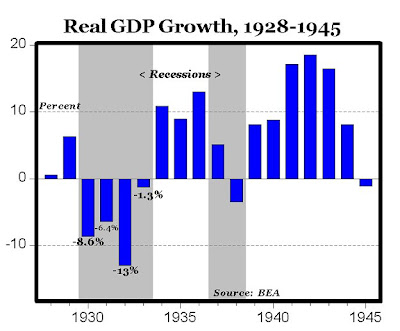
You be the judge how well his Austrian policy of "clearing out the system" worked.
http://en.wikipedia.org/wiki/Andrew_W._Mellon:
"Mellon became unpopular with the onset of the Great Depression. Many economists today (such as Milton Friedman and Fed Chairman Ben Bernanke, to give two prominent examples[citation needed]) partially attribute the collapse of the American banking industry to the popularity among Federal Reserve leadership of Mellon's infamous "liquidationist" thesis: weeding out "weak" banks was seen as a harsh but necessary prerequisite to the recovery of the banking system. This "weeding out" was accomplished through refusing to lend cash to banks (taking loans and other investments as collateral), and by refusing to put more cash in circulation. He advocated spending cuts to keep the Federal budget balanced, and opposed measures for relief of public suffering."
You be the judge how well his Austrian policy of "clearing out the system" worked.