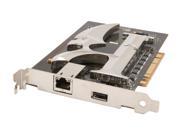
Here's a review of a new NIC (Bigfoot Networks' Killer M1 NIC) with its own built-in processor to offload network processing from the main CPU.
http://www.tomsguide.com/us/killer-m1-nic,review-1083.html
While the target audience is gamers, I thought the network latency performance measurements comparing a system setup with and without this NIC might be of interest to those folks that are always looking to shave a few ms off their network delay:
http://www.tomsguide.com/us/killer-m1-nic,review-1083-4.html
http://www.tomsguide.com/us/killer-m1-nic,review-1083.html
While the target audience is gamers, I thought the network latency performance measurements comparing a system setup with and without this NIC might be of interest to those folks that are always looking to shave a few ms off their network delay:
http://www.tomsguide.com/us/killer-m1-nic,review-1083-4.html
Table 5: PING Results for Crysis and Second Life (Min/Avg/Max msec)
Game: Crysis
Realtek 35/71/107
Killer NIC 27/53/79
Game: 2L
Realtek 43/87/131
Killer NIC 38/67/96
Whatâs interesting about these results is a consistent speed-up in PING times between the Realtek GbE interface and the Killer NIC in a range from 8 (min) to 18 (avg) to 28 (max)milliseconds for Crysis, and from 5 (min) to 20 (avg) to 35 (max) for Second Life.
This puts the average difference at about 18-20 millisecondsâ which represents a substantial 23% to 25% improvement for a system with the M1 Killer NIC versus a built-in motherboard GbE interface.
Though our other tests indicate this doesnât translate into an equal percentage boost for frame rates (and reflects the size of the payloads in real gaming traffic as opposed to minimum packet size for PING traffic), itâs still a remarkable difference.