
Assume that we have two securities that we want to trade using a spread strategy. One will be a buy while the other will be a sell. We will obviously buy the strongest security and sell the security that we think is weak. This will lead to a spread where the strong security will outperform the weak security and allow us to make money off of the spread. Now if the price of the strong security is above the price of the weak security we will have a spread that widens (in pure numerical terms) and if the strong security is below the weak security we will have a narrowing spread. But keep in mind that there are other ways of charting spreads.
If we look at this trade there will be several scenarios that may unfold some will make money and some will lose. Security A will be our strong âstockâ and security B will be our weak âstockâ. A will be a buy and B will be a sell.
CORRELATED
CONDITION 1
SECURITY A â UP SECURITY B â UP
WIN: SECURITY A RISES FASTER THAN SECURITY B RISES
LOSS: SECURITY A RISES SLOWER THAN SECURITY B RISES
CONDITION 2
SECURITY A â DOWN SECURITY B â DOWN
WIN: SECURITY A FALLS SLOWER THAN SECURITY B
LOSS: SECURITY A FALLS FASTER THAN SECURITY B
CONDITION 3
SECURITY A â UP SECURITY B â DOWN
WIN: NO MATTER WHAT
CONDITION 4
SECURITY A â DOWN SECURITY B â UP
LOSS: NO MATTER WHAT
So we have six outcomes⦠of which 3 are wins. This means 3/6 or 1/2 or 50 % which is more or less the exact same as trading the regular way.
Now let us examine negative correlation. This means that when A rises B falls and when B rises A falls. To be âhedgedâ you would have to buy both or sell both depending on the market.
NEGATIVE CORRELATION
CONDITION 1
SECURITY A â UP SECURITY B â DOWN
BUYS ONLY
WIN: SECURITY A RISES MORE THAN B FALLS
LOSS: SECURITY A RISES LESS THAN B FALLS
SELLS ONLY
WIN: SECURITY A FALLS MORE THAN B RISES
LOSS: SECURITY A FALLS LESS THAN B RISES
We have 4 outcomes of which only 2 are wins leaving us once again with only a 50 % probability of getting it right. However this isnât entirely accurate.
We have three possibilities when we look at correlation.
1. Correlation
2. Negative correlation
3. No correlation whatsoever
We only have a 1/3 chance of getting the correlation right going forward because correlation can also change and in fact does so all the time. Picking the right strategy depends on getting the correlation right first.
This leads us to a joint probability situation in which to get the above results is dependant on getting the correlation right.
Therefore we have 1/3 * 1/2 = 1/6⦠or only 16 % chance of getting it right. This would seem as a significantly lower outcome than if one just traded a security without a âpairâ or âspreadâ strategy.
To both supporters and opponents of these strategies⦠Please discuss in a civil manner.
If we look at this trade there will be several scenarios that may unfold some will make money and some will lose. Security A will be our strong âstockâ and security B will be our weak âstockâ. A will be a buy and B will be a sell.
CORRELATED
CONDITION 1
SECURITY A â UP SECURITY B â UP
WIN: SECURITY A RISES FASTER THAN SECURITY B RISES
LOSS: SECURITY A RISES SLOWER THAN SECURITY B RISES
CONDITION 2
SECURITY A â DOWN SECURITY B â DOWN
WIN: SECURITY A FALLS SLOWER THAN SECURITY B
LOSS: SECURITY A FALLS FASTER THAN SECURITY B
CONDITION 3
SECURITY A â UP SECURITY B â DOWN
WIN: NO MATTER WHAT
CONDITION 4
SECURITY A â DOWN SECURITY B â UP
LOSS: NO MATTER WHAT
So we have six outcomes⦠of which 3 are wins. This means 3/6 or 1/2 or 50 % which is more or less the exact same as trading the regular way.
Now let us examine negative correlation. This means that when A rises B falls and when B rises A falls. To be âhedgedâ you would have to buy both or sell both depending on the market.
NEGATIVE CORRELATION
CONDITION 1
SECURITY A â UP SECURITY B â DOWN
BUYS ONLY
WIN: SECURITY A RISES MORE THAN B FALLS
LOSS: SECURITY A RISES LESS THAN B FALLS
SELLS ONLY
WIN: SECURITY A FALLS MORE THAN B RISES
LOSS: SECURITY A FALLS LESS THAN B RISES
We have 4 outcomes of which only 2 are wins leaving us once again with only a 50 % probability of getting it right. However this isnât entirely accurate.
We have three possibilities when we look at correlation.
1. Correlation
2. Negative correlation
3. No correlation whatsoever
We only have a 1/3 chance of getting the correlation right going forward because correlation can also change and in fact does so all the time. Picking the right strategy depends on getting the correlation right first.
This leads us to a joint probability situation in which to get the above results is dependant on getting the correlation right.
Therefore we have 1/3 * 1/2 = 1/6⦠or only 16 % chance of getting it right. This would seem as a significantly lower outcome than if one just traded a security without a âpairâ or âspreadâ strategy.
To both supporters and opponents of these strategies⦠Please discuss in a civil manner.
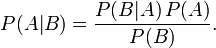

 I doubt anyone would share a model for future projections of correlations.