
You are using an out of date browser. It may not display this or other websites correctly.
You should upgrade or use an alternative browser.
You should upgrade or use an alternative browser.
Envelopes, Waves, and Cycles
- Thread starter expiated
- Start date


this reminded me of
one of those highly learned professor in TA triangular thing.
unfortunately he was a very nasty rude hot tempered professor.
https://www.elitetrader.com/et/threads/oscillators.337471/
by @Resto
one of those highly learned professor in TA triangular thing.
unfortunately he was a very nasty rude hot tempered professor.
https://www.elitetrader.com/et/threads/oscillators.337471/
by @Resto
Last edited:

Perhaps you are right, but if so, experience is going to have to prove this to me. For example, I believe that as long as both the crimson and midnight blue moving averages are sloping downward, the best course of action will be to sell and that this will never change. Similarly, if both moving averages are sloping upward, the best course of action will be to buy, and no matter how the markets evolve, this will always hold true. Whatever the system, it need not be much more complicated than this.
Wait a minute!
I just wrote that my final, final version looks a bit more confusing than most of those leading up to it and that this is because I discovered that the system works a lot better using a number of envelopes that have a lot of overlap rather than just three or four reflecting widely dispersed time frames.
That contradicts my opinion that a system "need not be much more complicated than this." So what gives?
To be honest, the image from Post #56 comes from a slightly modified version of my "final, final version" the emerged as I was analyzing my four-hour charts. So, the versions wasn't final after all, right?
Yes and no.
The midnight blue moving average is a smoother version of a moving average it replaces. But they measure the exact same thing and are virtually the same. Again, the midnight blue one is simply smoother.
The crimson moving average is actually a change. It is a "faster" (more accurate) substitute for the moving average it replaces. So in a sense, it is not so much a new final, final version as much as it is an improvement on the old one.
But still, if a system "need not be much more complicated than this," then why did I write in my thread on automating trading systems that "in its final configuration, it involves monitoring several baselines, envelopes/price ranges and signals, with a different protocol for each specific setup and for different situations and conditions"? Doesn't that sound pretty complicated?
Well, this was in reference to micro managing intraday positions at the one-minute level. The perspective represented by the image from Post #56 paints a picture taken from much, much father away, sort of like the difference between describing how water behaves in terms of simple observations and how water behaves at the molecular level.
What water is doing at the molecular level is irrelevant for most people.
It used to be my goal to fit all my indicators on a lower-timeframe chart, but I no longer do that. I now regularly refer to daily, four-hour, 60-minute, 15-minute, 5-minute, and 1-minute charts, even though I have them all set up the same way. However, when it comes to entering and exiting positions, it is a mistake for me to use anything other than one minute charts.What timeframe charts do you like?
What average hold times?
If the market's are extremely volatile, I might hold a position for just a few seconds. When things are slow however, it might be a few hours. But usually, if I'm still in a trade after an hour, I did something wrong. More often than not, it happens when I accidentally enter a position during the New York session just as everything is coming to a virtual stop, sometime around noon on the East coast.
Generally speaking, because I zig and zag with price action, I'm not going to reap more than a maximum of about ten pips at a time.
...and so was my comment about using several envelopes that have a lot of overlap.But still, if a system "need not be much more complicated than this," then why did I write in my thread on automating trading systems that "in its final configuration, it involves monitoring several baselines, envelopes/price ranges and signals, with a different protocol for each specific setup and for different situations and conditions"? Doesn't that sound pretty complicated? Well, this was in reference to micro managing intraday positions at the one-minute level.

I feel somewhat indebted to .sigma in that the above comment motivated me to look at my charts in such a way that it clarified which baselines I should assign the most significance for intraday trading (see Post #56) and it also helped me to crystalize in my mind once and for all exactly which moving averages my system should view as tracking the trend in each of the major time frames (but I really should have been giving my full attention to trading right now because I just missed the trigger I was waiting for to buy AUDUSD...)I don't think any system, especially a trading system, or charting system etc can be "finalized" as the markets are an ever evolving mechanism so you must adapt with the times.
Buy as soon as the first candlestick forms above newly upward hooking envelopes.
As a result, I did not make a lot of trades last night and this morning, but the handful I did make were profitable...
I suspect this culminating "insight" is going to help me eliminate more and more mistakes until I'm almost not making them anymore, or at least I hope so. It will probably also make it easier to explain how the system works to others in a more easily comprehensible manner, if and when that time should come.
Again, this is the value I find in ET. Nonetheless, I do still feel like I'm beginning to wrap things up here, as it were.
Last edited:
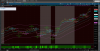
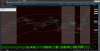
I found I was constantly having to match the width to the volatility, so I tried 2 envelopes 1 based on the High and 1 low, then I add a fixed width 0.04% only showed the highs upper line and ofcourse the lows lower line.
After years of Envelope trading this was the discovery which turned me profitable.
After years of Envelope trading this was the discovery which turned me profitable.
My experience was similar (except when I used adaptive envelopes, but I had to code those myself).I found I was constantly having to match the width to the volatility, so I tried 2 envelopes 1 based on the High and 1 low, then I add a fixed width 0.04% only showed the highs upper line and of course the lows lower line.
Also, sometimes I might use two different settings even on the adaptive moving average envelopes.
Last edited: