
You are using an out of date browser. It may not display this or other websites correctly.
You should upgrade or use an alternative browser.
You should upgrade or use an alternative browser.
Ecological Overshoot
- Thread starter Ricter
- Start date




https://richardheinberg.com/muselet...e-worsening-energy-crisis-is-due-to-depletion
November 2021
How Much of the Worsening Energy Crisis is Due to Depletion?
"Coal and natural gas spot prices have recently soared to record levels internationally, while oil is trading at over $80 a barrel—the highest price in seven years. Newspaper columnists are asking whether people in Europe and Asia who can’t afford high fuel and electricity prices might freeze this winter. High natural gas prices are causing fertilizer prices to spike, which will inevitably raise costs to farmers, with eventual catastrophic impact on people who already have trouble paying for food.
"Political commentators are naturally searching for culprits (or scapegoats). For those on the business-friendly political right, the usual target is green energy policies that discourage fossil fuel investment. For those on the left, the culprit is insufficient investment in renewable energy.
"But there’s another explanation for the high prices: depletion. I’m not suggesting we’re about to completely run out of coal, oil, or gas; there’s no immediate danger of that. However, the energy industry has historically targeted the highest-quality and easiest-accessed of these resources, which means that what’s left, in most cases, are fuels that will be costlier to extract and process—and also more polluting. The proximate causes of current price spikes may be transient market conditions (the see-sawing pandemic, Britain’s decision to leave the European Internal Energy Market, Russia’s reluctance to provide more gas to European buyers until a new pipeline is given final approval, and China’s choice to reduce coal imports from Australia). But behind the energy headlines is persistent, accelerating depletion.
"Fossil fuel supply shocks have long been forecast by the few analysts who track resource depletion and its consequences. In the early years of this century, a robust literature developed around the concept of “peak oil” (as well as “peak gas” and “peak coal”). Analysts predicted that world oil production might begin to decline as soon as 2005 or 2010, natural gas in the 2020s, and coal in the 2020s to 2040s.
"Forecasts for a peak in world oil production proved premature, with new supplies of “unconventional” petroleum (i.e., tight oil, oil sands, and deepwater oil) coming on line to boost US and world production by millions of barrels per day. Roughly 90 percent of new oil output added during the last decade came from US tight oil wells that were horizontally drilled and fracked. At the same time, using the same drilling and fracking technologies, so much natural gas was liberated that the US became a significant exporter. Meanwhile, Australia ramped up its coal mining in order to export the fuel to support fast-growing Asian economies. Supply problems were solved—sort of, and temporarily.
"Now, circumstances are changing and reality seems to be catching up with peak-supply forecasts. Many economic analysts attribute shortages and price hikes to failure by the fossil fuel industry to invest enough in exploration and production. But, to some extent, that’s just a misleading way of acknowledging that, from now on, extracting fossil fuels from Earth’s crust will take more money, technology, and energy than it used to.
"So, to directly address the question with which this essay is titled: exactly how much of the world’s current energy crisis is due to fossil fuel depletion, and how much to other factors? It’s impossible to assign percentages. There has always been some volatility in fossil fuel markets. But as depletion continues, price spikes and troughs are likely to grow in amplitude, and to become more frequent. And that’s precisely what we are seeing. Since 2005, when world conventional oil production stopped growing, petroleum prices have indeed become more volatile, with spot prices rising to the all-time record high of $147 (in July, 2008) and sinking to the all-time record low of -$37 (in April, 2020). Without depletion, there would still have been price variation—just as there would still be extreme weather events without climate change. But, like climate change, depletion is a slowly accumulating background condition that widens the envelope of day-to-day or year-to-year extremes.
"Let’s dig a little deeper into the “lack of investment” explanation for high fuel prices. As we’ve seen, higher rates of investment are needed because new projects are expensive. But, at the same time, it is also true that concern over climate change is leading major investors to reconsider long-standing practices of funding fossil fuel producers. Recently the highly influential International Energy Agency recommended that no new fossil fuel projects be approved after 2021—a suggestion inconceivable from that organization just a few years ago. The list of pension funds and banks that are divesting from fossil fuels grows with each passing month.
"But depletion and climate concern are not the only reasons for levels of investment in fossil fuels that may be insufficient to stave off hardship for the industry—and likely for society as a whole. The fossil fuel industry requires relatively stable and predictable prices for its own internal investment purposes. High prices are viewed as good, in that they generate more profits that can be reinvested in new projects. But very high prices have a downside: when energy becomes unaffordable, the stage is set for a price collapse. Market volatility makes fossil fuel companies wary to expand operations, as new projects are often many years in development, and the comparatively few remaining prospective drilling sites are unlikely to yield profits absent stable, high prices. In recent years, some companies have decided that their free cash flow is better used in buying back their own stock shares rather than in funding speculative new oil or gas drilling. That’s also partly because divestment campaigns are tending to lower the value of shares in oil and coal companies.
"So, if there are reasons for high energy prices other than depletion, why focus on this particular one? Two things. First: virtually nobody is mentioning depletion. I routinely scan energy-related news articles in the mainstream press, and in its coverage of the energy crisis I have yet to see depletion mentioned once—even though it is undeniably a contributing factor. Why is it being ignored? Maybe because of this second thing: it can only get worse. Other causes of energy price volatility may be solvable with investment or government policy, but not depletion. As long as society is extracting and burning fossil fuels, their resource quality (that is, their accessibility, affordability, and usability without expensive processing to remove pollutants like sulfur or to bring them up to standards that will suit existing refineries) will continue to decline and costs of production will increase.
"If fossil fuel prices are becoming more volatile, and if that’s partly due to depletion (which is irreversible), then this has a couple of implications—one fairly obvious, another less so. The obvious implication: we probably have a wild ride ahead of us. Energy is the master resource; literally everything we do requires it. If energy gets more expensive, cost increases will migrate throughout the economy, making everything we do harder and more expensive. Unaffordable energy usually translates to inflation, with wage hikes unable to keep pace with soaring prices of food and consumer goods. The main likely brake on the inflationary accelerator of high energy prices would be widespread deflationary debt defaults—which would likewise draw nasty consequences in their wake.
"But there’s a less obvious consequence of depletion and energy price volatility, and it has to do with climate policy. It takes energy to make solar panels, wind turbines, batteries, electric vehicles, heat pumps, and all the rest of the technology that policy makers propose to replace current fuel-burning infrastructure. Most of the energy that will be required for transition purposes, at least in the early stages, will have to come from fossil fuels—as is the case currently with Chinese solar panels being made in factories operating with coal-fueled electrical power. If society attempts to maintain current levels of energy services throughout the transition, the result will be a spike in both energy usage and carbon emissions (which policy makers hope to offset using unscalable and unaffordable carbon capture technologies). If fossil energy prices are going haywire during the transition, that makes an already arduous and perilous process even more so.
"Many climate activists may be happy to see fossil fuel price spikes and supply problems. Yes, if oil gets expensive, that means more people will buy electric cars. But where are the electric airliners, semi-trucks, container ships, and cement factories that will be needed? No company can simply order one today; they’re mostly still in the realm of fantasy. Meanwhile, solar and wind together are supplying just 3.3 percent of the world’s current primary energy budget.
"Policy makers envision an energy transition in which solar and wind seamlessly and quickly substitute for coal, oil, and gas, leaving consumers enjoying just the same comforts and conveniences as they do now, while emitting no carbon. That’s an exceedingly unlikely scenario. The real energy transition will almost certainly be a shift from using a lot to using a lot less.
"If that’s true, then what should we do? Over a dozen years ago, I was among several energy analysts and commentators who recommended the adoption of depletion protocols (which are essentially programs for conserving and rationing nonrenewable resources) as a policy tool for helping society adapt to the inevitable end of the fossil fuel era. Politicians were uninterested. Today, rationing is still the best policy response. Energy could be rationed in several different ways; in addition to depletion protocols, another rationing approach I’ve long liked is tradable energy quotas, which effectively provide monetary incentivizes to those who use less energy. With rationing, those who use the most sacrifice the most, while those who use the least maintain (or gain) access to necessities.
"There were always two reasons to reduce society’s reliance on fossil fuels: pollution and depletion. Pollution has taken center stage via climate change. But as long as we keep extracting and burning coal, oil, and natural gas, our depletion problem likewise keeps simmering away in the background. This winter, the pot may boil over. No honest policy maker can say they weren’t warned, or that there are no good responses."
They were claiming peak back in the early 2000s. That turned out to be complete bullshit.
BTW, we are nowhere near depletion. France actually got something right.
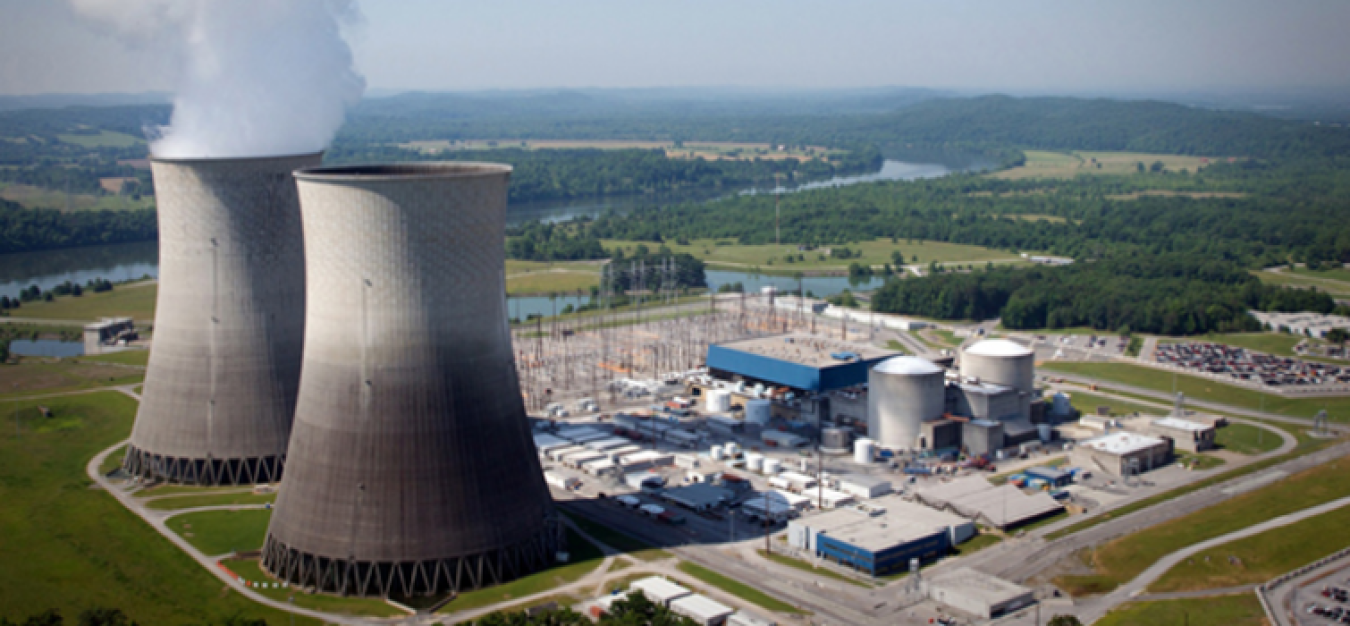
This is what the future of energy looks like.
I know you are all butt hurt about it, but deal with it.
Drought threatens England’s fruit and vegetable crop next year, says report
Scorching summer left reservoirs depleted and unlikely to recover, as growers warn of supply chain collapse in leaked meeting

Low water levels at Colliford Lake in Cornwall. Consistent above-average rainfall is needed in autumn and winter to end the drought in England. Photograph: Matt Cardy/Getty Images
Helena Horton
Farmers have warned they will not be able to grow crops next year if predictions that the drought will last until next summer prove accurate.
Leaked slides from a national drought group meeting, seen by the Observer, show there are concerns that because reservoirs are still empty due to record dry conditions, the fruit and vegetable supply chain could collapse.
They read: “If reservoirs cannot be filled during the winter 2022/23, which it is felt could be a possibility, this would have serious implications for businesses, the supply chains and those employed within them.
“Confidence is needed by the sector to have access to water to enable cropping plans to be enacted. Where confidence is not available, cropping rotations are being reviewed and reductions in areas of irrigated crops/water hungry crops are being undertaken.”
At the meeting, attended by the Environment Agency, water companies, farmers and other groups, there were warnings that it was unlikely that there would be enough rainfall to refill reservoirs and enable normal river flows by next year.
On Friday, the government announced that the drought in England was expected to last for many months, with further restrictions on water use under consideration.
Though rainfall levels were average across most of the country in September, this was not enough to dampen the soil and refill reservoirs after a dry and scorching summer.
Consistent above-average rainfall is needed throughout the autumn and winter to bring England out of drought, and this is not likely.
This could spell disaster for the agriculture sector, which has already faced reduced yields for crops including potatoes and barley.

NFU deputy president Tom Bradshaw. Photograph: Tim Scrivener/Alamy
The National Trust, also at the meeting, warned that its sites were running out of water. It said that this would impact its aims to meet net zero carbon emissions as tree planting was a large part of the strategy. It said there would probably be fewer flower displays in its gardens next year.
Tom Bradshaw, the National Farmers’ Union’s deputy president, said: “As the irrigation season is coming to a close and attention is turned to winter abstraction for storage reservoir fill, we have been working with the Environment Agency to further support the industry through these challenging times, with flexible abstraction measures being provided.
“However, more needs to be done to provide short-term certainty that water will be available for food production for the next growing season.”
Reservoirs across the country are currently at exceptionally low levels. Only one major reservoir in the country is assessed to be at normal water level for this year, with most others notably or exceptionally low.

Drought threatens UK government’s mass forestry scheme
Read more
The situation is particularly bad in Devon and Cornwall.
South West Water drought director Jo Ecroyd told the BBC that the region had experienced some of the driest weather for 130 years.
Currently, the water levels at Colliford Lake in Cornwall are at about 20%, according to the South West Lakes Trust. Roadford Lake, which can store up to 34,500 megalitres, is currently at 38% capacity.
Overall the company’s water storage is at 31.5% capacity.
Millions in the London and Oxfordshire areas could be placed under severe restrictions in coming months because the data also revealed that Thames Water is considering non-essential use bans.
Scorching summer left reservoirs depleted and unlikely to recover, as growers warn of supply chain collapse in leaked meeting
Low water levels at Colliford Lake in Cornwall. Consistent above-average rainfall is needed in autumn and winter to end the drought in England. Photograph: Matt Cardy/Getty Images
Helena Horton
Farmers have warned they will not be able to grow crops next year if predictions that the drought will last until next summer prove accurate.
Leaked slides from a national drought group meeting, seen by the Observer, show there are concerns that because reservoirs are still empty due to record dry conditions, the fruit and vegetable supply chain could collapse.
They read: “If reservoirs cannot be filled during the winter 2022/23, which it is felt could be a possibility, this would have serious implications for businesses, the supply chains and those employed within them.
“Confidence is needed by the sector to have access to water to enable cropping plans to be enacted. Where confidence is not available, cropping rotations are being reviewed and reductions in areas of irrigated crops/water hungry crops are being undertaken.”
At the meeting, attended by the Environment Agency, water companies, farmers and other groups, there were warnings that it was unlikely that there would be enough rainfall to refill reservoirs and enable normal river flows by next year.
On Friday, the government announced that the drought in England was expected to last for many months, with further restrictions on water use under consideration.
Though rainfall levels were average across most of the country in September, this was not enough to dampen the soil and refill reservoirs after a dry and scorching summer.
Consistent above-average rainfall is needed throughout the autumn and winter to bring England out of drought, and this is not likely.
This could spell disaster for the agriculture sector, which has already faced reduced yields for crops including potatoes and barley.
NFU deputy president Tom Bradshaw. Photograph: Tim Scrivener/Alamy
The National Trust, also at the meeting, warned that its sites were running out of water. It said that this would impact its aims to meet net zero carbon emissions as tree planting was a large part of the strategy. It said there would probably be fewer flower displays in its gardens next year.
Tom Bradshaw, the National Farmers’ Union’s deputy president, said: “As the irrigation season is coming to a close and attention is turned to winter abstraction for storage reservoir fill, we have been working with the Environment Agency to further support the industry through these challenging times, with flexible abstraction measures being provided.
“However, more needs to be done to provide short-term certainty that water will be available for food production for the next growing season.”
Reservoirs across the country are currently at exceptionally low levels. Only one major reservoir in the country is assessed to be at normal water level for this year, with most others notably or exceptionally low.
Drought threatens UK government’s mass forestry scheme
Read more
The situation is particularly bad in Devon and Cornwall.
South West Water drought director Jo Ecroyd told the BBC that the region had experienced some of the driest weather for 130 years.
Currently, the water levels at Colliford Lake in Cornwall are at about 20%, according to the South West Lakes Trust. Roadford Lake, which can store up to 34,500 megalitres, is currently at 38% capacity.
Overall the company’s water storage is at 31.5% capacity.
Millions in the London and Oxfordshire areas could be placed under severe restrictions in coming months because the data also revealed that Thames Water is considering non-essential use bans.
Brazil's election is of significance to the sustainability of the rain forest. I smell shenanigans afoot...
https://www.bloomberg.com/news/arti...-biggest-state-forces-urgent-campaign-rethink

https://www.bloomberg.com/news/arti...-biggest-state-forces-urgent-campaign-rethink
In a surprise, global greenhouse gas emissions seem to be on the decline
Global greenhouse gas emissions are improving, but the world depends heavily on fossil fuels.
https://www.upi.com/Top_News/World-News/2022/10/19/france-iea-co2-birol-ev-renewables/4051666197766/
The increase in global emissions of carbon dioxide could've been triple what it was from last year if not for major deployments of renewable energy technologies and electric vehicles, the International Energy Agency said Wednesday.
The Paris-based IEA estimated that global CO2 emissions are on pace to reach 33.8 billion tons this year, an increase of nearly 300 million tons should forecasts prove accurate. That's substantially lower than the 2-billion-ton increase from 2020 levels last year.
Some of that can be attributed to the move toward electric vehicles. The agency has estimated that nearly 7 million electric vehicles were sold in all of 2021. In just the first quarter of 2022 alone, however, that reached 2 million, a 75% increase year-over-year.
U.S. consumers were awarded heavy subsidies that would support the purchase of an electric vehicle under President Joe Biden's Inflation Reduction Act. The Energy Department, meanwhile, estimated that gasoline consumption is trending lower because of efficiency improvements for conventional vehicles.
For renewables, the IEA said solar and wind power are on pace to hit a record in terms of capacity this year. Without those gains, global CO2 emissions would be 600 million tons higher than 2021 levels.
Fatih Birol, the executive director of the IEA, said the global energy crisis triggered by the Russian invasion of Ukraine has caused major economies to keep looking for fossil fuels. Russia is a major supplier of crude oil and natural gas and importers are searching desperately for alternatives.
The encouraging news, he said, is that some of the Russian void is getting filled by wind and solar energy.
"This means that CO2 emissions are growing far less quickly this year than some people feared -- and that policy actions by governments are driving real structural changes in the energy economy," he said.
All this suggests that some of the momentum for clean energy technology that was lost during the worst of the COVID-19 pandemic is starting to return. Nevertheless, the IEA said oil demand is on pace to accelerate more than any other fossil fuel this year, contributing some 180 million tons to global CO2 emissions.
Global greenhouse gas emissions are improving, but the world depends heavily on fossil fuels.
https://www.upi.com/Top_News/World-News/2022/10/19/france-iea-co2-birol-ev-renewables/4051666197766/
The increase in global emissions of carbon dioxide could've been triple what it was from last year if not for major deployments of renewable energy technologies and electric vehicles, the International Energy Agency said Wednesday.
The Paris-based IEA estimated that global CO2 emissions are on pace to reach 33.8 billion tons this year, an increase of nearly 300 million tons should forecasts prove accurate. That's substantially lower than the 2-billion-ton increase from 2020 levels last year.
Some of that can be attributed to the move toward electric vehicles. The agency has estimated that nearly 7 million electric vehicles were sold in all of 2021. In just the first quarter of 2022 alone, however, that reached 2 million, a 75% increase year-over-year.
U.S. consumers were awarded heavy subsidies that would support the purchase of an electric vehicle under President Joe Biden's Inflation Reduction Act. The Energy Department, meanwhile, estimated that gasoline consumption is trending lower because of efficiency improvements for conventional vehicles.
For renewables, the IEA said solar and wind power are on pace to hit a record in terms of capacity this year. Without those gains, global CO2 emissions would be 600 million tons higher than 2021 levels.
Fatih Birol, the executive director of the IEA, said the global energy crisis triggered by the Russian invasion of Ukraine has caused major economies to keep looking for fossil fuels. Russia is a major supplier of crude oil and natural gas and importers are searching desperately for alternatives.
The encouraging news, he said, is that some of the Russian void is getting filled by wind and solar energy.
"This means that CO2 emissions are growing far less quickly this year than some people feared -- and that policy actions by governments are driving real structural changes in the energy economy," he said.
All this suggests that some of the momentum for clean energy technology that was lost during the worst of the COVID-19 pandemic is starting to return. Nevertheless, the IEA said oil demand is on pace to accelerate more than any other fossil fuel this year, contributing some 180 million tons to global CO2 emissions.
Novel entities.
Exposure to environmental toxins may be root of rise in neurological disorders
Doctors warn exposure to omnipresent yet poorly understood chemicals such as microplastics could play a role in dementia

Microplastics, pesticides and other toxins could be causing increase of neurological disorders. Photograph: David Kelly/Photograph David Kelly/The University of Queensland
Nina Lakhani in New York
The mystery behind the astronomical rise in neurological disorders like Parkinson’s disease and Alzheimer’s could be caused by exposure to environmental toxins that are omnipresent yet poorly understood, leading doctors warn.
At a conference on Sunday, the country’s leading neurologists and neuroscientists will highlight recent research efforts to fill the gaping scientific hole in understanding of the role environmental toxins – air pollution, pesticides, microplastics, forever chemicals and more – play in increasingly common diseases like dementias and childhood developmental disorders.
Humans may encounter a staggering 80,000 or more toxic chemicals as they work, play, sleep and learn – so many that it is almost impossible to determine their individual effects on a person, let alone how they may interact or the cumulative impacts on the nervous system over a lifespan.
Some contact with environmental toxins is inevitable given the proliferation of plastics and chemical pollutants, as well as America’s hands off regulatory approach, but exposure is unequal.
In the US, communities of color, Indigenous people and low income families are far more likely to be exposed to a myriad of pollutants through unsafe housing and water, manufacturing and agricultural jobs, and proximity to roads and polluting industrial plants, among other hazards.
It’s likely genetic makeup plays a role in how susceptible people are to the pathological effects of different chemicals, but research has shown higher rates of cancers and respiratory disease in environmentally burdened communities.
Very little is known about impact on brain and nervous system disorder, but there is growing consensus that genetics and ageing do not fully account for the sharp rise in previously rare diseases like Alzheimer’s, Parkinson’s and ALS (amyotrophic lateral sclerosis) – a degenerative disease more likely in army veterans and neighborhoods with heavy industry.
Neurologists and their surgical counterparts, neuroscientists, will spotlight the research gap at the American Neurological Association (ANA) annual meeting in Chicago.
“Neurology is about 15 years behind cancer so we need to sound the alarm on this and get more people doing research because the EPA [Environmental Protection Agency] is absolutely not protecting us,” said Frances Jensen, the ANA president and chair of the Department of Neurology at the University of Pennsylvania.
Scores of well-known dangerous toxins such as asbestos, glyphosates, and formaldehyde continue to be used widely in agriculture, construction, pharmaceuticals, and cosmetics in the US, despite being banned elsewhere. Earlier this week, the Guardian reported on corporate efforts to influence the EPA and conceal a possible link between the popular weed killer Paraquat and Parkinson’s.
Jensen added: “It’s like dark matter, there are so many unknowns … it’s truly going to be an epic exploration using the most cutting edge science we have.”
Neurology is the branch of medicine focused on disorders of the nervous system – the brain, spinal cord and sensory neural elements like the ears, eyes and skin. Neurologists treat stroke, multiple sclerosis, migraines, Parkinson’s, epilepsy, and Alzheimer’s, as well as children with neurodevelopmental disorders like ADHD, autism and learning disabilities.
The brain is the most complex and important organ in the body – and likely the most sensitive to environmental toxins, but was largely inaccessible to researchers until sophisticated imaging, genetic and molecular techniques were developed in the past 20 years.
Going forward, research could help explain why people living in neighborhoods with high levels of air pollution have a higher risk of stroke, as well as examine links between fetal exposure and neurodevelopmental disorders.
Rick Woychik, director of the National Institute of Environmental Health Sciences, said: “It’s not just about pesticides. PFAS chemicals are ubiquitous in the environment, as are nanoplastics. And there are trillions of dollars’ worth of demand for nanomaterials, but it’s sobering how little we know about their toxicology.”
https://www.theguardian.com/us-news...-neurological-disorders-parkinsons-alzheimers
Exposure to environmental toxins may be root of rise in neurological disorders
Doctors warn exposure to omnipresent yet poorly understood chemicals such as microplastics could play a role in dementia
Microplastics, pesticides and other toxins could be causing increase of neurological disorders. Photograph: David Kelly/Photograph David Kelly/The University of Queensland
Nina Lakhani in New York
The mystery behind the astronomical rise in neurological disorders like Parkinson’s disease and Alzheimer’s could be caused by exposure to environmental toxins that are omnipresent yet poorly understood, leading doctors warn.
At a conference on Sunday, the country’s leading neurologists and neuroscientists will highlight recent research efforts to fill the gaping scientific hole in understanding of the role environmental toxins – air pollution, pesticides, microplastics, forever chemicals and more – play in increasingly common diseases like dementias and childhood developmental disorders.
Humans may encounter a staggering 80,000 or more toxic chemicals as they work, play, sleep and learn – so many that it is almost impossible to determine their individual effects on a person, let alone how they may interact or the cumulative impacts on the nervous system over a lifespan.
Some contact with environmental toxins is inevitable given the proliferation of plastics and chemical pollutants, as well as America’s hands off regulatory approach, but exposure is unequal.
In the US, communities of color, Indigenous people and low income families are far more likely to be exposed to a myriad of pollutants through unsafe housing and water, manufacturing and agricultural jobs, and proximity to roads and polluting industrial plants, among other hazards.
It’s likely genetic makeup plays a role in how susceptible people are to the pathological effects of different chemicals, but research has shown higher rates of cancers and respiratory disease in environmentally burdened communities.
Very little is known about impact on brain and nervous system disorder, but there is growing consensus that genetics and ageing do not fully account for the sharp rise in previously rare diseases like Alzheimer’s, Parkinson’s and ALS (amyotrophic lateral sclerosis) – a degenerative disease more likely in army veterans and neighborhoods with heavy industry.
Neurologists and their surgical counterparts, neuroscientists, will spotlight the research gap at the American Neurological Association (ANA) annual meeting in Chicago.
“Neurology is about 15 years behind cancer so we need to sound the alarm on this and get more people doing research because the EPA [Environmental Protection Agency] is absolutely not protecting us,” said Frances Jensen, the ANA president and chair of the Department of Neurology at the University of Pennsylvania.
Scores of well-known dangerous toxins such as asbestos, glyphosates, and formaldehyde continue to be used widely in agriculture, construction, pharmaceuticals, and cosmetics in the US, despite being banned elsewhere. Earlier this week, the Guardian reported on corporate efforts to influence the EPA and conceal a possible link between the popular weed killer Paraquat and Parkinson’s.
Jensen added: “It’s like dark matter, there are so many unknowns … it’s truly going to be an epic exploration using the most cutting edge science we have.”
Neurology is the branch of medicine focused on disorders of the nervous system – the brain, spinal cord and sensory neural elements like the ears, eyes and skin. Neurologists treat stroke, multiple sclerosis, migraines, Parkinson’s, epilepsy, and Alzheimer’s, as well as children with neurodevelopmental disorders like ADHD, autism and learning disabilities.
The brain is the most complex and important organ in the body – and likely the most sensitive to environmental toxins, but was largely inaccessible to researchers until sophisticated imaging, genetic and molecular techniques were developed in the past 20 years.
Going forward, research could help explain why people living in neighborhoods with high levels of air pollution have a higher risk of stroke, as well as examine links between fetal exposure and neurodevelopmental disorders.
Rick Woychik, director of the National Institute of Environmental Health Sciences, said: “It’s not just about pesticides. PFAS chemicals are ubiquitous in the environment, as are nanoplastics. And there are trillions of dollars’ worth of demand for nanomaterials, but it’s sobering how little we know about their toxicology.”
https://www.theguardian.com/us-news...-neurological-disorders-parkinsons-alzheimers
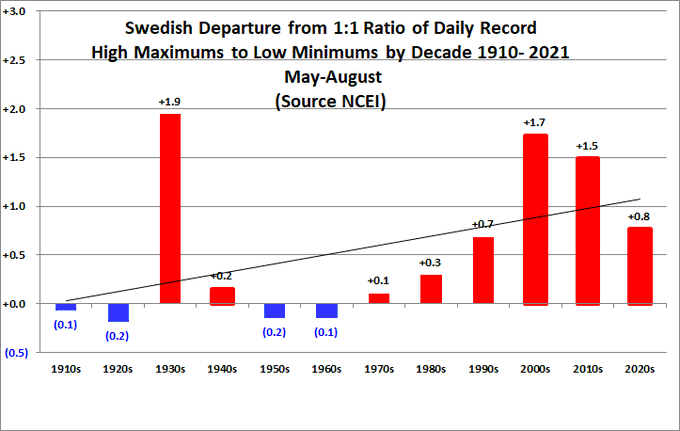
From:
How the Great Plains Dust Bowl Drought Spread Heat Extremes Around the Northern Hemisphere
in @SciReports
Drought threatens England’s fruit and vegetable crop next year, says report
Damn, no oranges, bananas, and pineapples from England next year.
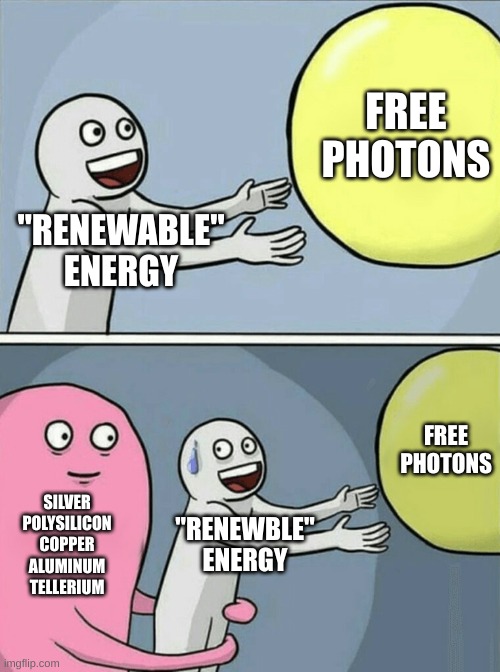
fascists gonna fasciBrazil's election is of significance to the sustainability of the rain forest. I smell shenanigans afoot...
https://www.bloomberg.com/news/arti...-biggest-state-forces-urgent-campaign-rethink
View attachment 297784