Developing IntraDay Strategies Using ATR for Risk

Thank you so much Xela for the good and thoughtful response. You gave me some ideas to think about.

I will reply below.


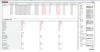
You asked why I would like to test using ATR as stop loss placement. I am not sure why use ATR, I read it in a book and online content. I am still learning ATR. I am glad you pointed out S/R-based SL and TP because I do have experienced trading S/R but only pivots. The strategies I was testing was intraday swing trending strategies. Attached is an example of what I can test even with an ema cross strategy and use the pivots for stop loss placement. Atleast then I know if i am stopped out, price is trending a different direction and the stop out is worth it.


Thanks and no need for "sorry". You are correct, what ever the tested data shows, that what works. Makes great sense.


lol, I agree with you on that. Lots of testing underway. I will back test ATR(X)*Y, with X representing look back period, and Y the multiple.


Thanks for the question.

My reason for ATR-multiple was because I read it in a book and online and I never thought of using ATR, this is my first time today studying ATR and its advantages. I was going to test with some strategies I wrote for intraday swing strategies.

The S/R I am familiar with (and please recommend more) pivots points, O.H.L.C and the S/R I use to see (these can not be programmed from my knowledge) on the chart while discretionary trading.

Are there more support and resistance I am missing?

Thanks for your advice, especially regarding not looking for a certain R:R to better then another R:R.

Thanks

Donchian Channels give you timeframe S/R levels. It’s much easier to see confluence of previous S/Rs. It’s one of my favorite indicators.

In a upward trending market usually entries are placed at the lower Donchian with a stop loss as a fraction or multiple of ATR. ATR stops or profit targets were from a Turtle System I believe.
 
Donchian Channels give you timeframe S/R levels. It’s much easier to see confluence of previous S/Rs. It’s one of my favorite indicators.

In a upward trending market usually entries are placed at the lower Donchian with a stop loss as a fraction or multiple of ATR. ATR stops or profit targets were from a Turtle System I believe.
Thank you Spectre2007,

I never heard of Donchian Channels, I will study it this indicator for support and resistance. I will experiment with it.
 
I never heard of Donchian Channels, I will study it this indicator for support and resistance. I will experiment with it.


It's an indicator that's worth a look.

In such threads, I'm always on the point of sounding pompous and pedantic by saying things like "Support and resistance are a function of price, not a function of indicators", but then I (sometimes) remember Donchian upper and lower lines, which do actually show S/R, in a sense, and I think better of it.

The "channels" are just the area between the Donchian upper and lower lines.

For myself, I was more interested in Donchian channel midlines, which were also independently invented in Japan as part of the Ichimoku indicator-set, and there they were given the names "Tenkan Sen" and "Kijun Sen" (they're exactly the same thing as Donchian midlines, although hardly anyone ever comments on it).
 
Last edited:
If anything, you should consider the ATR or whatever other measure during the exact time period you're interested in trading.

Thank you Laissez Faire for response.

What do you mean by "during the exact time period you're interested in trading" ?

Thanks
 
Hello all,

Just an update.

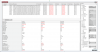
So I wanted to backtest an intraday-strategy I been working with using static stop loss versus using ATR(Period) times a Multiple as the stop loss. I wanted to see how the drawdown and average trade loss looks testing both.

Optimization Period:
2006-2011

Instrument
/ES

TimeFrame
30 min start trading at 8am to market close.

Conclusion
Optimizing an ATR times a Multiple reduces average loss per trade and overall drawdown versus using a static loss.

Now I will work on making the profit target dynamic instead of using static profit target. Maybe a trailing stop or trailing ATR stop or maybe even resistance and support as other members have suggested.
 

Attachments

  • ATR stop loss.png
    ATR stop loss.png
    307.2 KB · Views: 31
  • static stop loss.png
    static stop loss.png
    293 KB · Views: 23
Last edited:
Hello all,

Just an update.

So I wanted to backtest an intraday-strategy I been working with using static stop loss versus using ATR(Period) times a Multiple as the stop loss. I wanted to see how the drawdown and average trade loss looks testing both.

Optimization Period:
2006-2011

Instrument
/ES

TimeFrame
30 min start trading at 8am to market close.

Conclusion
Optimizing an ATR times a Multiple reduces average loss per trade and overall drawdown versus using a static loss.

Now I will work on making the profit target dynamic instead of using static profit target. Maybe a trailing stop or trailing ATR stop or maybe even resistance and support as other members have suggested.

Forget the money.Look at this from logical point of view.
You are in the business where score is kept by catching even small trends.How far will these trends move and how long is as important as putting stop loss.Whipsaws that will get you.What is out there that reduces whipsaw?Perhaps stop loss below certain number in given time period derived from measure volatility as this is a variable that changes as markets are dynamic.Only then you can build betting progression that will carry you to positive expectancy.
Loss is a loss.This is why stops correctly placed are critical as whipsaw after whipsaw and another will happen and this will put your account in uncertain territory.

Look at this from sequences standpoint,in those sequences stop loss needs to be kept below certain number to even have a chance to build betting progression that will show profit.
Breakeven trades are also important,they lower drawdown and free money and less time spend in a trade which in turn reduces risk.Time stop trades that did not hit static stop loss are also interesting subject to explore.Tests prove that trailing stops are the worst and do not give positive expectancy,as a saying goes taking small profits is indeed way to the poorhouse

I responded to your thread only because i seen ATR giving less positive results than static stops in your backtest

BTW with slippage accounted for both systems would only make brokers money,not what you intended to do.

The major problem is the more you learn the more difficult it becomes,unlike everything else you study to educate yourself.
 
Interesting post ... Van der V has just made (at least) three very good points, here ...


Breakeven trades are also important,they lower drawdown and free money and less time spend in a trade which in turn reduces risk.


I agree. I'm slightly surprised not to see more discussion of this in the forum. It's always been true of my own trading, anyway. (My own "win-rate" figures are very misleading because of this: a significant proportion of my trades actually end up +1 or +2 ticks, which I think of as "breakeven", though strictly speaking of course it's a positive return.) But the point is well made.


Time stop trades that did not hit static stop loss are also interesting subject to explore.


Again, I agree ... (I'd call it "number of bars stop" rather than "time stop", myself, just because I don't use timed charts, but the point's the same, really) - and I'm surprised not see more discussion of this here, also. These can work well.


Tests prove that trailing stops are the worst and do not give positive expectancy,as a saying goes taking small profits is indeed way to the poorhouse


That's absolutely true of my own trading and testing, and true of others I've been shown as well. I think this is a hugely misunderstood subject, in trading.

It's so easy to imagine that trailing stops "must be a good thing", but it's even easier - without detailed research and analysis - to lose track of how often trailing stops take you out of trades with small profits which could have been much bigger profits.

They're also difficult, and counter-intuitive, to use.

I'm convinced from my own experience and that of colleagues that many (probably "most") people using trailing stops and "believing in them" would actually be better off without them.
 
Last edited:
It's so easy to imagine that trailing stops "must be a good thing", but it's even easier - without detailed research and analysis - to lose track of how often trailing stops take you out of trades with small profits which could have been much bigger profits.

IMV, "trailing stops" are neither inherently good nor bad... where they are placed is most important.

There are several parameters one could use for them... like the lower Bollinger band, the lower Donchian channel, a moving average, others. One advantage is that a counter move is presumed and played to actually be a "counter", not a change in trend... up to the point the trailing stop is taken out. (Thus keeping the player in the trade and "riding out counters".) A second advantage... is that the user is actually using stop discipline. Exactly where to place stops is an art and somewhat arbitrary. Most important is that stop is used in some way to avoid turning a nice gain into a loser or worse yet... making a big mistake.

FWIW... Personally, I don't use trailing stops in the traditional sense. My stops are always tighter.
 
IMV, "trailing stops" are neither inherently good nor bad... where they are placed is most important.

There are several parameters one could use for them... like the lower Bollinger band, the lower Donchian channel, a moving average, others.


Yes, indeed ... I should have been clearer, distinguishing between "automated, tick/point/pip-count trailing stops" (generally unpleasant, inappropriate and bad, IMO) and others of the type you mention, which are more S/R based. I occasionally trail stops manually, myself, on the last third of my positions after closing two thirds, if it looks like running. Those are when Christmas comes early, kind of, but we've just had one, so my current expectations for those are nothing special. o_O


My stops are always tighter.


Mine also: when I enter a trade, it's on the basis of the price moving in "my direction" pretty quickly; if it doesn't, I want to be taken out at low cost. (I can always re-enter later.)
 
Back
Top