
Democrats "Better Deal" Platform - hand me a barf bag

FDR's letter:

Franklin D. Roosevelt Letter to the Democratic Convention
July 18, 1940

Members of the Convention:

In the century in which we live, the Democratic Party has received the support of the electorate only when the party, with absolute clarity, has been the champion of progressive and liberal policies and principles of government.

The party has failed consistently when through political trading and chicanery it has fallen into the control of those interests, personal and financial, which think in terms of dollars instead of in terms of human values.

The Republican Party has made its nominations this year at the dictation of those who, we all know, always place money ahead of human progress.

The Democratic Convention, as appears clear from the events of today, is divided on this fundamental issue. Until the Democratic Party through this convention makes overwhelmingly clear its stand in favor of social progress and liberalism, and shakes off all the shackles of control fastened upon it by the forces of conservatism, reaction, and appeasement, it will not continue its march of victory.

It is without question that certain political influences pledged to reaction in domestic affairs and to appeasement in foreign affairs have been busily engaged behind the scenes in the promotion of discord since this Convention convened.

Under these circumstances, I cannot, in all honor, and will not, merely for political expediency, go along with the cheap bargaining and political maneuvering which have brought about party dissension in this convention.

It is best not to straddle ideals.

In these days of danger when democracy must be more than vigilant, there can be no connivance with the kind of politics which has internally weakened nations abroad before the enemy has struck from without.

It is best for America to have the fight out here and now.

I wish to give the Democratic Party the opportunity to make its historic decision clearly and without equivocation. The party must go wholly one way or wholly the other. It cannot face in both directions at the same time.

By declining the honor of the nomination for the presidency, I can restore that opportunity to the convention. I so do.
 
Lets take a look at the 2016 Republican platform. Starts with a preamble and only has 6 sections:
  • Restoring the American Dream
  • A Rebirth of Constitutional Government
  • America’s Natural Resources: Agriculture, Energy, and the Environment
  • Government Reform
  • Great American Families, Education, Healthcare, and Criminal Justice
  • America Resurgent
The difference in messaging should be plain to everyone. The primary sections of the Republican platform are a call to action. The sections are full of details that address jobs, immigration, defense, and other things a majority of Americans care about.

https://prod-cdn-static.gop.com/media/documents/DRAFT_12_FINAL[1]-ben_1468872234.pdf

To get a sense of the vast difference you don't need to look further than the Opener and Preamble in the Republican platform which the Democrats totally lack.


The opener:
We dedicate this platform with admiration and gratitude
To all who stand strong in the face of danger
So that the American people may be protected against it —
The men and women of our military,
of our law enforcement, and the first responders
of every community in our land —
And to their families.


Here is the Preamble:

Preamble
With this platform, we the Republican Party
reaffirm the principles that unite us in a common purpose.


We believe in American exceptionalism.
We believe the United States of America is​
unlike any other nation on earth.
We believe America is exceptional because of​
our historic role — first as refuge, then as defender,
and now as exemplar of liberty for the world to see.
We affirm — as did the Declaration of​
Independence: that all are created equal, endowed
by their Creator with inalienable rights of life, liberty,
and the pursuit of happiness.
We believe in the Constitution as our founding​
document.
We believe the Constitution was written not as​
a flexible document, but as our enduring covenant.
We believe our constitutional system — limited​
government, separation of powers, federalism,
and the rights of the people — must be preserved
uncompromised for future generations.
We believe political freedom and economic​
freedom are indivisible.
When political freedom and economic freedom​
are separated — both are in peril; when united, they
are invincible.
We believe that people are the ultimate resource​
— and that the people, not the government, are the
best stewards of our country’s God-given natural
resources.
As Americans and as Republicans we wish for​
peace — so we insist on strength. We will make
America safe. We seek friendship with all peoples
and all nations, but we recognize and are prepared
to deal with evil in the world.
Based on these principles, this platform is an​
invitation and a roadmap. It invites every American
to join us and shows the path to a stronger, safer,
and more prosperous America.
This platform is optimistic because the​
American people are optimistic.
This platform lays out — in clear language — the​
path to making America great and united again.
For the past 8 years America has been led in the
wrong direction.
Our economy has become unnecessarily weak​
with stagnant wages. People living paycheck to
paycheck are struggling, sacrificing, and suffering.
Americans have earned and deserve a strong
and healthy economy.
Our standing in world affairs has declined​
significantly — our enemies no longer fear us and
our friends no long trust us.
People want and expect an America that is the
most powerful and respected country on the face
of the earth.
The men and women of our military remain​
the world’s best. The have been shortchanged in
numbers, equipment, and benefits by a Commander
in Chief who treats the Armed Forces and our
veterans as a necessary inconvenience.
The President and the Democratic party have​
dismantled Americans’ system of healthcare. They
have replaced it with a costly and complicated
scheme that limits choices and takes away our
freedom.
The President and the Democratic party have​
abandoned their promise of being accountable to
the American people.
They have nearly doubled the size of the​
national debt.
They refuse to control our borders but try​
to control our schools, farms, businesses, and
even our religious institutions. They have directly
attacked the production of American energy and
the industry-related jobs that have sustained families
and communities.
The President has been regulating to death​
a free market economy that he does not like and
does not understand. He defies the laws of the
United States by refusing to enforce those with
which he does not agree. And he appoints judges
who legislate from the bench rather than apply the
law.
We, as Republicans and Americans, cannot​
allow this to continue. That is why the many sections
of this platform affirm our trust in the people, our
faith in their judgment, and our determination to
help them take back their country.
This means removing the power from unelected,​
unaccountable government.
This means relieving the burden and expense of​
punishing government regulations.
And this means returning to the people and​
the states the control that belongs to them. It is the
control and the power to make their own decisions
about what’s best for themselves and their families
and communities.
This platform is many things: A handbook for​
returning decision-making to the people. A guide
to the constitutional rights of every American. And
a manual for the kind of sustained growth that will
bring opportunity to all those on the sidelines of our
society.
Every time we sing, “God Bless America,” we​
are asking for help. We ask for divine help that our
country can fulfill its promise. We earn that help by
recommitting ourselves to the ideas and ideals that
are the true greatness of America.
I'm a little frightened by the dedication, as it seems we are drifting toward becoming a police state. And too, I believe reform of our justice system should be well up on the list of priorities. I'm very bothered by our having more people incarcerated than any other country, having for-profit prisons and a criminal justice system funded by fines. . Something is very wrong. I don't want the military and police to be top commitments, I want to see long term plans that would reduce our military expenditure to approximately half what it is today -- it would still be per capita much more than any other nation -- I want to greatly increase the educational requirements for new police officers, their pay to be approximately doubled, and the number of police ultimately, through attrition, cut approximately in half. I want public education and halving of class size in the early years to be the top commitment, and then after that bringing the cost of and access to healthcare in line with that in other developed countries. I have high up on my priority list, repeal of citizens united, and revamping of congressional districting to prevent, so far as possible, gerrymandering. I have immigration concerns far down on my list. So I'm quite out of step, apparently, with mainstream America. I have radical ideas about the mechanism for achieving tax reform, so that's a topic for another day.
 
Democrats are worthless. If the government doesn't get the taxes from the rich and corporations, the government is coming after YOU to make up the difference.

 
Last edited:
Typical. More bullshit.

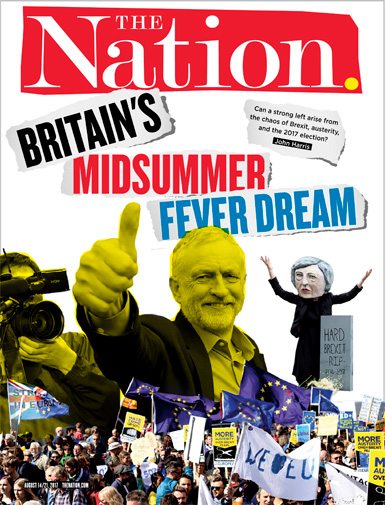
The Quiet Audacity of the Democratic ‘Better Deal’

An alphabet soup of new agencies could shake up federal oversight.
By David Dayen

The Democrats continue to roll out their agenda, and I’m noticing a pattern. Want to lower the cost of prescription drugs? They’ve got a “price gouging” enforcer, the director of a new agency dedicated to investigating drug manufacturers that jack up the cost on their products. How about breaking concentrated corporate power across all fields? They’ve got a consumer-competition advocate who would recommend investigation of monopolistic industries to the Justice Department and the Federal Trade Commission. How about trade, a policy ripped away from liberals by Donald Trump? Democrats have you covered there too, with a new “American Jobs Security Council” that can veto foreign purchases of stateside companies on economic grounds, and an independent trade prosecutor that would challenge unfair trade practices outside of the World Trade Organization framework.

Now, these aren’t the only proposals in the Better Deal. But they stand out, particularly because the new suggested positions duplicate existing structures within the federal government. The FTC (and, to a lesser extent, the Food and Drug Administration) is supposed to monitor drug prices, as well as other monopolies. The Committee on Foreign Investment in the United States (CFIUS) votes on foreign mergers. And the US trade representative handles trade disputes.

Of course, building new agencies with targeted missions was a hallmark of the New Deal. And like under FDR, these Better Deal agencies are an admission that the current framework is fatally corrupted, unresponsive to public needs. The FTC has stood relatively mute amid massive consolidation in virtually every industry. There hasn’t been a major case to break up a monopoly since the Microsoft suit in the late 1990s. Drug-price spikes are also occurring without much resistance, at least not from policymakers. CFIUS is a coalition of cabinet members that only screens foreign investment for national-security implications; though the secretaries of Commerce and Labor sit on the committee and the White House’s chief economists participate, there’s no economic screen.

What’s really going on is that Democrats are trying to recapture the magic of the Consumer Financial Protection Bureau, the popular brainchild of Elizabeth Warren. That, too, was an agency that took over mostly existing capabilities; the FTC and the Federal Reserve had consumer-protection responsibility in financial dealings. But they were indifferent to the job because it wasn’t their sole mission. CFPB reordered these priorities under one roof with a singular mission—protect consumers. And it’s worked.

In fact, CFPB was really the only major new agency of the Obama era. And its history serves as an example that the culture of an agency matters in its effectiveness. Early stories about CFPB always highlighted this—how the examiners often came from outside agencies and the feel was more akin to a startup. Eventually the revolving door came spinning there as well, but for the most part the agency has maintained its mission.

The question is whether this is endlessly replicable, and whether it’s good practice to pile on new agencies on top of the old. And there’s another problem here: Changing the structure of the federal government is the kind of policy rollout best associated with a presidential campaign, not a midterm election. Even if Democrats were able to get these new agencies authorized, Donald Trump would be filling the seats until at least 2021. Democrats are asking for the reins of power, but making promises that at least in part would be restrained by the limits of that power in the near term.

Some might see cynicism in this approach. Democrats call for support in 2018 with an agenda that would require support in 2020. With the fragmented nature of our system, that’s somewhat inevitable, but it sure makes it easier to live up to your midterm campaign promises when they can’t be lived up to.


View our current issue

Subscribe today and Save up to $129.

It’s worth noting that several Better Deal policies break with that trend. Democrats want Medicare to be able to negotiate drug prices (something they’ve promised before, then gave up on during the Affordable Care Act debate). They have a $1 trillion infrastructure bill and a plan to raise the minimum wage to $15 per hour by 2024. The competition policy proposal would change federal merger guidelines to reflect the broad range of harms caused by monopolies. On trade, Democrats want to penalize federal contractors who outsource jobs, add Buy America provisions to every project funded by taxpayers, and punish currency manipulation.

But as much as it’s a cop-out in the short term, the call for new Better Deal agencies recognizes a problem. New laws have to be carried out by an old bureaucracy. And the current one doesn’t work for the people anymore. It serves special interests, and its top officers think more about career advancement than the public good. On trade and competition and drug prices, regardless of which party has done the appointing lately, the public has gotten shafted. Is that a result of who was doing the picking, or agency culture that is rigid to change?

Admitting we need to start over reflects a reformist tendency that gave us the alphabet-soup agencies after the Depression. It’s an indictment of the predecessors, even on the Democratic side, who were unable and unwilling to alter the system. And it’s a warning shot to the expected bevy of 2020 candidates that they cannot think small about the task at hand: that they must reengineer instead of tinker.

The Better Deal isn’t entirely about building a new government atop the old one. But that tendency stands out, and, while it’s something of a dodge, it’s also as quietly radical as anything we’ve seen recently from a major political party.

https://www.thenation.com/article/the-quiet-audacity-of-the-democratic-better-deal/
 
Back
Top