Day Trading Strategy

Thanks globalarbtrader,

First paper formulated L/S (0) strategy with the weight rebalanced daily at closing price.

My understanding, I think it is similar to Shannon's Demon. Correct me if I'm wrong.

Appreciate your comments.

This is the title for the first paper:

"What Happened To The Quants In August 2007?"

I just did a text search for Shannons Demon in the paper and it isn't mention. You have the wrong link.

Of course Shannons demon works in theory, but the question is whether it can overcome realistic transaction costs.

GAT
 
I personally don't day trading because I don't (yet) have a reliable execution. But if I could do the coding stuff and automate trading, I'd set aside some equity for day trading.
What kind of reliability are you talking about? Are you talking about latency?
 
Hello globalarbtrader,

If day trading strategies did not exist, then instrument prices would not fluctuate trillions a time per day.

That's not correct.

Consider a world in which there were no day traders. There would still be long term traders making decisions to trade, and trading with each other and with HFT market makers. That would be enough to cause prices to move a hell of a lot. Day traders add some additional noise, but not very much.

Finally prices don't move 'trillions of times a day'. There are around 30,000 seconds in the trading day. If prices were to move say 3 trillion times a day, that would be 100 million price changes a day, or 100 times per micro second. That is orders of magnitudes greater than the theoretical maximum possible update frequency.

Its about get rich fast, that getting rich slow stuff is over with. Day trading is how you get rich fast.

You're correct. But the vast majority of people who day trade get poor fast.

GAT
 
Day traders contribute to the noise that we see in markets everyday and screw up any fundamental analysis that you might come up with. I technically do day trading as my algos trade several times during the day, so I contribute to that noise, do your part, contribute to that mess and chaos.
 
I technically do day trading as my algos trade several times during the day

I also trade several times a day, but I don't define myself as a 'day trader'

Personally I define day trading as a holding period of less than a day, i.e. you end up flat at the close. I think this is the most common definition.

A large fund can have a holding period of years, and still trade several times a day, and not be a day trader.

GAT
 
I also trade several times a day, but I don't define myself as a 'day trader'

Personally I define day trading as a holding period of less than a day, i.e. you end up flat at the close. I think this is the most common definition.

A large fund can have a holding period of years, and still trade several times a day, and not be a day trader.

GAT

Yep, agreed, I understand a day trader as that bloke that scalp futures discretionarily using some kind of technical analysis. I don't call myself a day trader either.
 
I'm a watcher of Crudele's channel. He's occasionally got some good material on event contract trading but there's also a lot of non-actionable hype in there.

But there are edges for intraday trading which are persistent and have been around for a long time. Some edges are spellled out in broad daylight in publications and papers if you look hard enough. But other edges are stumbled upon from personal research and tend to be closely held. It's just a matter of buying the historical intraday data and doing the challenging work of intraday backtesting.
 
This is the title for the first paper:

"What Happened To The Quants In August 2007?"

I just did a text search for Shannons Demon in the paper and it isn't mention. You have the wrong link.

Of course Shannons demon works in theory, but the question is whether it can overcome realistic transaction costs.

GAT

I believe I have correctly shared the link. Yes: "What Happened To The Quants In August 2007?"

upload_2022-12-23_22-44-18.jpeg


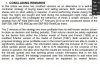
What I understand about Shannon's Demon is that it does a daily rebalancing between cash and equity. Indeed there is no mention of Shannon's Demon there, but what the formula is trying to achieve I think is similar. I heard this after reading Chan.

upload_2022-12-23_22-44-55.jpeg


I am attaching an example:

upload_2022-12-23_22-45-23.jpeg


The second paper is more or less the same as what was in the first paper, the only difference is that it is long-only and orders are placed on opening and closing price (not just on closing as in the first paper).

The second paper claims day trading can still be profitable:

upload_2022-12-23_22-46-50.jpeg


What is your opinion?
 

Attachments

  • upload_2022-12-23_22-45-57.jpeg
    upload_2022-12-23_22-45-57.jpeg
    112.5 KB · Views: 4
Back
Top