Climate alarmist starting young

Death tolls tell different tale to headlines’ climate of fear
BJORN LOMBORG

Unsurprisingly, the media this year has been filled to the brim with coverage of natural disasters.
THE WALL STREET JOURNAL
11:00PM NOVEMBER 5, 2021
62 COMMENTS
Activists constantly talk about the existential threat climate change poses and the deaths natural disasters inflict – but they never quite manage to total up these deaths.

One reason is that it’s easier to bend the data about disaster frequency than to bend death statistics. Death tolls tell a very clear story: people are safer from climate-related disasters than ever before.

Many of the fearful descriptions you hear of souped-up hurricanes, heatwaves and wildfires aren’t accurate. And estimates of costly but increasingly frequent climate damages are typically designed to mislead.


One you see repeated often in the media is the National Centres for Environmental Information’s statistic that the number of natural disasters costing over $1bn in damage is on the rise.

But as I have explained in regard to flood costs, only measuring the total damage of natural disasters over time misses the important point – there’s much more stuff to damage today than there was several decades ago.


As the world has gotten richer and its population has grown, the number and quality of structures in the path of floods, fires, and hurricanes have risen. If you remove this variable by looking at damage as a percentage of gross domestic product, it actually paints an optimistic picture.

The trend of weather-related damages from 1990 to 2020 declined from 0.26 per cent of global GDP to 0.18 per cent. A landmark study shows this has been the trend for poor and rich countries alike, regardless of the types of disaster.

Economic growth and innovation have insulated all sorts of people from floods, droughts, wind, heat and cold.

Still, it’s easy to misuse the data to make things seem worse than they actually are. The International Disaster Database – the biggest disaster data depository in the world – attempts to register every catastrophe around the globe using reports from sources ranging from the press to insurance companies to UN agencies.

But because the internet and proliferation of media have made it so much easier to access information today, the database records small natural disasters from 1980 onwards that in prior decades wouldn’t have been recorded.


This skews the database by making it appear there are more total disasters today than in the past. (Several UN agencies have twisted this data to say just that.) For instance, the database recorded four times as many earthquakes each year on average after 1980 as it did before.

As the US Geological Survey points out, when databases show more earthquakes, it isn’t because there are actually more earthquakes, but because they have been recorded better over time. Indeed, almost all of the earthquake increase in the disaster database is composed of small earthquakes that likely just didn’t make the news earlier in the 20th century.

You see the same slant with hurricanes: the disaster database recorded far more US hurricanes after 1980 than before – six times as many a year on average.

But the historical record from dozens of peer-reviewed studies shows the number of landfalling US hurricanes has actually declined slightly since 1900.

Death totals, on the other hand, are much less pliable. While reports on climate catastrophes multiplied over the past century, large-scale deaths have been consistently recorded. In fact, the disaster database’s death toll is very close to official estimates. And that data tells an incredible and heartening story. A century ago, almost half a million people died on average each year from storms, floods, droughts, wildfires and extreme temperatures. Over the next 10 decades, global annual deaths from these causes declined 96 per cent, to 18,000. In 2020, they dropped to 14,000.

Unsurprisingly, the media this year has been filled to the brim with coverage of natural disasters, from the Northwestern Heat Dome to floods in Germany and China. Yet it has conveniently left out the total death toll. So far 5500 people have died from climate-related disasters in 2021.

Using previous years’ data to extrapolate, climate-related deaths will probably total about 6600 by the end of the year. That’s almost 99 per cent less than the death toll a century ago. The global population has quadrupled since then, so this is an even bigger drop than it looks.

Again, economic growth and technological innovation get the credit for our improving position. Human beings are pretty good at adapting to their environment, even if it’s changing. Keep that in mind when you see another worried headline about climate disasters.
 
The Australian


Meet Greta Thunberg, the face of the global student climate strike

Greta Thunberg with her father, Svante.
  • GRAHAM LLOYD

    472f9e6dbba205c1a1c31a21cedcaf64
  • 3:22PM DECEMBER 5, 2018


The teenage star of the global student strike for climate change movement would ban private car ownership, meat eating and ration air travel.

Greta Thunberg, 15, is being showcased at the Katowice climate conference in Poland like a Nordic child-Yoda with a message of doom.

She chides politicians for acting like children and has been embraced by the climate establishment, fawned upon by media and granted a private audience with UN Secretary General, António Guterres.

Thunberg is told by her minders she is a “sixth sigma person” whose knowledge of the climate is six standard deviations out from the average.

She laments the ignorance of politicians and journalists who do not know their Keeling curve from the albedo.

For months, Ms Thunberg has staged a one-girl protest every Friday outside the Swedish parliament.

She is the motivation behind ClimateStrike which has spread to Australia with students wagging school to demand action on climate change.

If Thunberg were allowed to call the shots they could look forward to a greatly restricted life.

“Neither the rich nor the poor can consume as we do now,” Ms Thunberg says.

“In this situation we need some kind of rationing.”


Students and activists, protesting climate change, stage a sit-in in the marble foyer at Parliament House in Canberra. Picture: AAP
Ms Thunberg has an uncompromising belief in her understanding of the science of climate change and disdain for journalists who do not surrender impartiality for advocacy.

For her, every headline and every front page should be about the “climate crisis”.

Ms Thunberg is on the Katowice trail with her equally hardcore father Svante Thunberg who claims to be a third cousin of Svante Arrhenius, the Nobel prize winning chemist who first discovered the link between atmospheric CO2 and global temperature.

Svante Thunberg says none of today’s political parties are up to the challenge.

“We need a complete system change, stop flying and stop eating meat,” he said.

“There is no politics to solve the situation we are in today.

“There is not one single political party that I know of that will solve this crisis so we need to create a whole new thing and that is why we also need to lead by example.”

Ms Thunberg’s climate crusade started after she fell ill.


Thousands of students rally demanding action on climate change in Sydney. Picture: AAP
“She stopped eating and talking and fell into a depression and stayed at home from school,” Mr Thunberg said.

“It turned out she was very concerned and upset about climate, she could not get this out of her head,” he said.

“The fact everyone was saying one thing and doing the exact opposite.”

Ms Thunberg says she has no immediate plans to enter politics.

“I am just going to sit outside parliament in Sweden every Friday until Sweden is aligned with the Paris agreement,” she said.

GRAHAM LLOYD
ENVIRONMENT EDITOR
Graham Lloyd is a fearless reporter of all sides of the environment debate. A former night editor, chief editorial writer and deputy business editor with The Australian, Graham has held senior positions nationa
%%
THAT LITTLE fear monger[Greta T] said ''i want to scare you'' LOL, lady thanks for the disclosure!!
 
Death tolls tell different tale to headlines’ climate of fear
BJORN LOMBORG

Unsurprisingly, the media this year has been filled to the brim with coverage of natural disasters.
THE WALL STREET JOURNAL
11:00PM NOVEMBER 5, 2021
62 COMMENTS
Activists constantly talk about the existential threat climate change poses and the deaths natural disasters inflict – but they never quite manage to total up these deaths.

One reason is that it’s easier to bend the data about disaster frequency than to bend death statistics. Death tolls tell a very clear story: people are safer from climate-related disasters than ever before.

Many of the fearful descriptions you hear of souped-up hurricanes, heatwaves and wildfires aren’t accurate. And estimates of costly but increasingly frequent climate damages are typically designed to mislead.


One you see repeated often in the media is the National Centres for Environmental Information’s statistic that the number of natural disasters costing over $1bn in damage is on the rise.

But as I have explained in regard to flood costs, only measuring the total damage of natural disasters over time misses the important point – there’s much more stuff to damage today than there was several decades ago.


As the world has gotten richer and its population has grown, the number and quality of structures in the path of floods, fires, and hurricanes have risen. If you remove this variable by looking at damage as a percentage of gross domestic product, it actually paints an optimistic picture.

The trend of weather-related damages from 1990 to 2020 declined from 0.26 per cent of global GDP to 0.18 per cent. A landmark study shows this has been the trend for poor and rich countries alike, regardless of the types of disaster.

Economic growth and innovation have insulated all sorts of people from floods, droughts, wind, heat and cold.

Still, it’s easy to misuse the data to make things seem worse than they actually are. The International Disaster Database – the biggest disaster data depository in the world – attempts to register every catastrophe around the globe using reports from sources ranging from the press to insurance companies to UN agencies.

But because the internet and proliferation of media have made it so much easier to access information today, the database records small natural disasters from 1980 onwards that in prior decades wouldn’t have been recorded.


This skews the database by making it appear there are more total disasters today than in the past. (Several UN agencies have twisted this data to say just that.) For instance, the database recorded four times as many earthquakes each year on average after 1980 as it did before.

As the US Geological Survey points out, when databases show more earthquakes, it isn’t because there are actually more earthquakes, but because they have been recorded better over time. Indeed, almost all of the earthquake increase in the disaster database is composed of small earthquakes that likely just didn’t make the news earlier in the 20th century.

You see the same slant with hurricanes: the disaster database recorded far more US hurricanes after 1980 than before – six times as many a year on average.

But the historical record from dozens of peer-reviewed studies shows the number of landfalling US hurricanes has actually declined slightly since 1900.

Death totals, on the other hand, are much less pliable. While reports on climate catastrophes multiplied over the past century, large-scale deaths have been consistently recorded. In fact, the disaster database’s death toll is very close to official estimates. And that data tells an incredible and heartening story. A century ago, almost half a million people died on average each year from storms, floods, droughts, wildfires and extreme temperatures. Over the next 10 decades, global annual deaths from these causes declined 96 per cent, to 18,000. In 2020, they dropped to 14,000.

Unsurprisingly, the media this year has been filled to the brim with coverage of natural disasters, from the Northwestern Heat Dome to floods in Germany and China. Yet it has conveniently left out the total death toll. So far 5500 people have died from climate-related disasters in 2021.

Using previous years’ data to extrapolate, climate-related deaths will probably total about 6600 by the end of the year. That’s almost 99 per cent less than the death toll a century ago. The global population has quadrupled since then, so this is an even bigger drop than it looks.

Again, economic growth and technological innovation get the credit for our improving position. Human beings are pretty good at adapting to their environment, even if it’s changing. Keep that in mind when you see another worried headline about climate disasters.
Found guilty of scientific dishonesty. He went on to write a book about what we must do to deal with climate change, lol. He's a book peddler.
 
Death tolls tell different tale to headlines’ climate of fear
BJORN LOMBORG

Unsurprisingly, the media this year has been filled to the brim with coverage of natural disasters.
THE WALL STREET JOURNAL
11:00PM NOVEMBER 5, 2021
62 COMMENTS
Activists constantly talk about the existential threat climate change poses and the deaths natural disasters inflict – but they never quite manage to total up these deaths.

One reason is that it’s easier to bend the data about disaster frequency than to bend death statistics. Death tolls tell a very clear story: people are safer from climate-related disasters than ever before.

Many of the fearful descriptions you hear of souped-up hurricanes, heatwaves and wildfires aren’t accurate. And estimates of costly but increasingly frequent climate damages are typically designed to mislead.


One you see repeated often in the media is the National Centres for Environmental Information’s statistic that the number of natural disasters costing over $1bn in damage is on the rise.

But as I have explained in regard to flood costs, only measuring the total damage of natural disasters over time misses the important point – there’s much more stuff to damage today than there was several decades ago.


As the world has gotten richer and its population has grown, the number and quality of structures in the path of floods, fires, and hurricanes have risen. If you remove this variable by looking at damage as a percentage of gross domestic product, it actually paints an optimistic picture.

The trend of weather-related damages from 1990 to 2020 declined from 0.26 per cent of global GDP to 0.18 per cent. A landmark study shows this has been the trend for poor and rich countries alike, regardless of the types of disaster.

Economic growth and innovation have insulated all sorts of people from floods, droughts, wind, heat and cold.

Still, it’s easy to misuse the data to make things seem worse than they actually are. The International Disaster Database – the biggest disaster data depository in the world – attempts to register every catastrophe around the globe using reports from sources ranging from the press to insurance companies to UN agencies.

But because the internet and proliferation of media have made it so much easier to access information today, the database records small natural disasters from 1980 onwards that in prior decades wouldn’t have been recorded.


This skews the database by making it appear there are more total disasters today than in the past. (Several UN agencies have twisted this data to say just that.) For instance, the database recorded four times as many earthquakes each year on average after 1980 as it did before.

As the US Geological Survey points out, when databases show more earthquakes, it isn’t because there are actually more earthquakes, but because they have been recorded better over time. Indeed, almost all of the earthquake increase in the disaster database is composed of small earthquakes that likely just didn’t make the news earlier in the 20th century.

You see the same slant with hurricanes: the disaster database recorded far more US hurricanes after 1980 than before – six times as many a year on average.

But the historical record from dozens of peer-reviewed studies shows the number of landfalling US hurricanes has actually declined slightly since 1900.

Death totals, on the other hand, are much less pliable. While reports on climate catastrophes multiplied over the past century, large-scale deaths have been consistently recorded. In fact, the disaster database’s death toll is very close to official estimates. And that data tells an incredible and heartening story. A century ago, almost half a million people died on average each year from storms, floods, droughts, wildfires and extreme temperatures. Over the next 10 decades, global annual deaths from these causes declined 96 per cent, to 18,000. In 2020, they dropped to 14,000.

Unsurprisingly, the media this year has been filled to the brim with coverage of natural disasters, from the Northwestern Heat Dome to floods in Germany and China. Yet it has conveniently left out the total death toll. So far 5500 people have died from climate-related disasters in 2021.

Using previous years’ data to extrapolate, climate-related deaths will probably total about 6600 by the end of the year. That’s almost 99 per cent less than the death toll a century ago. The global population has quadrupled since then, so this is an even bigger drop than it looks.

Again, economic growth and technological innovation get the credit for our improving position. Human beings are pretty good at adapting to their environment, even if it’s changing. Keep that in mind when you see another worried headline about climate disasters.
%%
Good points.
Actually floods in USa have been on a sloppy 100 year uptrend, so cant really honestly call that a climate change. BUT IF nobody believes global warming, global cooling, they changed the name of the scam to ''climate change''/LOL:D:D
 
She's a propaganda figure whether she knows it or not.
%%
Interesting+ it maybe her youth\she admits ''i want to scare you'' LOL:D:D Most propaganda peddlers are not that honest.................................................................:caution::caution::caution::caution::caution::caution:,:caution::caution::caution:
 
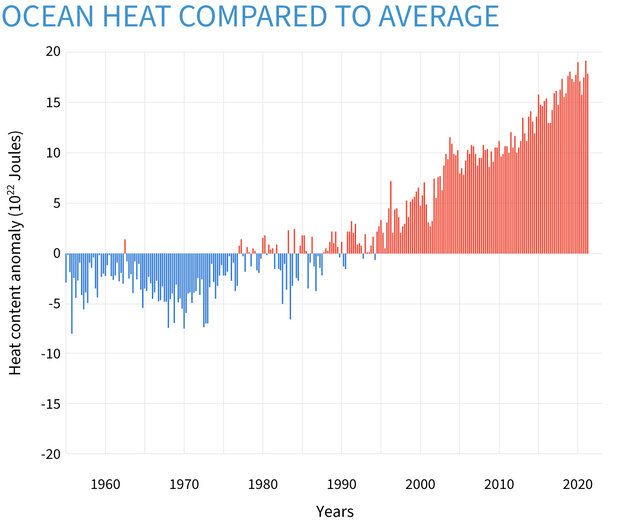
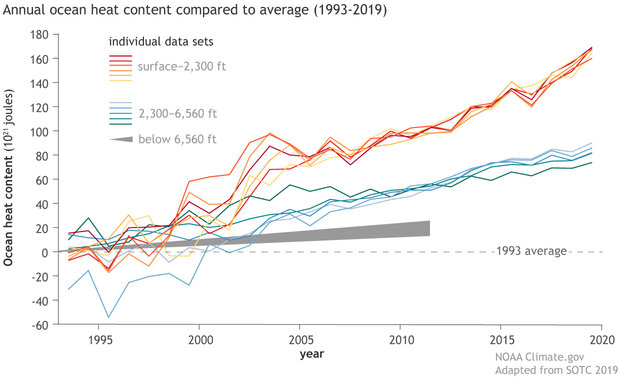
The Arctic is enduring one of the largest extents of ice in recent decades. It is so bad that it is only November and Russian ships are being frozen in. Where is the this so-called "global warming"?

Climate change: Ships stuck in Arctic ice as region freezes over in bizarre reversal
DOZENS of ships have become grounded in 12-inch thick ice after an earlier-than-predicted deep freeze struck the Russian Arctic.
https://www.express.co.uk/news/scie...-arctic-ice-northern-sea-route-global-warming
 
The Arctic is enduring one of the largest extents of ice in recent decades. It is so bad that it is only November and Russian ships are being frozen in. Where is the this so-called "global warming"?

Climate change: Ships stuck in Arctic ice as region freezes over in bizarre reversal
DOZENS of ships have become grounded in 12-inch thick ice after an earlier-than-predicted deep freeze struck the Russian Arctic.
https://www.express.co.uk/news/scie...-arctic-ice-northern-sea-route-global-warming
express lol.

I know, i know, you only believe graphs concerning vaccines

ClimateDashboard-ocean-heat-content-graph-20211004-1400px.jpg

OHC_trendsthrough2019_lrg.jpg
 
Back
Top