Markets get stark reminder that China is a Communist dictatorship
https://www.axios.com/2022/10/25/markets-china-xi-jinping-communist-dictatorship
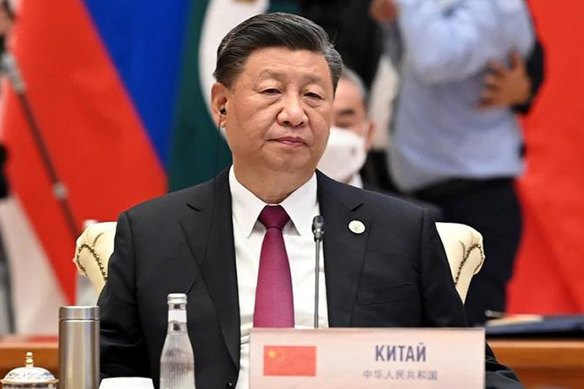
Global capital fled China en masse Monday in the aftermath of Xi Jinping's quasi-coronation as the sole power in charge of China.
Why it matters: Market moves suggest investors were surprised by the extent to which Xi's elevation signaled a coming period of conflict with the West — and a backdrop that could make it increasingly difficult for investors to extricate themselves from what's been the most important growth market for decades.
https://www.axios.com/2022/10/25/markets-china-xi-jinping-communist-dictatorship
Global capital fled China en masse Monday in the aftermath of Xi Jinping's quasi-coronation as the sole power in charge of China.
Why it matters: Market moves suggest investors were surprised by the extent to which Xi's elevation signaled a coming period of conflict with the West — and a backdrop that could make it increasingly difficult for investors to extricate themselves from what's been the most important growth market for decades.
- Investors seem to be getting out now, while the getting is good.
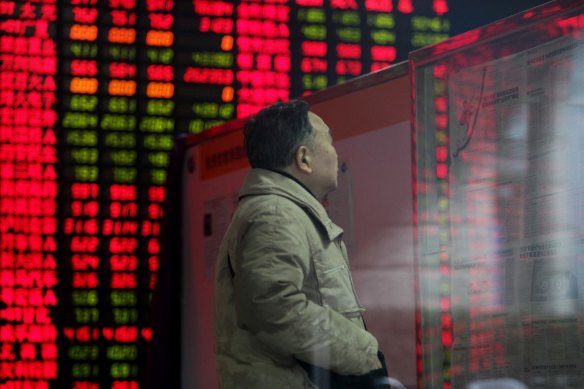
- Hong Kong's Hang Seng index, traditionally the venue of choice for foreign investors in Chinese equities, plunged 6.4% — its worst drop since the 2008 financial crisis.
- China's currency hit its weakest level against the U.S. dollar in more than 14 years, indicating a widespread withdrawal of capital from markets there.
- Goldman Sachs' index of Chinese ADRs — U.S.-listed securities tied to shares of some of the largest Chinese companies — collapsed by 15%.
- As a result, China's ruling Communists shifted to a political system that relied on retirements and term limits to prevent the type of personality cult that developed around Mao, while tapping politically moderate technocrats to manage the country's economy and its links to global financial markets.
- The system generated enormous prosperity for China, turning the People's Republic into an engine of global economic growth — and lifting roughly 800 million Chinese out of dire poverty.
- "What this means is that China will face a more difficult international and domestic environment in the future, and that China and Western countries led by the US will face even greater conflict in the fields of geopolitics, high-tech, economy, and trade," wrote analysts for SGH Macro Advisors in a note to clients on Monday.
- This could also precipitate a period of pronounced pain for global investors who have poured hundreds of billions of dollars into China.
- The recent example of Russia — where investors are still trying to establish the scope of losses related to sanctions, expropriations and capital controls stemming from the war on Ukraine — likely sharpens for investors the potential risks of China's experiment with a single-man rule.