
You are using an out of date browser. It may not display this or other websites correctly.
You should upgrade or use an alternative browser.
You should upgrade or use an alternative browser.
Challenge of Weekly Profit trading Futures
- Thread starter Trade4gainz
- Start date


Until you have proven that you can trade trough different phases of your market(s) and make consistent profits.
It is easier for a scalper, who makes dozens of trades a day, than for a swing trader. A swing trader might sim trade for half a year, make good profits and think that he "got it". But because of the relative low number of trades a swing trader makes in that time, it might also just be pure luck.
A scalper who does many trades per day will realize much sooner if what he does makes sense or not. But even if he seems to be consistently profitable, he should keep practicing or at least trade with small size until he has seen a few different cycles/phases of his market.
Someone who started scalping NQ in February this year and traded it for one month might think: wow, this is the easiest game ever, I will pile on the money in no time !
But February and March were the exception, and only experience will tell you in which phase of the market we are in and how to adapt your trading.
So there is no simple and easy answer to this question. But for a scalper I would say, stick for at least 3 months to sim, but a sim with good, realistic fills. Then, if you are consistently profitable in sim, you might switch to live trading, but I would suggest to keep the size small for the beginning. Trade 1 contract for the next 3 months, even if you make consistent profits. Then after another 3 months start trading 2 contracts, and from there you can slowly reward yourself with additional contracts, for example for every profitable month you add one additional contract.
CALLumbus,
I appreciate the detail response. Once, I get to $6000 in sim trading one contract, I will go live.
Thanks.
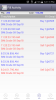
Plotted your trades on the chart to visually see them. What's interesting is that you don't seem to follow any general rules. For example, trade 1 goes against you heavily before it recovers and turns into your biggest winner. Same thing with trade 4, where the risk is much bigger than the reward was.6th
Totals
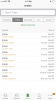
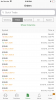
1900 + 462.5 = 2362.5
In contrast, the short at trade 3 could have been a much bigger winner, but you got out for a tiny profit.
Not knocking you of course, since the PnL speaks for itself, but its obvious that each of these trades is quite different. Perhaps its your algo that is calling the shots.
Plotted your trades on the chart to visually see them. What's interesting is that you don't seem to follow any general rules. For example, trade 1 goes against you heavily before it recovers and turns into your biggest winner. Same thing with trade 4, where the risk is much bigger than the reward was.
In contrast, the short at trade 3 could have been a much bigger winner, but you got out for a tiny profit.
Not knocking you of course, since the PnL speaks for itself, but its obvious that each of these trades is quite different. Perhaps its your algo that is calling the shots.
View attachment 189781
I stopped using the algo Sunday night, even though it makes money in the long run, it’s not suited to the week challenge.
I don’t follow any general rules, the market is point of reference, meaning it’s dynamic. I’m not patient, I enter too early or get out early. At each moment in time it’s tendency can change.
You can’t fixate on what you did previously. One mistake very easily leads to the next. It’s like letting trades initiate based on the momentary reference in time and how it’s behaving.
Just because you had a big intratrade MAE drawdown, doesn’t mean you wait for a large profit before exiting. It’s like taking snapshots and not remembering prior snapshots in current analysis of its tendency.
When I take that snapshot I can tell what it’s tendency is for the next few seconds to minute to hrs. Of all the algo that I have programmed, I can’t beat the internal tendency I’ve developed from screen time.
I won’t trade discretionarily unless I have a read on it. That read can be affected by many things. It’s not as simple as the market is going down I’m going to short. The way the tics move and create patterns implies tendency internally for me.
Last edited:
Of all the algo that I have programmed, I can’t beat the internal tendency I’ve developed from screen time.
This is all very interesting to me. I like that you're also saying this from the point of view of someone who has done a great deal of work on the algo side since your remark is a very informed point of view from both sides.The way the tics move and create patterns implies tendency internally for me.
So the question that remains then is what made you hold through such a deep drawdown for trade 1, but then not be willing to do so again for trade 3, the short that would have done well if held for an hour. Similarly, trade 4 had you hold for a bounce, but on trade 5 and 6 you got out fairly quickly. Perhaps we are getting close to the end of the day, and by then of course, the down move is well established with successive lower lows.
This is all very interesting to me. I like that you're also saying this from the point of view of someone who has done a great deal of work on the algo side since your remark is a very informed point of view from both sides.
So the question that remains then is what made you hold through such a deep drawdown for trade 1, but then not be willing to do so again for trade 3, the short that would have done well if held for an hour. Similarly, trade 4 had you hold for a bounce, but on trade 5 and 6 you got out fairly quickly. Perhaps we are getting close to the end of the day, and by then of course, the down move is well established with successive lower lows.
On the open market likes to test VwAp highs and lows, plus bond market didn’t confirm downside move, risk was it reverts and blows above 40s. It was trying to get confirmation from other markets but it never did. Thus wedge creation.[/QUOTE]
Last edited: