Can Traders Get A Loan or Mortgage

Of course it is. Listen to the people in this thread. It's outright scary. The problem with the average American is that he/she must have stuff now not tomorrow. There is enormous peer pressure in every aspect of the American life. You are basically choosing whom to invite to your home party based on where and how they live and which school their kids attend. No wonder so many try to conform to expectations rather than living responsibly.

If you see this http://www.realtytrac.com/statsandtrends/foreclosuretrends
it is maybe more dangerous to give a loan to the average American.
 
That your math is absolutely wrong is evidenced by most wealthy people paying up cash for their home. You did not even mention the correct way to assess whether a mortgage makes sense. It would only make sense if you can lock in a lower rate than the yield you achieve from investing your cash. And even then you face lots of risk because the future returns of investments are uncertain.

Taking on debt only makes sense if you are able to repay, if you can invest with certainty at higher returns than the interest on debt and if you are not able to pay up fully in cash. A lot of ifs and those smart enough evaluate very carefully. As long as you are not able to socialize losses debt makes no sense and is a bad choice. Corporations embark on debt mostly because they either believe they can invest their cash at higher yields than the debt interest payments and/or because a company can simply go bankrupt if it cannot service it's debt while the decision makers are not on the hook for even a single penny.

Why do you think most Americans are living at the verge of disaster? Because they loaded up to the hilt on debt. You are giving terrible advice IMHO.

I agree that you should only take a debt if you are able to repay. That wasn't your stance earlier in this thread.

There's clearly a difference between borrowing 100k to buy a new Porsche when you are making 30k/year and borrowing 100k to buy a house when you are making 60k/year.

Regarding a wealthy individual buying a house for cash: I haven't seen statistics one way or the other, but if you have 50MM in the bank and are looking to buy a 2MM house, it probably won't change your investment allocation if you take a mortgage.

If you have two choices: pay X in montly rent today and watch that rise (with inflation) over the next thirty years, or borrow at a competitive rate to buy a house such that you mortgage payment is X monthly for the next thirty years (unchanging), why is the mortgage a bad idea?

You have a Bloomberg. Run the ROB calculation over a long horizon. It's hard to against owning real estate with a mortgage. The tax incentives and the fact that you are long a real asset in a typically inflationary world make it easy to justify.
 
What? You contradicted yourself at least 5 times in this thread already. So if we understand correctly you sold your home used the proceeds to trade...lost a bunch...and have to now rent...and you are asking for ways to obtain credit? Wow. ..how lucky I am not to be your credit officer. Enough said.

There is a difference. Buying a home costs several 100K for one share, however there is lots of stocks less than 1K per share.

Personally I have equity with no loan. Sometimes I pay interest in accidental purchase with margin loan but less than once in every year. Also after I sell my home 2006, I am renting for 9 years.
 
Taking on debt only makes sense if you are able to repay, if you can invest with certainty at higher returns than the interest on debt and if you are not able to pay up fully in cash.

History shows that banks (creditors) survive to outperform the debtors in the long run. You are losing exactly as much as banks win.

Please do NOT think that you are over the banks, never. Most time banks are smarter than investors.
 
Disagree. The property tax and management fees (if you buy a condo ) alone make up a significant portion of the equivalent rental payment. Then you have to maintain your home and invest to keep it up and running. Then you omit that with inflation adjusted rent most incomes are inflation adjusted as well.

Most studies gave shown that over a life time owning vs renting makes not much of a difference cash flow wise. But buying on margin (entering into mortgage debt) exposes one to various ris factors which rent does not. I am not saying renting is without risk but a lot less. I am not saying that renting is better than owning but renting is definitely better , ris adjusted, than owning via debt. By the way you don't own...the bank owns.

I agree that you should only take a debt if you are able to repay. That wasn't your stance earlier in this thread.

There's clearly a difference between borrowing 100k to buy a new Porsche when you are making 30k/year and borrowing 100k to buy a house when you are making 60k/year.

Regarding a wealthy individual buying a house for cash: I haven't seen statistics one way or the other, but if you have 50MM in the bank and are looking to buy a 2MM house, it probably won't change your investment allocation if you take a mortgage.

If you have two choices: pay X in montly rent today and watch that rise (with inflation) over the next thirty years, or borrow at a competitive rate to buy a house such that you mortgage payment is X monthly for the next thirty years (unchanging), why is the mortgage a bad idea?

You have a Bloomberg. Run the ROB calculation over a long horizon. It's hard to against owning real estate with a mortgage. The tax incentives and the fact that you are long a real asset in a typically inflationary world make it easy to justify.
 
What? You contradicted yourself at least 5 times in this thread already. So if we understand correctly you sold your home used the proceeds to trade...lost a bunch...and have to now rent...and you are asking for ways to obtain credit? Wow. ..how lucky I am not to be your credit officer. Enough said.

I never said I will never get a loan for home. Personally there might be three times of loan in my life.
I sold home 2006 (less than half loan at that time) since I felt the market was too hot temporarily.

Probably after FRB increase the rate from 0.5% to 3~4%, it might be a good time to begin seeing around the street to find any sucker with big loan.
I keep all the cash that I took in 2006, in equity market. Of course it was growing in the last 9 years.

Most likely we will see 3~4% instead of current FRB 0.5%, possibly within a few years.
 
Last edited:
I have not seen those studies. I agree with your assessment in a city like NYC where there are economies of scale that rental companies get on the maintanence that you don't (and maintanence is like 30% of your mortgage cost). Even then over time, those that bought and stayed in their place in NYC (say buying in the early 90's) did very well. One broker I knew bought a townhouse in the early nineties, rents out the top 3 floors and lives in the ground floor. He's cashflow positive (and got a nice apartment for free) on the whole deal because his mortgage costs have been flat and he's been able to raise rents over the years.

I would love to see those studies if you have them. I don't know where you live, but you can do the analysis in Bloomberg using the ROB calculation. On a post-tax NAV basis it's hard to get renting to be better than buying unless your holding periods are short.


Disagree. The property tax and management fees (if you buy a condo ) alone make up a significant portion of the equivalent rental payment. Then you have to maintain your home and invest to keep it up and running. Then you omit that with inflation adjusted rent most incomes are inflation adjusted as well.

Most studies gave shown that over a life time owning vs renting makes not much of a difference cash flow wise. But buying on margin (entering into mortgage debt) exposes one to various ris factors which rent does not. I am not saying renting is without risk but a lot less. I am not saying that renting is better than owning but renting is definitely better , ris adjusted, than owning via debt. By the way you don't own...the bank owns.
 
A lot of things will be changed after interest goes up.

Not always buying with big mortgage outperforms renting.
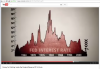
For example back in 80's 90's, FRB rate was > 10%. It can happen again.

Furthermore, average rate was roughly 6%, during the last 400 years of modern capitalism.

Can you manage your living safely, if rate is >15%, as in 1980?
If you do not have debt or little, then you can.
 

Attachments

  • FED_Interest_Rate.png
    FED_Interest_Rate.png
    753.9 KB · Views: 163
Last edited:
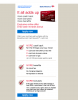
BTW, would you like accept the CC as shown below, sent to my email from BAC?
This topic was argued hours ago.

$100 cash and no annual fee
1% cash back (2% at grocery and 3% gas)

Why they are hoping to search a customer?
 

Attachments

  • 1.png
    1.png
    116.5 KB · Views: 161
you can easily google to find numerous studies. And no, renting comes close in value to owning over long periods of time, clearly renting falls behind if you switch once or several times in your life time.

Your post lacks logic entirely at several points:

* Your anecdotal evidence is one thing (especially you picking the best time a purchase was made, early 90s), it is the same as saying "investing in the stock market is always profitable, I know a friend who bought stocks in March 2009 and he since then generated a 200% return".

* You are grossly omitting that most did not buy exactly in the early 90s and that a lot of home owners face huge drawdowns over their holding period, often to the tune of > 25%. Whether they are under, meaning their home value lies below their purchase price, depends of course on timing.

* Why does where I live have to do with Bloomberg's ROB function?

* Your "On a post-tax NAV basis it's hard to get renting to be better than buying unless your holding periods are short" makes very little sense other than accepting it to be a mere statement and opinion of yours. It certainly does not back up your opinion.


I have not seen those studies. I agree with your assessment in a city like NYC where there are economies of scale that rental companies get on the maintanence that you don't (and maintanence is like 30% of your mortgage cost). Even then over time, those that bought and stayed in their place in NYC (say buying in the early 90's) did very well. One broker I knew bought a townhouse in the early nineties, rents out the top 3 floors and lives in the ground floor. He's cashflow positive (and got a nice apartment for free) on the whole deal because his mortgage costs have been flat and he's been able to raise rents over the years.

I would love to see those studies if you have them. I don't know where you live, but you can do the analysis in Bloomberg using the ROB calculation. On a post-tax NAV basis it's hard to get renting to be better than buying unless your holding periods are short.
 
Back
Top