
Can It Be This Simple? S&P 500

Rather than blatantly stating wether this "system" will work or not, you deserve kudos for presenting your thoughts with a graph and as a concrete topic that may be discussed. This usage of MACD isn't proprietary or secret and many use weekly timeframe for filtering markets and long-term opportunities.

However, in my view this is not yet a realizable trading system, as you don't really describe how to trade it. Apart from the pretty graph, there's really no way to measure its profitability without some answers to questions such as:

  • How often (ie. per week) will you analyse and take trades on this system?
  • Are you comfortable waiting a whole week before recognizing and acting on a signal?
  • In the graph, where will the final system take trades?
  • Are the simulated trades too optimistic and perhaps should it always take the pessimistic price?
  • Are there more details that should be clearly defined and then result of backtest shown with appropriate figures?
Also, seasoned traders will quickly recognize that while this may be a good enough assumption for filtering markets long-term, the number of trades are really too few to be considered statistically significant.
 
Egonan, first and foremost i want to say we should talk because i also use the macd as a corr in my tradingg and have studied for about 7 years so far, for my trading which is not this,

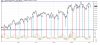
Now as far as this thread u bring me to a question, based on the time period i posted in the picture it did beat the S&P 500 by 1% annually and most importantly it got out on the two biggest drops

I see what you mean it unserperforms in bull and works in bear but arent we concerned about overall performance rather than year to year in terms of long term investing ? What you think ?

I tried the S&P 500 with timeframes as daily but didnt seem very good

However in ither trading and systems developing where i spend most of my time macd daily is where my bread and butter

I appreciate where you are coming from but I doubt in your 7 years you have put in 10,000 hours or so of staring at charts and their nuances. Your question is very basic and I don't mean this in a condescending way but a very naive question at that. Despite my differences with what ZZzz1 sometimes says he is absolutely correct if you plan to do this simple system then buy and hold or professional management would be best for you. It is NOT as simple as you think. The reason this "system" worked over the last 22 years is that we have had more volatility in the last 22 years. We had a major market top in the dot com bubble and a major market top in the collapse of worldwide financial markets. In these crashes this "simple" system would keep you out of the major downturns and get you back in to buy again at better prices. If prices consolidate this system will fail miserably. If in those two major downturns and then subsequent upturns in the market and you only outperform an index by 1% I think is telling you it's a bad system. You have not considered commissions and cost of index funds in there I suspect. If there is no major downturn of those magnitudes in the next 32 years for you then you will not match the index. Markets spend more time consolidating than they do trending and you need to have a plan for those times where this system will fail miserably. Test out this system in other times not just the last 22 years. Pick periods of consolidation and you will see.
 
Can it be this simple, this outperformed the market by 1% and with way LESS volatility and i dont see how it cant do the same again in the future, even if unperformed, the lower volatility might be worth it for some people, at least for me it is

THE SYSTEM IN THE PICTURE is simply the MACD WEEKLY CHART above or below 0, above zero ur in, below zero UR OUT, NOT SHORT, SIMPLY FLAT

below a visual summary, orange shade = in, white = flat

what u guys think?


View attachment 170236

ive been deploying this 3 years so far

STORY BEHIND IT HERE

about 4 years ago i finally realized that at the time i was still a losing trader, and that there is no point in adding money to a trading account until i establish a consistent upward trend, regardless of the dollar value in my account, at that time i decided to have PLAN B which is to max out my yearly contributions to my 401(k) ($18,000) and IRA ($5,500) and do the standard buy and hold until i become a winning trader and to maximize tax deductions from my income at my job, the 401(k) simply allows either cash, or stocks (S&P 500) nothing else. the IRA allows other stuff which is use for individual stocks (see my other threads)


fast forward 5 years the money became bigger from the contributions and the gains weve been experiencing, i realized no way in hell i can stomach a drop of 2008 magnitude and still cant today considering i have no savings besides these pretax accounts since i squeeze all my resources to hit the maximum threshold allowed by IRS


i wanted to find something ultra-simple that improves simply on buy and hold while lowering volatility and after sometime i did find something, yet it seems too simple but its methods and backtracking results prove its superiority, at least so far,

Hindsight is great, isn't it? Check out GE weekly last 5 years and you will see very much the opposite. The trouble is you won't know for a few years when it s not working, often problems of indicators. I use MACD in my long term stocks and commodities, but have found most indicators are not a one size fits all for flip flopping buys and sells as you not buying low or selling high, using them for divergences and using different trend identifier works better for me. GE has been in my retirement account over 20 years as I like the dividends and can dance options around them.

Check out 401k LLC's for being able to do much more than regular 401k's like selling short, they are self directed.
 

Attachments

  • macd1.jpg
    macd1.jpg
    282.9 KB · Views: 60
Rather than blatantly stating wether this "system" will work or not, you deserve kudos for presenting your thoughts with a graph and as a concrete topic that may be discussed. This usage of MACD isn't proprietary or secret and many use weekly timeframe for filtering markets and long-term opportunities.

However, in my view this is not yet a realizable trading system, as you don't really describe how to trade it. Apart from the pretty graph, there's really no way to measure its profitability without some answers to questions such as:
Also, seasoned traders will quickly recognize that while this may be a good enough assumption for filtering markets long-term, the number of trades are really too few to be considered statistically significant.


Hello, the description of when to trade is on top of the picture, its more so when to switch allocation as this isnt probably trading but more so investing

Ill put the answers under your questions

  • How often (ie. per week) will you analyse and take trades on this system?
  • ------system needs to be looked at about once monthly or so, a trade is condicted if the mavd has crossed above or below 0 line
  • Are you comfortable waiting a whole week before recognizing and acting on a signal?
  • ------- yes, some of these signals dont change for years which means no trading, considering this is my long term holding this is ideal because my focus is on trading else where, with this i wanted a system that i dont need to actively manage
  • In the graph, where will the final system take trades?
  • -----the begining of orange shading is where the system enters the trade, meaning switch from cash to stocks (S&P 500)
  • Are the simulated trades too optimistic and perhaps should it always take the pessimistic price?
  • ------ the trades simply enter and exit if macd line is above or below 0 line, absolute enforcement is needed and was also calculated in the simulated trades, as u can see the system did have about 4-6 whipsaw signal
  • Are there more details that should be clearly defined and then result of backtest shown with appropriate figures?
  • ----- as far as details its all in there but as my opinion as well as others opinions on the thread i do beloeve adding more to the system can enhance it
 
I appreciate where you are coming from but I doubt in your 7 years you have put in 10,000 hours or so of staring at charts and their nuances. Your question is very basic and I don't mean this in a condescending way but a very naive question at that. Despite my differences with what ZZzz1 sometimes says he is absolutely correct if you plan to do this simple system then buy and hold or professional management would be best for you. It is NOT as simple as you think. The reason this "system" worked over the last 22 years is that we have had more volatility in the last 22 years. We had a major market top in the dot com bubble and a major market top in the collapse of worldwide financial markets. In these crashes this "simple" system would keep you out of the major downturns and get you back in to buy again at better prices. If prices consolidate this system will fail miserably. If in those two major downturns and then subsequent upturns in the market and you only outperform an index by 1% I think is telling you it's a bad system. You have not considered commissions and cost of index funds in there I suspect. If there is no major downturn of those magnitudes in the next 32 years for you then you will not match the index. Markets spend more time consolidating than they do trending and you need to have a plan for those times where this system will fail miserably. Test out this system in other times not just the last 22 years. Pick periods of consolidation and you will see.


i see points here i didnt see before, thank you, i will look into them further
 
Hindsight is great, isn't it? Check out GE weekly last 5 years and you will see very much the opposite. The trouble is you won't know for a few years when it s not working, often problems of indicators. I use MACD in my long term stocks and commodities, but have found most indicators are not a one size fits all for flip flopping buys and sells as you not buying low or selling high, using them for divergences and using different trend identifier works better for me. GE has been in my retirement account over 20 years as I like the dividends and can dance options around them.

Check out 401k LLC's for being able to do much more than regular 401k's like selling short, they are self directed.


i agree on its not one size fits all, and i so far only referring to MACD weekly on S&P 500, i did notice it did horrible on other instruments. Also just for clarification in the picture i posted its using MACD above and below the 0 line and NOT its cross as in GE..... but none the less looking at its validity as you say is thousand percent true..

401k LLC,,, lovely, this is something iam definitely gonna take notes on and research since it gives more flexibility, specially also since my departure decision from my employer is nearing (in which then i can take my 401k any where)
 
extensive college and grad school and then many more years of on the job training to become a derivatives specialist

Those guys on average don't beat the simple buy and hold, aka market.
 
Back
Top