
You are using an out of date browser. It may not display this or other websites correctly.
You should upgrade or use an alternative browser.
You should upgrade or use an alternative browser.
Breakout Strategy Help
- Thread starter SimpleMeLike
- Start date

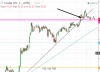
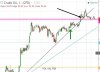
The first arrow, I would enter as price breaks resistance. The second arrow, i always hesitate to enter. I enter on the 2nd arrow because price has touched some support.
Its good that you try to apply common sense.

Trading is all about common sense.
I included the following common sense factors to my principle based day strategy :
1. Common volatility range of underlying instrument
2. Support and resistance
3. Time factor
From bird's eye view I have included the three psychologies of
1. Trading
2. Trader
3. Mass

It has an unique feature which i call "virtual stop loss", where the entry price transforms into stop loss since most of the times price moves forward after entry giving a comfortable breathing space. This style is momentum trading strategy.
This strategy has various facets like:
1. Business Principle
2. Psychology
3. Momentum
4. In-built risk management (virtual stop loss)
5. Universal day trading strategy
Trading is an all round approach rather than bits and pieces. It needs a complete system based on psychology and business principle. Ideas and techniques are good to begin with and that is just a part of the game.
Just like human body needs all nutrients, trading needs all the ingredients, not just a few techniques.
I suggest the following :
1. Treat this strategy as a case study
2. Use a modified version of it, if possible without losing its completeness.
3. Create a new and "complete" strategy based on the case study.
4. Use it as it is
Last edited:
Trading is all about common sense.
I included the following common sense factors to my principle based day strategy :
This bullshit has absolutely nothing to do with the thread at all, Rajesheck. Your persistent habit of breaking into interesting and important discussions in other people's threads simply to "promote" your own nonsensical threads here is extremely irritating; it isn't doing you any favors at all, and it impresses nobody.

This bullshit has absolutely nothing to do with the thread at all, Rajesheck. Your persistent habit of breaking into interesting and important discussions in other people's threads simply to "promote" your own nonsensical threads here is extremely irritating; it isn't doing you any favors at all, and it impresses nobody.
A thread need not have to reflect only one interest. Many a times threads express multiple interests either explicitly and implicitly.
This thread post reflects a flavor of common sense which interested me.
The issue is not clash of interests but lack of recognition on diverse interests.
And regarding "what is interesting and important" is subjective not objective.
Last edited:


Its good that you try to apply common sense.
Trading is all about common sense.
I included the following common sense factors to my principle based day strategy :
1. Common volatility range of underlying instrument
2. Support and resistance
3. Time factor
From bird's eye view I have included the three psychologies of
1. Trading
2. Trader
3. Mass
It has an unique feature which i call "virtual stop loss", where the entry price transforms into stop loss since most of the times price moves forward after entry giving a comfortable breathing space. This style is momentum trading strategy.
This strategy has various facets like:
1. Business Principle
2. Psychology
3. Momentum
4. In-built risk management (virtual stop loss)
5. Universal day trading strategy
Trading is an all round approach rather than bits and pieces. It needs a complete system based on psychology and business principle. Ideas and techniques are good to begin with and that is just a part of the game.
Just like human body needs all nutrients, trading needs all the ingredients, not just a few techniques.
I suggest the following :
1. Treat this strategy as a case study
2. Use a modified version of it, if possible without losing its completeness.
3. Create a new and "complete" strategy based on the case study.
4. Use it as it is
Thank you rajesheck,
Trading for me has to be as simple as simple can be. whatever price direction is moving, i want to get on board in that direction, everything after that is just simple risk vs reward.
If I can't bet $100 that this (attachment) trade I am about make will return me $100 or more, why take it? Everything else is mechanics of the trade. The attachment is just simple to me. Price going up, it broke resistance. Now I want to make a $100 bet if I buy near resistance that broke, it will go $100 or more. If it does not, I will lose $100. My only problem is I have been lazy and not keep good records and not properly documenting my trades are trying to practice my entries (seond breakout enter?, what about retracement entry? what about time factor as you and Handle123 has mention ). Greedy, all that other stuff. For example, I been practicing this method for 6 months and never recorded time of entry or exit, just P/L and date. Soo much metrics I did not record. Now I am thinking of how I can program this method and back test historically. Live and learn. Didn't even know til about a month ago traders was programming methods and auto backtesting their methods with fake money. I use real money off the rip. I Loss!! lol
Now I want to do it right or atleast in a practical analytical fashion
Attachments
Thank you rajesheck,
Trading for me has to be as simple as simple can be. whatever price direction is moving, i want to get on board in that direction, everything after that is just simple risk vs reward.
If I can't bet $100 that this (attachment) trade I am about make will return me $100 or more, why take it? Everything else is mechanics of the trade. The attachment is just simple to me. Price going up, it broke resistance. Now I want to make a $100 bet if I buy near resistance that broke, it will go $100 or more. If it does not, I will lose $100. My only problem is I have been lazy and not keep good records and not properly documenting my trades are trying to practice my entries (seond breakout enter?, what about retracement entry? what about time factor as you and Handle123 has mention ). Greedy, all that other stuff. For example, I been practicing this method for 6 months and never recorded time of entry or exit, just P/L and date. Soo much metrics I did not record. Now I am thinking of how I can program this method and back test historically. Live and learn. Didn't even know til about a month ago traders was programming methods and auto backtesting their methods with fake money. I use real money off the rip. I Loss!! lol
Now I want to do it right or atleast in a practical analytical fashion
My approach is based on gauging the momentum/force of breakout.
Breakout VS Time : If a solid breakout happened faster than usual, a spike kind of thing, then wait for more time, at least 20 minutes (from the point of resistance) before you enter and ofcourse after hitting a support.
When the breakout is of moderate momentum then wait for at least 10 minutes.
For a slow and steady kind of momentum, couple of minutes is enough to enter.
I suggest a tight stop loss for momentum trading and entry as closer to resistance as possible.
Momentum trading is simple and effective too.
Attachments
Last edited:
With regard to breakouts. They do one of three things. They fail. This may represent a profit opportunity but thats another discussion. The breakout takes off. The breakout punches thru a level then comes back to retest that level. Depending on market and trading style I like to wait for price to retest a prior level, stall then resume in the breakout direction. My entry is where price rejects the previous level.
With regard to breakouts. They do one of three things. They fail. This may represent a profit opportunity but thats another discussion. The breakout takes off. The breakout punches thru a level then comes back to retest that level. Depending on market and trading style I like to wait for price to retest a prior level, stall then resume in the breakout direction. My entry is where price rejects the previous level.
Good strategy.
RR ?