boru's price action journal

It's worth remembering for the "older" crowd that unless one is over at least 50, he's not going to remember a time when there was not the universal reliance on indicators. Or the ubiquitous candle. Those who learned by reading the tape have no problem with this. Those who learned with digital charts very often just don't get it. Which is the chief reason why I sometimes suggested observing a 5s chart (note the word "observing", which is distinct from "trading").

But then some people do see it, and some is enough. If trading were easy, everybody would be doing it.
 
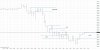
I posted this elsewhere. It reinforces what you're discovering about the relationships among bar intervals, in this case, the 1m and the 5m:

index.php
I have been aware of this for some time which is why I always had at least two charts on my screen a factor of 3/1 -5-1 but whats different now is I know they are the same, I know this sounds stupid and I don't want to beat this to death but if I hadn't climbed off the hamster wheel and observed with no intent other than OBSERVE I don't think I would have noticed this. thanks
 
Gears attached a chart showing Part 1 of the exercise, and we'll get to 2 and 3 soon. I'll send you PM on Monday explaining it in a bit more detail.

There is a nice discussion between two bond traders - one who traded "upstairs," i.e. off a screen, and another who was "downstairs," i.e. on the floor in the pit. The pit trader, Tom Baldwin, gives a nice description of what is happening during those "seriously gapped bars" you discuss above:

Peter Borish: (Sarcastically) But, it opens @ 97. It says in the daily range that it’s from 97 to 98, how come after the number came out @ 97.04, I can’t filled @ 97.06? I want to buy a lot there!

Tom Baldwin: The reason you can’t is that is really not the market. At 7:29 am before the number comes out the market is at ‘x’ and then when the number comes out and its out of line, the actual market has a gap between where it eventually goes to and where it starts. And in between there is really nothing there because the market is now here. And most people are not accustomed to that jump and they are not aware that there is really nothing to trade there, unless it is by luck. i.e. there was resting order that happened to be there, doesn’t happen often. So you would never get filled at those prices. It would be very easy if when the number came out and you said gee that’s way out of line and it’s really bullish and I want to be long 1000 bonds, well the rest of the world is not stupid either and they see its out of line so they decide not to sell now. When it rallies a point then I’m going to sell it. Because that is where the market should go to based on that number. It’s like saying I wish I could buy 1000 bonds a point below market, but it’s not the market.

As to the "flow," this has been the most frustrating thing for me to explain to others. I remember back in your first SLA journal I posted a trade where price dropped out of a hinge soon after the open. My fill on the short was like 30.75. I posted the chart, and I posted my IB blotter showing the executions. I got a PM from one of my "troll fans" at the time basically saying "How the hell do you expect me to believe you got filled at 30.75? The low of that [1 minute] bar was 29.75" (or whatever - I'm going from memory here).

I replied "What does that have to do with anything? The lower high at 31.50 was the signal to get short and so I did at 30.75."

"How did you know that 31.50 was a lower high"

"Because price traded up to 32, then down to 30, then back up to 31.50. 31.50 is lower than 32. Hence, a lower high."

"But how did you know price was going to continue dropping? How did you know that 31.50 would be the lower high?"

"I didn't know that ... It was a lower high. I get short. I have no idea if it is going to continue lower or if I'm going to have to scratch it or take a loss."

"Fuckin' liar."

He was pissed because I wouldn't tell him how I knew something that I did not and could not know. I still can't tell you how I knew because I did not know. I never know if a trade is going to do me plus or minus. But I know if I keep taking them at the extremes based on LH's and HL's, my account balance will go up. That I know.

"How do you know ...?"
is the wrong question, imo.

All price action related, Boru - nice journal, btw. Thank you for having us :)
I read mamis books and I got the failure thing right away it really stuck in my mind so when i'm watching this 5 min bar on Thursday i see the right tick spazzing out it goes up stops slows down drops goes back to the same spot stops slower and BAM I understood, I think its a failure I don't know if price is going down but I could sense a lack of intent on the buyers part. I need to go back and research this in replay can't see it on paper. To gears, not butting in at all, I appreciate everyones input as long as its positive and helpful, God knows I lurked enough threads over the years, hopefully someone will get this quicker than I did .
 
I have been aware of this for some time which is why I always had at least two charts on my screen a factor of 3/1 -5-1 but whats different now is I know they are the same, I know this sounds stupid and I don't want to beat this to death but if I hadn't climbed off the hamster wheel and observed with no intent other than OBSERVE I don't think I would have noticed this. thanks

Well, I first became acquainted with W in '98. How long did it take me to realize that it was AMT?
 
I read mamis books and I got the failure thing right away it really stuck in my mind so when i'm watching this 5 min bar on Thursday i see the right tick spazzing out it goes up stops slows down drops goes back to the same spot stops slower and BAM I understood, I think its a failure I don't know if price is going down but I could sense a lack of intent on the buyers part.

The "trick" here -- though it's really just planning -- is determining just how far away from this activity one's entry needs to be to avoid being caught in a false move but not so far away that one gets caught in the first retracement. Some avoid the whole problem by just taking it and saying the hell with it. But the fearful are incapable of doing that, and trying to do it anyway just creates more damage and sets them back even further.

Therefore, one needs to do a little testing and find that sweet spot referred to in the first sentence above.
 
The "trick" here -- though it's really just planning -- is determining just how far away from this activity one's entry needs to be to avoid being caught in a false move but not so far away that one gets caught in the first retracement. Some avoid the whole problem by just taking it and saying the hell with it. But the fearful are incapable of doing that, and trying to do it anyway just creates more damage and sets them back even further.

Therefore, one needs to do a little testing and find that sweet spot referred to in the first sentence above.
yes the reactions will be larger on a 15 or 60 min chart so I thought I would chart the size of the reactions as long as price trends, then a pullback exceeding previous pullbacks and now you know you're outside the noise. am I seeing this correctly?
 

Attachments

  • db example.jpg
    db example.jpg
    132.8 KB · Views: 51
yes the reactions will be larger on a 15 or 60 min chart so I thought I would chart the size of the reactions as long as price trends, then a pullback exceeding previous pullbacks and now you know you're outside the noise. am I seeing this correctly?

Well, not really. You need to see them move. For instance, in hindsight, the 1100 bar appears to be the only one that does not return to 4454 (or whatever it was). But there's really no way of knowing that without also looking at a much smaller interval. The 1045 bar, for example, may have left 4454 and never looked back. Or it may have spent 15m bobbing up and down and banging into 4454 and ending up at the end of the interval at the bar's "close". You could place your entry stop just below that bar, but then you'd be looking at a minimum 14pt stop, and are you prepared for that?

A better bar would be the 1030, largely because it's acting as a springboard (remember those?). You would need to find out via "backtesting" if an entry N points below the low of that bar would result in an entry that would not back up on you and take you all the way back to 4454. And even if it did, your stop could be far smaller.

So much of this has to do with fear. If one assesses the situation correctly and isn't afraid of it, he may just take the trade and the hell with it and not futz around with points this and points that and stops whatever. It's a matter of confidence, and it's hard to acquire that by dicking around with the minutiae of where do I enter and what should my stop be.

Sorry, but the answers here aren't in the back of the book.
 
got it thanks, I put off the observation phase for years because I couldn't see the value in it, now I wonder what was I thinking.
 
If trading were easy, everybody would be doing it.
Actually successful trading is extremely easy. It's one of the easiest things I've ever done. What make it hard for a lot of traders is the over-analyzing of information, the need to be right and of course, under-capitalization. ---Rules should be simple--buy when things are rising, sell when things are dropping. Never risk more than 2% of TLNW on any one trade/idea. Let winners run. Learn to be wrong and be ok with it.
 
Back
Top