
Bet Against NY Real Estate

Hi everyone,

I recently thought of an idea that is a low risk strategy, which may make a profit during an upward or downward trend in the market.

I have read countless stories of office prices going down post-pandemic. Many companies seem to be losing money on offices in urban areas, despite the real-estate boom in residential property.

In particular, NYC REIT (Ticker: NYC) seems to be a perfect choice considering a low short float, and a downward-trajectory since their public offering. NYC REIT is also solely focused on offices (other than one medical building and a condo building).

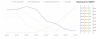
Revenues have gone down, and it seems to be happening to all REITS solely in New York, while diversified REITS, such as Brookfield, see a huge increase in revenue.
NYC-revenue-COMP.png


Taking a look at the macro side of things, workers in New York still haven't been re-employed.
NYEMPLOYEES.png


These are just a few of the reasons I came to the conclusion to bet against NY real-estate. Are there any risks I haven't considered? Opposing view? Please let me know.
 

Attachments

  • NYC-revenue-COMP.png
    NYC-revenue-COMP.png
    79.4 KB · Views: 13
So, you want to short a stock that has already been crushed, is at rock bottom valuations relative to the industry and pay the 5.84% yield to the longs while you wait for an even worse outcome from the pandemic?

many people like to short it when it is at the all-time low
(and long it when it is at the all-time high).

interestingly, many many trading books recommend such a 'strange' strategy;
buy it when it is very very high,
sell it when it is very very low.
 
Last edited:
Hi everyone,

I recently thought of an idea that is a low risk strategy, which may make a profit during an upward or downward trend in the market.

I have read countless stories of office prices going down post-pandemic. Many companies seem to be losing money on offices in urban areas, despite the real-estate boom in residential property.

In particular, NYC REIT (Ticker: NYC) seems to be a perfect choice considering a low short float, and a downward-trajectory since their public offering. NYC REIT is also solely focused on offices (other than one medical building and a condo building).

Revenues have gone down, and it seems to be happening to all REITS solely in New York, while diversified REITS, such as Brookfield, see a huge increase in revenue.
NYC-revenue-COMP.png


Taking a look at the macro side of things, workers in New York still haven't been re-employed.
NYEMPLOYEES.png


These are just a few of the reasons I came to the conclusion to bet against NY real-estate. Are there any risks I haven't considered? Opposing view? Please let me know.

You can short but make sure you hedge.
 
Hi everyone,

I recently thought of an idea that is a low risk strategy, which may make a profit during an upward or downward trend in the market.

I have read countless stories of office prices going down post-pandemic. Many companies seem to be losing money on offices in urban areas, despite the real-estate boom in residential property.

In particular, NYC REIT (Ticker: NYC) seems to be a perfect choice considering a low short float, and a downward-trajectory since their public offering. NYC REIT is also solely focused on offices (other than one medical building and a condo building).

Revenues have gone down, and it seems to be happening to all REITS solely in New York, while diversified REITS, such as Brookfield, see a huge increase in revenue.
NYC-revenue-COMP.png


Taking a look at the macro side of things, workers in New York still haven't been re-employed.
NYEMPLOYEES.png


These are just a few of the reasons I came to the conclusion to bet against NY real-estate. Are there any risks I haven't considered? Opposing view? Please let me know.
It's important to differentiate between a "low risk" strategy and one uncorrelated with the stock market. There is certainly value in adding uncorrelated assets to a portfolio, but it's important to remember that just because an asset is uncorrelated doesn't mean it is low risk, those are two completely different concepts.
 
i get that office real estate is out of vogue but....
this thing pays a 7% div which will likely not change in the near term and has a book value of 150MM (BV of real estate - Senior secured debt) and a market cap of 80MM.
 
Back
Top