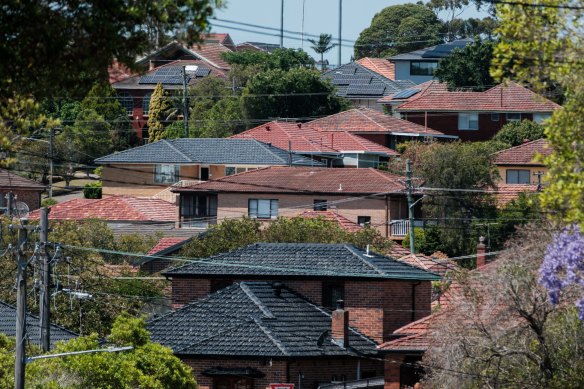
Australia’s property boom making the nation poorer

The newest victims of Australia's homelessness crisis
19 hours ago https://www.bbc.com/news/articles/cn09g9j143no
Katy Watson Australia correspondent Reporting from Perth
c6c7ab90-4e96-11ef-b2d2-cdb23d5d7c5b.jpg.webp
BBC
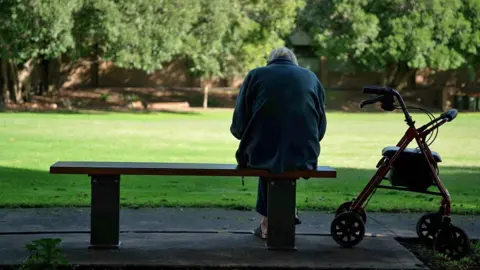
Mary, 71, became homeless when her landlord evicted her and she couldn't find another affordable place to rent

This isn’t the retirement that Mary had dreamed of.
The former midwife spent years living on a cattle station with her husband on the north-western edge of Australia - outside her window, the vast and ruggedly beautiful Kimberley region.

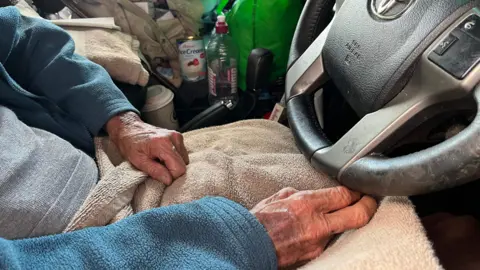
Now, though, the frail 71-year-old spends most of her days and nights in her battered car. Her current view is the public toilet block of a Perth shopping centre.

Mary is not her real name. She does not want people she knows to find out she is living like this.

She is one of the roughly 122,000 people who are homeless in Australia on any given night, according to data from the country’s bureau of statistics.

A recent government report says that 40% of renters on low income are now at risk of joining that cohort.

That’s what happened to Mary. Pushed out of her flat last year when her landlord opted to lease it for short-term stays, she couldn’t find anywhere affordable on her state pension.

Her husband can’t help - he’s in a care home with Alzheimer's disease.

“He'd be horrified [if he knew], absolutely mortified,” she says.

So now Mary’s 4x4 is full to the brim with her belongings. A walking frame lies in the back, along with piles of clothes. On the passenger seat sits a tin of rice pudding.

“That’s my evening meal, every night without fail,” she says, picking it up, her hands shaking.

She sometimes gets a bed in a shelter, but most nights, Mary settles down in a part of the city where more police are around. She explains she has been assaulted four times and does not want to take any risks.

Every so often, Mary coughs - the after-effects of a recent bout of pneumonia she suffered after getting caught in a rainstorm. The car battery died when the windows were down, and she had no money to fix it.

“It seems that the moment people know you're homeless… you become what I call a non-person,” she says. “You no longer have any value in people's lives.”

ab4ab110-395f-11ef-9202-af701d1ad5cc.jpg.webp

Mary has spent nine months living in her car

Homelessness services around Australia have reported a jump in demand amid a national housing crisis – with women and children the clear majority of those needing help. Indigenous Australians are over-represented too.

In recent years, record house prices, underinvestment in social housing, a general shortage of homes and drastically climbing rents, have left much of the nation’s growing population struggling to find a place to live.

Rents have risen the fastest in Perth - up an average of 20% this past year alone. In the few days we were in the city, everyone had a story to share.

Hailey Hawkins tells me she and her daughter Tacisha have been couch-surfing and living in tents for nearly four years, most of Tacisha’s life. They are eligible for social housing – but waiting lists are years-long.

“One week, I'll have enough money to have decent enough accommodation plus be able to feed both myself and my daughter,” she says, struggling to hold back tears.

“Otherwise, it's asking money to friends, family or pretty much anyone really that is willing to help.”

Michael Piu, head of St Patrick’s Community Support Centre, says they’re seeing people from all walks of life – young and old, working families and individuals alike – come through the doors.

“A single trigger can push people into homelessness, and there really are very few options for them," he says.

“They don't know where to start.”

Is housing a ‘human right’?
The housing crisis remains a national talking point, and it is no different inside the country’s parliaments.

Wilson Tucker, a member of the Western Australia state parliament, recently made headlines for being a "homeless" politician – although he prefers the word nomadic. He was evicted and, despite a salary almost twice the national average, could not find anywhere else to live.

But what Mr Tucker didn’t initially mention was that he is also a landlord. He says he bought the home with tenants already living there, and didn’t want to turf them out in what he calls a "red hot" property market.

So now, when parliament sits, Mr Tucker stays in hotels. The rest of the time he is on the road in his 4x4 and roof tent.

“But there's a lot of people out there that don't have that privilege, and they're resigned to fight over this handful of properties,” he tells the BBC.


7d769580-395d-11ef-9202-af701d1ad5cc.jpg.webp

Wilson Tucker, a member of the Western Australia state parliament, made the news as a "homeless politician"

Housing has also been on the agenda in the federal parliament, where MPs have been considering making it a legally protected human right.

Two independent parliamentarians introduced a bill on the issue off the back of advocacy by the Australian Human Rights Commission, but without government support it is unlikely to pass.

Prime Minister Anthony Albanese announced in this year’s budget A$6.2bn ($4.1bn; £3.3bn) to speed up the construction of new houses, provide rent subsidies, and increase the pool of social and affordable housing.

States and territories also have a slew of initiatives they hope will ease the strain.

But homelessness charities are crying out for extra support to keep up with the growing demand, and advocates say more urgent reform – like scrapping lucrative tax concessions for investors or increasing protections for renters – is needed.

There has been criticism heaped on landlords too for hiking rents at a time when people are squeezed – and discussions about limiting increases and narrowing the reasons for which a landlord can evict a tenant.

But the property industry says landlords are hurting too.

In May 2022, interest rates began rising faster than at any time in Australia's history – with 13 increases over 18 months.

“Most people only own one investment property and they've had their mortgage repayments [on those properties] go up by 50% as well,” says Cath Hart, chief executive of the Real Estate Institute of Western Australia.

She says the conditions are tough enough already, and the pandemic showed that measures like rent increase caps and eviction moratoriums only push landlords out of the long-term rental market.

“What we saw during Covid… was that 20,000 fewer properties were available to rent as investors just went ‘You know what? It's too hard.’”

f0258ff0-395d-11ef-9202-af701d1ad5cc.jpg.webp

Every night volunteers in Perth distribute food and clothes to the homeless

In the meantime, every night different charities take turns offering help to those who want it.

As evening falls and commuters exit their shiny office buildings in the centre of Perth, crowds of people with nowhere to go gather in a square by the railway tracks.

With the Australian winter now kicking in, it is the clothes donations that are causing the biggest flurry. Supermarkets donate food, there is a laundry service, a mobile doctor surgery and a hairdresser.

Also out are street chaplains, providing meals.

Michelle Rumbold has joined them to help. Until a few months ago, she was the one receiving the handouts. A registered nurse, she was left with nothing after she got evicted and crashed her car.

“I ended up losing my job purely because I didn't have accommodation and I didn't have a car,” Michelle says.

“I think it took a while for people to actually realise I was homeless, because I didn't look homeless. Gradually, over time, you become so used to the street that you lose yourself.”

Michelle managed to get transitional housing and she’s now back on her feet, working in a GP’s surgery. But she still likes to come back here and help.

“It's hard to leave this place once you've been here,” she says. “It's a really odd thing to say but people become your family here.”

But for every Michelle, there are plenty more like Mary, still struggling.

For Mary, it’s the loneliness that hits her the most.

“You’ve got no TV, no neighbours to say hi to,” she says.

“People often just give you the side eye and think 'Oh God, not another one' and walk away.”

Additional reporting by Simon Atkinson.

Heartbreaking.
 
Very powerful article about the homeless problem. It reminds me of some of the diaries I read about the Great Depression & the Dust Bowl of the US midwest (mainly Kansas & Oklahoma).

It seems these 1st world politicians are just sleepwalking through these problems and they don't want to do anything drastic to evoke change. Albanese has done much since is election has he? Biden did nothing about it either and neither did the Canadian PM. Singapore should be their model but these lazy politicians will do nothing and just hope there will always be more real estate speculators than renters.
 
Very powerful article about the homeless problem. It reminds me of some of the diaries I read about the Great Depression & the Dust Bowl of the US midwest (mainly Kansas & Oklahoma).

It seems these 1st world politicians are just sleepwalking through these problems and they don't want to do anything drastic to evoke change. Albanese has done much since is election has he? Biden did nothing about it either and neither did the Canadian PM. Singapore should be their model but these lazy politicians will do nothing and just hope there will always be more real estate speculators than renters.
100%
Albanese is a waste of space, just like the opposition party, he won't/refuses to tackle difficult problems.
When housing a couple of years back was making huge headline, Albanese decided to run a red herring campaign about Aboriginal rights which he lost.
The main political parties Labor - National - Liberals are all in bed with each other, their main priorities, keep the gravvy train rolling, keep themselves in power.

Housing is fucked, business is fucked, "oh we'll build nuclear submarines, we'll argue about nuclear power stations".

Australia doesn't need nuclear fucking power stations, we have a gazzilion free acres of land and more sunshine that shines out of Timbucktoos ass.
 
Deceased estate sells for $7.8m as buyers set to gain spring advantage
Bonnie Campbell Luxury property reporter Aug 11, 2024
https://www.afr.com/property/reside...-set-to-gain-spring-advantage-20240810-p5k1bb

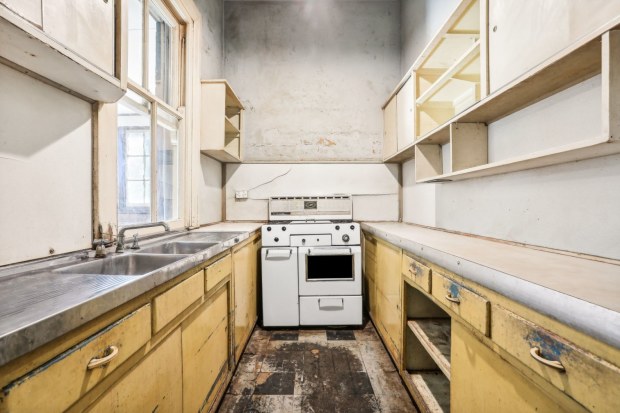
An unlivable deceased estate in Sydney’s Centennial Park has sold under the hammer for $7.8 million, helping to push the national preliminary clearance rate back above 70 per cent.

But experts predict incoming spring stock, weak consumer confidence and cooling migration will shift dynamics in favour of buyers.

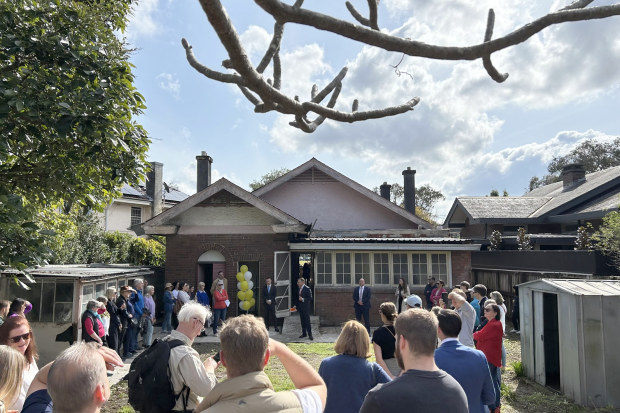
Two active parties traded bids for the heritage-protected Walter Burley Griffin-designed Californian bungalow at 41 Robertson Road, with the keys going to a young family from Sydney’s Sutherland Shire.

b8edfbcda1ecbcef28668607f866e78319a00005

This unlivable deceased estate sits on 727 square metres.

The four-bedroom property – purchased by the late owners for £22,000 in 1962 – was sold by Ray White’s Dean Jarman who said the within-guide result was “encouraging.”

However, the eastern suburbs-based agent said the Reserve Bank of Australia’s move to take rate cuts off the table until 2025 had contributed to a soft start to the spring selling season.

“People are stepping carefully,” Mr Jarman said. “It’s a transitional market coming off a hot run. Consumers were hoping that a cut might come sooner.”

4b88ee1a063ea25543ff972fe8ec0893ad689f7e

The property last traded for £22,000 in 1962.

Corelogic’s Tim Lawless attributed the subtle bump in national preliminary clearance rates to 70.4 per cent – up from last week’s 69.2 per cent – to the strong performance of the smaller capitals. Brisbane (73.1 per cent), Adelaide (88.9 per cent) and Canberra (52.2 per cent) all improved on last week’s early results.

But early clearance rates in large auction markets Sydney and Melbourne both weakened, slipping below 70 per cent.

In Melbourne, 69.5 per cent of 844 homes were cleared, down from 70.4 per cent last week, while in Sydney preliminary clearance rate slipped to 68.0 per cent cleared from 632 homes sent to auction – down from the previous week’s 69.4 per cent.

SQM’s Louis Christopher said while property prices remained strong, overall clearance rates continued on a downward trajectory.

“They are rather weak results, and when we see the final results they will be even weaker,” Mr Christopher said. “Clearance rates have been falling since June.”
 
Rooms in aged care now cost $800 a week

Those who can’t afford the full accommodation deposit need to watch out for an 8.35pc sting in the tail.

Bina Brown Contributor Aug 9, 2024
https://www.afr.com/wealth/personal...ed-care-could-cost-800-a-week-20240805-p5jznh

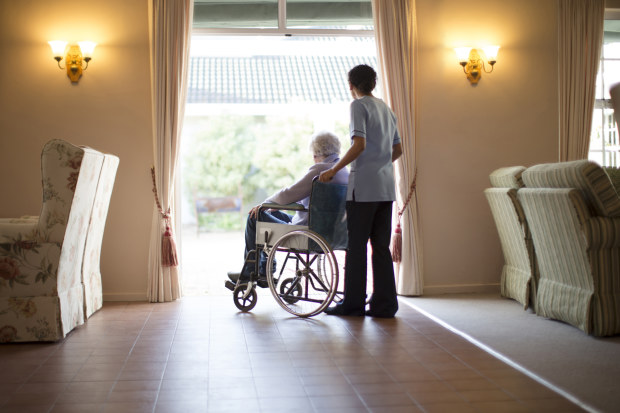
Residents moving into aged care are not immune from the rental crisis. The average daily rental rate has increased from $55 a day to $114 since June 2021, according to aged care accounting expert StewartBrown.

This is because the maximum permissible interest rate (MPIR) of 8.36 per cent is almost double what it was three years ago.

This interest rate – relevant to those who choose or need to pay rent in aged care – is high when compared to other aspects of aged care.

Most people are given the option of buying a room and paying a refundable accommodation deposit (RAD), or renting a room and paying a daily accommodation payment (DAP).

27e9e3559e0d6b0f84ea0d0620d1fe50a9abe3db

The number of facilities providing additional or extra services jumped from about one third to 42 per cent in the year to March. Getty

Provided you have the resources, you can also combine the two options and essentially pay less rent per day.

The average RAD across Australia is about $470,000 and can be as much as $1 million in inner-city areas.

If someone pays the full RAD, there is no DAP.

Many people don’t realise there are two – potentially three – other costs in the form of a basic care fee ($61.96 a day) and the means-tested care fee (capped at $417 a day, or $33,309 a year).

On top of this, extra or additional service fees of between $8 and $100 a day are increasingly being charged for things previously included in everyday costs, such as a choice of meals, entertainment and internet.

Some facilities are charging higher additional service fees for rooms with a visibly different feel, such as nicer furnishings, larger beds, space for a lounge suite and attractive views. Daily newspapers and wine with meals are also part of this package.

The number of facilities providing additional or extra services jumped from about one third to 42 per cent in the year to March 2024.

You may not be required to pay a RAD if your income or assets are below a certain threshold, and you are a supported resident. In this case, the government picks up some or all of the accommodation bill and most of the care costs.

But the MPIR can still be very relevant to the costs paid by partially supported residents to providers. A partially supported person pays a refundable accommodation contribution or equivalent daily accommodation contribution.

The good news is that the interest rate is fixed to the date you move in. So if rates increase, yours won’t. But then they won’t go down either.

Based on the average RAD of $500,000, the current weekly rent being paid in aged care could be $800 a week or $41,799 a year.

By comparison, the average house rent costs $630 a week (or an estimated $32,760 a year) across the eight capital cities and $540 a week (or an estimated $28,080 a year) for combined regional areas, according to the latest Domain rental report.

The way to reduce rental amount in aged care is to pay the RAD in full – often from the sale of a house no longer needed if you are moving into aged care.

However, it’s not unusual for the house to be lived in by a spouse and the assessable income and assets to exceed the threshold requiring a RAD to be paid

If the money to pay the RAD isn’t available, then 8.36 per cent of the unpaid amount will apply.

Ann and Allan Raye (names changed) faced this issue recently when the hospital informed the couple it wasn’t safe for Allan to return home.

With a high enough defined benefit pension from his days in the defence force and combined assets to push them into RAD-paying territory, they were required to pay a DAP on the unpaid RAD.

The challenge is managing the aged care costs – which in this case were close to Allan’s entire income – while ensuring the partner living in the home also has enough money for living expenses.

With some extra paperwork, they both qualified for a single rate, part age pension because they were now classified as a couple separated by illness.

But the cost of the accommodation and care is still higher than it should be given their financial circumstances.
 
Australia’s fall in disposable income is the worst in the world

Michael Read Economics correspondent Aug 30, 2024
https://www.afr.com/policy/economy/...ome-is-the-worst-in-the-world-20240822-p5k4ji


Australian households experienced the largest fall in disposable incomes across the OECD over the past two years, and economists forecast it will take another two years for purchasing power to recover to pre-pandemic levels.

A sharp increase in mortgage repayments and a surge in income taxes drove an 8 per cent fall in inflation-adjusted household disposable incomes in the two years to March, according AFR Weekend analysis of OECD data.

The decline in real incomes was the largest among the 20 measured OECD economies, and underscores the severity of the cost-of-living pressures on Australian households.

Over the past year, household incomes fell 2 per cent per capita. Only Denmark recorded a bigger decline than Australia in the 12 months to March.

The fall in real incomes has taken household purchasing power back to 2017 levels, forcing consumers to cut back.

Retail spending was unchanged in July, the Australian Bureau of Statistics said on Friday, despite expectations the stage three tax cuts on July 1 would give consumers the confidence to spend more on discretionary items.

“Although the impact of the tax cuts on the economy will remain uncertain for much of 2024, today’s data suggests that households remain cautious and a spending splurge is unlikely,” KPMG senior economist Michael Malakellis said.

While the tax cuts were estimated to raise disposable incomes by about 1.5 per cent, Deloitte Access Economics partner Stephen Smith said it would take until June 2026 for purchasing power to recover to pre-pandemic levels.

Record tax take
Disposable incomes surged at the onset of the pandemic as the Morrison government unleashed $429 billion in fiscal stimulus, which experts have since found dramatically overcompensated households for the losses experienced due to COVID-19.

The stimulus helped consumers accumulate a $300 billion buffer of extra savings, which the household sector has gradually drawn down in the face of cost-of-living pressures.

Deutsche Bank chief economist Phil O’Donaghoe said a big contributor to the sharp decline in disposable incomes in Australia was the dominance of variable rate mortgages.

More than 80 per cent of the Australian mortgage market is typically priced at a variable interest rate, meaning most home owners see their mortgage rates adjust soon after the RBA changes the cash rate.

“I think this is one of the main reasons why the RBA never lifted rates to around 5 per cent like peer central banks,” Mr O’Donaghoe said.

Only Chile and South Africa, where fixed-rate lending is essentially non-existent, have a greater proportion of variable loans, according to the International Monetary Fund.

HSBC chief economist Paul Bloxham said bracket creep was another driver of the decline in disposable incomes.

Australia is among the cohort of 21 OECD countries that do not index their tax brackets for inflation. Seventeen OECD countries automatically adjust their brackets to compensate for higher prices.

Because tax brackets are not indexed to inflation, increases in nominal wages lead to increases in average taxes, since a greater proportion of a worker’s pay is pushed into the highest bracket applicable to them. Economists call this bracket creep.

As a result, a near-record 16.4 per cent of household incomes was lost to income tax in the three months to March, according to the national accounts.

“In short, substantial RBA tightening and rising personal income taxes have both weighed heavily on household disposable incomes,” Mr Bloxham said.

Despite the headwind to household income, Mr Bloxham said it was striking that the economy had kept growing.

“The key here is that population growth has been exceptionally strong,” Mr Bloxham said.

“So despite individual households being hit hard by higher interest rates and income taxes, there have been lots more new households that have arrived, which has meant the overall economy has kept growing nonetheless – albeit only slowly.”

Deutsche Bank’s Mr O’Donaghoe said households had saved less to ensure they could continue spending in the face of declining household incomes.
 
Opinion
Our unending housing crisis will never get fixed without a lot more thought and effort

Ross Gittins Economics Editor September 16, 2024
https://www.smh.com.au/business/the...-more-thought-and-effort-20240915-p5kaoo.html

Contrary to popular opinion, the cost-of-living crisis will pass. But the housing crisis will go on worsening unless politicians – federal, state and local – try a mighty lot harder than they have been.

The cost of home ownership took off – that is, began rising faster than household incomes – about the time I became a journo 50 years ago, and is still going. Even the (unlikely) achievement of Anthony Albanese’s target of building 1.2 million new homes by 2034 probably wouldn’t do more than slow the rate of worsening affordability for a while.

5422b7db86790543569c2569d6dee9c637741ce4

Housing has played a big part in the cost-of-living crisis that’s finally broken the dam of politicians’ disinterest in housing affordability.Credit: Oscar Colman

You’d think there must be some kind of limit to how much harder it becomes to afford a home of your own, but considering how long it’s been running, it’s difficult to see just how it will come to an end.

It’s the advent of the Bank of Mum and Dad that’s making the rise in prices seem self-sustaining. Housing prices keep rising, but this makes the existing home owners wealthier, giving them greater wherewithal to help their kids afford the higher prices, which keeps those prices rising, rather than falling back to a level young people could afford without a special leg-up.

Small problem: we end up with a country divided between those born into the wealthy, home-owning class and those born into the class where generation after generation has never been able to afford to own the home they live in. Is that the Australia we want to live in?

Blaming Albanese for this crisis is unreasonable
How on earth did we allow housing prices to rise faster than household incomes for the past five decades, with little reason to hope this gap won’t get ever wider? By allowing the slow but steady decline in the rate of home ownership – which began in the mid-1970s – to be a problem we’d worry about later. Or worse, to be a problem the politicians only pretended to care about.

I call this the Howard Effect. John Howard takes the credit because he’s the polly who most clearly hinted at the political class’s true lack of concern about declining home ownership.

He was always repeating the line that he had yet to meet a home owner who thought rising house prices were a bad thing. Get it? The number of happy home-owning voters far exceeded the number of unhappy young couples unable to join the club.

But the rise of the Bank of Mum and Dad has changed this calculus. It’s proof of home owners’ dawning realisation that rising house prices are a two-edged sword. They’re not a problem only if you don’t give a crap about your kids.

No problem as big and long-lasting as declining home ownership could be anything other than multi-faceted. Yes, we need to fix the supply side. But yes, we need to fix the demand side as well.

It’s probably housing’s big part in the cost-of-living crisis that’s finally broken the dam of politicians’ disinterest in housing affordability. What is of lasting significance about the Albanese government’s efforts to speed up the rate of home-building is its shift to seeing blockage on the supply side of the housing market as the key to progress.

Until now, those seeking to do something about the decline in home ownership have focused on the way special tax breaks and pension exemptions add unhelpfully to the demand for housing.

But the misguided notion that its plan to reform negative gearing and the capital gains tax discount played a significant part in Labor’s loss of the 2019 federal election put paid to demand-side solutions.

The great strength of Albanese’s plan is its focus on reforming local government planning and zoning restrictions on the supply of medium and high-density housing in our capital cities.

Tax and pension problems are the responsibility of the feds. Planning and zoning restrictions are the responsibility of the states. As ever, the only way for nationwide state-level problems to be fixed is for the feds to take the lead. And, as ever, the only way for the feds to get the states to make changes is to flash the federal chequebook.

The state governments – NSW in particular – are making genuine efforts to overcome the long-standing NIMBY resistance to higher-density housing.

Great. But if you think fixing the density problem will stop housing prices rising faster than household incomes, you’re deluding yourself. Just as fixing negative gearing wasn’t a magic answer, nor is fixing density.

No problem as big and long-lasting as declining home ownership could be anything other than multi-faceted. Yes, we need to fix the supply side. But yes, we need to fix the demand side as well. And there’s more to the supply side than density, just as there’s more to the demand side than negative gearing.

Last week’s report of its Review of Housing Supply Challenges, by the NSW Productivity Commission, should be read by people in all states.

The report says local councils should lift their game in reducing the inordinate delays in accepting development approvals and in reducing unreasonable demands on builders.

I think government agencies are monopolies and, like all monopolies, they rarely resist the temptation to put their own convenience ahead of their customers’ needs.

As federal Treasury’s sermon on the housing challenge in this year’s budget papers also made clear, the NSW report notes that part of the problem is the inadequacy and inflexibility of our housing industry.

It’s simply not capable of expanding to meet the surge in demand for homes – something that, I suspect, doesn’t worry it greatly. It’s content to respond by “rationing by [higher] price”, a mechanism I explained in last week’s column.

But the NSW report says the housing industry simply doesn’t have enough tradespeople to increase its production. Workers have been lost to the major construction projects, thanks to the surge in state government spending on infrastructure.

This is no doubt right, as far as it goes. It’s certainly true that state governments would do better (and cheaper) if they timed their investment spending to fit with the ups and downs of private sector major construction spending.

But I think the ability to meet shortages of skilled workers simply by bringing workers from overseas when you need them has led the industry to neglect training sufficient apprentices to meet future needs.

Neither this report nor Treasury’s budget sermon acknowledges another possible supply-side problem, the one highlighted by the economists’ great alternative thinker on housing, Dr Cameron Murray. He argues that the developers keep house prices rising by limiting the release of land to fit.

When you look at the broader causes of ever-rising house prices, even the Reserve Bank doesn’t escape responsibility. The central bankers have always argued that housing prices are a consequence of the interaction of the demand for housing and its supply, so nothing to do with them.

Again, that’s true as far as it goes. But it sidesteps the more behavioural possibility that whacking interest rates up and down engenders an “irrational” FOMO – fear of missing out – that helps keep house prices rising when rates are falling and even when rates are rising and could rise further.

If so, that’s yet another reason why the economists need to come up with a better way of limiting demand than just screwing young people with big mortgages.

There’s more to ever-rising house prices than has ever crossed the minds of most economists.
 
Back
Top