Retail

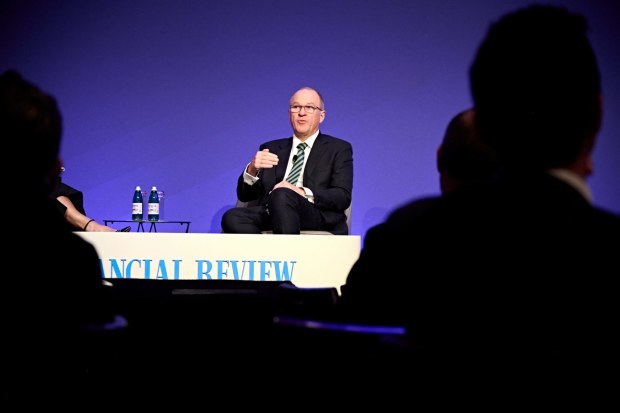
Philip Lowe has suggested Australians need to ‘economise’ on housing given the rental crisis. Photograph: Mike Bowers/The Guardian
OpinionRenting
Philip Lowe wants us in share houses to fix the rental crisis. We can’t accept this as normal
Maiy Azize
https://www.theguardian.com/comment...e-rental-crisis-we-cant-accept-this-as-normal
With young people staying at home longer than ever, it’s no surprise the Reserve Bank governor’s comments went down like a lead balloon
In the middle of Australia’s worst ever housing crisis, more pain is in store for renters. The Reserve Bank governor, Philip Lowe, says rents will keep going up, coming off the back of years of huge increases.
If you’re worried you won’t be able to keep up with more rent surges, Lowe has some advice. Young people should live with their parents for longer. Working people should keep share housing. Professionals shouldn’t expect to live on their own.
If you need proof of Australia’s warped housing system, look no further than these comments. I wasn’t surprised they went down like a lead balloon with young people. They are already living at home for longer than any previous generation. Working people are share housing for decades, not years. People on low incomes are stuck in overcrowded homes with no stability.
Stories like these are climbing the age and income ladder. A recent Everybody’s Home report shows essential workers with full-time jobs can’t afford to rent a unit on their own without getting into severe rental stress. Teachers, nurses, and other essential workers we looked at would have to spend around two-thirds of their income just to make the rent on a typical unit. Every region in the country is affected, with the average worker being left with as little as $20 a day for food, bills, and transport.
If these workers are doing it tough on full-time wages, spare a thought for those in casual jobs or who are out of work altogether. They can get stuck in a limbo that becomes permanent, couch surfing with friends and family for years at a time.
When I did the interview rounds to promote our research, I got two kinds of reactions. Most journalists, readers, and talkback listeners were appalled by what we found. Many had their own stories of rental stress, telling me they were putting off having children because they couldn’t afford it, or that they weren’t asking for home repairs because they couldn’t get their landlord offside.
Others reacted the same way as Lowe. Why do these people need their own unit? Shouldn’t they keep share housing until they can afford to move out? Surely some have partners who can help them make the rent?
What they don’t understand is that workers are already staying in boarding homes and share houses into their 40s. Women in industries such as aged care and childcare are relying on their partners to get by. People are making tough choices to keep a roof over their head.
It is a farce that we accept any of this as normal. Instead of stopping people from hoarding houses and profiting from the rental crisis, those in power are gaslighting the system’s losers for daring to want a decent home.
There is nothing radical about a teacher or a firefighter wanting to rent a unit. There is nothing radical about women in caring industries wanting financial independence. There is nothing radical about businesses wanting to hire staff without having to house them – something that more businesses are being forced to do as rents soar and governments sit on their hands.
The truth is that governments have outsourced their responsibility to tackle the housing crisis to the rest of us. If we’re fighting among ourselves about when a hospitality worker should expect to move out of their parents’ home or how a delivery driver should budget to survive on $20 a day, we aren’t looking at the huge shortfall in social housing. We aren’t thinking about the billions in taxpayer handouts for investors. We aren’t focusing on how much more could be done to fix it.
People shouldn’t have to abandon their expectation of a decent home. It should be the government’s responsibility to make sure we have the decent, affordable homes that Australians need. It’s time to shake off our rock-bottom expectations and demand the homes we deserve.
Maiy Azize is the spokesperson for Everybody’s Home, a national campaign representing housing, homelessness and welfare organisations, and a former Greens adviser. She is also the deputy director of Anglicare Australia
Philip Lowe has suggested Australians need to ‘economise’ on housing given the rental crisis. Photograph: Mike Bowers/The Guardian
OpinionRenting
Philip Lowe wants us in share houses to fix the rental crisis. We can’t accept this as normal
Maiy Azize
https://www.theguardian.com/comment...e-rental-crisis-we-cant-accept-this-as-normal
With young people staying at home longer than ever, it’s no surprise the Reserve Bank governor’s comments went down like a lead balloon
In the middle of Australia’s worst ever housing crisis, more pain is in store for renters. The Reserve Bank governor, Philip Lowe, says rents will keep going up, coming off the back of years of huge increases.
If you’re worried you won’t be able to keep up with more rent surges, Lowe has some advice. Young people should live with their parents for longer. Working people should keep share housing. Professionals shouldn’t expect to live on their own.
If you need proof of Australia’s warped housing system, look no further than these comments. I wasn’t surprised they went down like a lead balloon with young people. They are already living at home for longer than any previous generation. Working people are share housing for decades, not years. People on low incomes are stuck in overcrowded homes with no stability.
Stories like these are climbing the age and income ladder. A recent Everybody’s Home report shows essential workers with full-time jobs can’t afford to rent a unit on their own without getting into severe rental stress. Teachers, nurses, and other essential workers we looked at would have to spend around two-thirds of their income just to make the rent on a typical unit. Every region in the country is affected, with the average worker being left with as little as $20 a day for food, bills, and transport.
If these workers are doing it tough on full-time wages, spare a thought for those in casual jobs or who are out of work altogether. They can get stuck in a limbo that becomes permanent, couch surfing with friends and family for years at a time.
When I did the interview rounds to promote our research, I got two kinds of reactions. Most journalists, readers, and talkback listeners were appalled by what we found. Many had their own stories of rental stress, telling me they were putting off having children because they couldn’t afford it, or that they weren’t asking for home repairs because they couldn’t get their landlord offside.
Others reacted the same way as Lowe. Why do these people need their own unit? Shouldn’t they keep share housing until they can afford to move out? Surely some have partners who can help them make the rent?
What they don’t understand is that workers are already staying in boarding homes and share houses into their 40s. Women in industries such as aged care and childcare are relying on their partners to get by. People are making tough choices to keep a roof over their head.
It is a farce that we accept any of this as normal. Instead of stopping people from hoarding houses and profiting from the rental crisis, those in power are gaslighting the system’s losers for daring to want a decent home.
There is nothing radical about a teacher or a firefighter wanting to rent a unit. There is nothing radical about women in caring industries wanting financial independence. There is nothing radical about businesses wanting to hire staff without having to house them – something that more businesses are being forced to do as rents soar and governments sit on their hands.
The truth is that governments have outsourced their responsibility to tackle the housing crisis to the rest of us. If we’re fighting among ourselves about when a hospitality worker should expect to move out of their parents’ home or how a delivery driver should budget to survive on $20 a day, we aren’t looking at the huge shortfall in social housing. We aren’t thinking about the billions in taxpayer handouts for investors. We aren’t focusing on how much more could be done to fix it.
People shouldn’t have to abandon their expectation of a decent home. It should be the government’s responsibility to make sure we have the decent, affordable homes that Australians need. It’s time to shake off our rock-bottom expectations and demand the homes we deserve.
Maiy Azize is the spokesperson for Everybody’s Home, a national campaign representing housing, homelessness and welfare organisations, and a former Greens adviser. She is also the deputy director of Anglicare Australia