Cost-of-living pressures deepen mental health crisis
By Henrietta Cook and Aisha Dow May 1, 2023
particularly among the young. Data from the Coroners Court of Victoria and NSW Health shows that suicide numbers are now increasing after remaining relatively stable throughout the pandemic.
Claire Tacon, assistant director of financial counselling at the Consumer Action Law Centre, said a new demographic of fully employed people who had never experienced financial problems before were phoning the National Debt Helpline.
She said rent and mortgage repayments had overtaken credit card and energy bills as the main reason people sought help.
“Previously, everyone had a story … their marriage may have broken down, or they stopped work to care for a parent or partner,” she said.
“Now, there is often no backstory. It’s because interest rates have gone up, cost of living has gone up, and their incomes have stayed the same.”
Anne Holmes, a financial counsellor at Lifeline in NSW, said the organisation had encountered a “huge spike” in demand over the past year, and higher rates of mental distress than she had seen among callers during her 25-year career.
“We always ask people if they are safe [and] if they have thoughts of harming themselves,” she said. “The rate of [people answering] ‘Yes, I have had these thoughts’ has gone up.”
Holmes said a growing number of people were behind on their strata, body corporate and council rates, while people were also finding themselves in trouble after they had stopped paying for car insurance and had an accident.
There was an almost 50 per cent increase in the number of Lifeline crisis operators seeking referrals related to financial issues and homelessness between July and January.
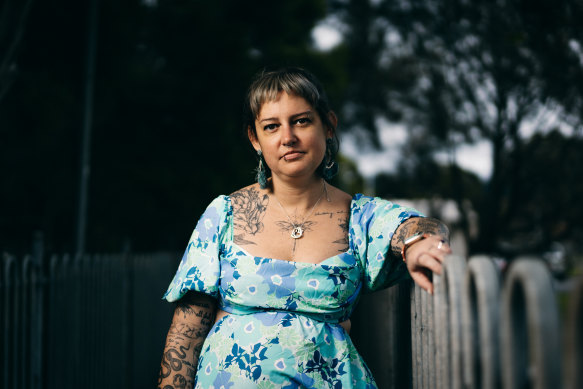
Evie recently moved into a granny flat at the back of her friend’s house with her seven-year-old son because she could not afford to rent in the private market.CREDIT ION GEORGOPOULOS
Evie, who doesn’t want to disclose her surname for privacy reasons, has been diagnosed with complex post-traumatic stress disorder and would like to see her psychologist every month. But the out-of-pocket cost of $100 a session means she can afford to see him only four times a year.
“I need to heal the trauma,” said Evie, who is a sexual assault survivor.
The single mother, who works as a lecturer at a community college in southern Sydney, said she had a decent wage but was struggling to make ends meet.
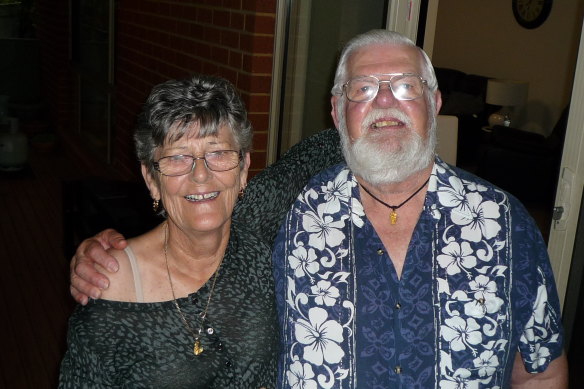
Bill and Bridget Schulz are struggling to make ends meet.
She recently moved into a granny flat at the back of a friend’s house with her seven-year-old son because she could not afford her previous weekly rent of $560 in Wollongong’s private rental market.
“I constantly feel like I am doing maths in my head,” she said. “I didn’t register my car last month. This is really stressful as a single parent.”
Pensioner Bill Schulz, from Drouin in country Victoria, is also worried about rising costs. He is a carer for his wife, Bridget, who in 2021 was diagnosed with lung cancer and given five years to live.
Their rent amounts to half their income, which is about $1800 a fortnight. They are expecting another rent rise in July. That leaves them with less than $65 a day to cover the cost of everything else: food, electricity, gas, water, phone bills, fuel, insurance and registration.
“We’ve got to keep my wife’s medication going, that’s vitally important, but then you turn around and think, ‘Oh, what are we having for dinner tonight?’”
Schulz started his first full-time job as a boilermaker in 1962, well before superannuation was made mandatory in Australia. He worked in the Defence Force for more than a decade and was employed as a shop steward before he retired at 65.
“I’ve done my share to help the country, and my wife has worked hard for the country as well,” he said.
Federal Health Minister Mark Butler said many Australians were feeling cost-of-living pressures and mental health help was available through primary health network services and crisis phone lines.
He said the government was spending about $6.9 billion on mental health and suicide prevention services this financial year.
Earlier this year, the Commonwealth cut the number of Medicare-subsidised psychology sessions from 20 to 10, which was the level before the pandemic.
Butler said the additional sessions during the pandemic had limited the availability of psychologists for new patients, put pressure on the supply of mental health services and increased costs for patients.
“We are not shying away from developing and implementing a more equitable and sustainable Better Access program and broader mental health system – one based on the evidence – and that ensures no one is left behind,” he said.
By Henrietta Cook and Aisha Dow May 1, 2023
particularly among the young. Data from the Coroners Court of Victoria and NSW Health shows that suicide numbers are now increasing after remaining relatively stable throughout the pandemic.
Claire Tacon, assistant director of financial counselling at the Consumer Action Law Centre, said a new demographic of fully employed people who had never experienced financial problems before were phoning the National Debt Helpline.
She said rent and mortgage repayments had overtaken credit card and energy bills as the main reason people sought help.
“Previously, everyone had a story … their marriage may have broken down, or they stopped work to care for a parent or partner,” she said.
“Now, there is often no backstory. It’s because interest rates have gone up, cost of living has gone up, and their incomes have stayed the same.”
Anne Holmes, a financial counsellor at Lifeline in NSW, said the organisation had encountered a “huge spike” in demand over the past year, and higher rates of mental distress than she had seen among callers during her 25-year career.
“We always ask people if they are safe [and] if they have thoughts of harming themselves,” she said. “The rate of [people answering] ‘Yes, I have had these thoughts’ has gone up.”
Holmes said a growing number of people were behind on their strata, body corporate and council rates, while people were also finding themselves in trouble after they had stopped paying for car insurance and had an accident.
There was an almost 50 per cent increase in the number of Lifeline crisis operators seeking referrals related to financial issues and homelessness between July and January.
Evie recently moved into a granny flat at the back of her friend’s house with her seven-year-old son because she could not afford to rent in the private market.CREDIT
ION GEORGOPOULOSEvie, who doesn’t want to disclose her surname for privacy reasons, has been diagnosed with complex post-traumatic stress disorder and would like to see her psychologist every month. But the out-of-pocket cost of $100 a session means she can afford to see him only four times a year.
“I need to heal the trauma,” said Evie, who is a sexual assault survivor.
The single mother, who works as a lecturer at a community college in southern Sydney, said she had a decent wage but was struggling to make ends meet.
Bill and Bridget Schulz are struggling to make ends meet.
She recently moved into a granny flat at the back of a friend’s house with her seven-year-old son because she could not afford her previous weekly rent of $560 in Wollongong’s private rental market.
“I constantly feel like I am doing maths in my head,” she said. “I didn’t register my car last month. This is really stressful as a single parent.”
Pensioner Bill Schulz, from Drouin in country Victoria, is also worried about rising costs. He is a carer for his wife, Bridget, who in 2021 was diagnosed with lung cancer and given five years to live.
Their rent amounts to half their income, which is about $1800 a fortnight. They are expecting another rent rise in July. That leaves them with less than $65 a day to cover the cost of everything else: food, electricity, gas, water, phone bills, fuel, insurance and registration.
“We’ve got to keep my wife’s medication going, that’s vitally important, but then you turn around and think, ‘Oh, what are we having for dinner tonight?’”
Schulz started his first full-time job as a boilermaker in 1962, well before superannuation was made mandatory in Australia. He worked in the Defence Force for more than a decade and was employed as a shop steward before he retired at 65.
“I’ve done my share to help the country, and my wife has worked hard for the country as well,” he said.
Federal Health Minister Mark Butler said many Australians were feeling cost-of-living pressures and mental health help was available through primary health network services and crisis phone lines.
He said the government was spending about $6.9 billion on mental health and suicide prevention services this financial year.
Earlier this year, the Commonwealth cut the number of Medicare-subsidised psychology sessions from 20 to 10, which was the level before the pandemic.
Butler said the additional sessions during the pandemic had limited the availability of psychologists for new patients, put pressure on the supply of mental health services and increased costs for patients.
“We are not shying away from developing and implementing a more equitable and sustainable Better Access program and broader mental health system – one based on the evidence – and that ensures no one is left behind,” he said.