
You are using an out of date browser. It may not display this or other websites correctly.
You should upgrade or use an alternative browser.
You should upgrade or use an alternative browser.
Anyone had "Herxheimer reaction" from dying parasites/candida?
- Thread starter DT-waw
- Start date

Baron
ET Founder
Not really. All you have to do is get a urine culture done and it will reveal the presence of anything out of range such as candida overgrowth, bacterial infection, etc. That means you go to the nearest labcorp and pee in a cup for their lab to analyze. You'll get the results back in a few days.I may have mold, but its very hard to find, might be deeply in the walls.
https://www.mountsinai.org/health-library/condition/intestinal-parasites
...
Treatment Options
Drug Therapies
Your doctor will choose the drug that is most effective against your intestinal parasite. You may need one dose, or you may have to take the medication for several weeks. Be careful to take the medicine exactly as it is prescribed, or it may not work.
Complementary and Alternative Therapies
Conventional medical treatments can get rid parasites more quickly and with fewer side effects than most alternative treatments. Alternative treatments may be helpful along with conventional medications. However, your doctor must find out what kind of organism is causing your problems before you start treatment. The following nutritional guidelines may help keep parasites from growing.
Nutrition and Supplements
Herbs are a way to strengthen and tone the body's systems. As with any therapy, you should work with your doctor to diagnose your problem before starting treatment. You may use herbs as dried extracts (capsules, powders, or teas), glycerites (glycerine extracts), or tinctures (alcohol extracts). People with a history of alcoholism should not take tinctures.
Many of the herbs used to treat intestinal parasites have toxic side effects or interfere with other medications. Use them only under the supervision of a qualified practitioner. Your health care provider should treat you with the most gentle herb that is effective for the type of parasite you have. A few of the herbs that your provider might consider include:
As with other treatments, your health care provider must first diagnose the kind of parasite you have. Before prescribing a remedy, homeopaths take into account a person's constitutional type, includes your physical, emotional, and intellectual makeup. An experienced homeopath assesses all of these factors, as well as any current symptoms, when determining the most appropriate remedy for a particular individual. The following remedies may be used:
Following Up
Your doctor will retest your stool to be sure your parasite is gone, and will give you advice to help you avoid getting infected again. Follow these instructions carefully. Getting a parasite a second time can cause more serious health problems.
Special Considerations
The seriousness and length of illness varies with the specific intestinal parasite. Complications happen more often in older people, and in people who already have serious illnesses, such as AIDS.
Intestinal parasites can be more serious if you are pregnant. Your doctor will tell you which drugs are safe to take during pregnancy. Your doctor should closely monitor any treatment for intestinal parasites during pregnancy.
Supporting Research
Alum A, Rubino JR, Ijaz MK. The global war against intestinal parasites--should we use a holistic approach? [Review]. Int J Infect Dis. 2010;14(9):e732-8.
Betti L, Trebbi G, Majewsky V, et al. Use of homeopathic preparations in phytopathological models and in field trials: a critical review. Homeopathy. 2009 Oct;98(4):244-66. Review.
Dinleyici EC, Eren M, Dogan N, Reyhanioglu S, Yargic ZA, Vandenplas Y. Clinical efficacy of Saccharomyces boulardii or metronidazole in symptomatic children with Blastocystis hominis infection. Parasitol Res. 2011;108(3):541-5.
El-On J. Current status and perspectives of the immunotherapy of leishmaniasis. Isr Med Assoc J. 2009 Oct;11(10):623-8. Review.
Farthing MJ. Treatment options for the eradication of intestinal protozoa. Nat Clin Pract Gastroenterol Hepatol. 2006;3(8):436-45.
Guarner F. Prebiotics, probiotics and helminths: the 'natural' solution? Dig Dis. 2009;27(3):412-7. Review.
Lima AA, Soares AM, Lima NL, et al. Effects of vitamin A supplementation on intestinal barrier function, growth, total parasitic, and specific Giardia spp infections in Brazilian children: a prospective randomized, double-blind, placebo-controlled trial. J Pediatr Gastroenterol Nutr. 2010;50(3):309-15.
Mishra PK, Palma M, Bleich D, Loke P, Gause WC. Systemic impact of intestinal helminth infections. Mucosal Immunol. 2014;7(4):753-62.
Missaye A, Dagnew M, Alemu A, Alemu A. Prevalence of intestinal parasites and associated risk factors among HIV / AIDS patients with pre-ART and on-ART attending dessie hospital ART clinic, Northeast Ethiopia. AIDS Res Ther. 2013; 10(1):7.
Okeniyi JA, Ogunlesi TA, Oyelami OA, Adeyemi LA. Effectiveness of dried Carica papaya seeds against human intestinal parasitosis: a pilot study. J Med Food. 2007;10(1):194-6.
Ottenhof M, Baidjoe A, Mbugi EV, et al. Protection against diarrhea associated with Giardia intestinalis Is lost with multi-nutrient supplementation: a study in Tanzanian children. PLoS Negl Trop Dis. 2011;5(6):e1158.
Ritchie BK, Brewster DR, Tran CD, Davidson GP, McNeil Y, Butler RN. Efficacy of Lactobacillus GG in aboriginal children with acute diarrhoeal disease: a randomised clinical trial. J Pediatr Gastroenterol Nutr. 2010;50(6):619-24.
Roka M, Goni P, Rubio E, Clavel A. Intestinal parasites in HIV-seropositive patients in the Continental region of Equatorial Guinea: its relation with socio-demographic, health and immune system factors. Trans R Soc Trop Med Hyg. 2013;107(8):502-10.
Rollemberg CV, Silva MM, Rollemberg KC, et al. Predicting frequency distribution and influence of sociodemographic and behavioral risk factors of Schistosoma mansoni infection and analysis of co-infection with intestinal parasites. Geospat Health. 2015;10(1):303.
...
Treatment Options
Drug Therapies
Your doctor will choose the drug that is most effective against your intestinal parasite. You may need one dose, or you may have to take the medication for several weeks. Be careful to take the medicine exactly as it is prescribed, or it may not work.
Complementary and Alternative Therapies
Conventional medical treatments can get rid parasites more quickly and with fewer side effects than most alternative treatments. Alternative treatments may be helpful along with conventional medications. However, your doctor must find out what kind of organism is causing your problems before you start treatment. The following nutritional guidelines may help keep parasites from growing.
Nutrition and Supplements
- Avoid simple carbohydrates, such as those found in refined foods, fruits, juices, dairy products, and all sugars, except honey.
- Eat more raw garlic, pumpkin seeds, pomegranates, beets, and carrots, all of which have been used traditionally to kill parasites. In one study, researchers found that a mixture of honey and papaya seeds cleared stools of parasites in 23 out of 30 subjects. Drink a lot of water to help flush out your system.
- Eat more fiber, which may help get rid of worms.
- Probiotics (Lactobacillus acidophilus, Lactobacilus plantarum, Saccharomyces boulardii, and bifidobacteria). Help keep your digestive tract healthy. Probiotics may not be appropriate in some severely immune compromised patients. Talk to your doctor.
- Digestive enzymes will help restore your intestinal tract to its normal state, which makes it inhospitable to parasites. Papain is an enzyme from the papaya plant that may help kill worms when taken 30 minutes before or after meals. Papain may increase bleeding in people with clotting disorders, or in those taking blood-thinning medications, such as warfarin (Coumadin) among others.
- Vitamin C. Supports the immune system. Lower the dose if diarrhea develops.
- Zinc. Supports the immune system. Zinc may interact with certain medications, particularly some antibiotics, and it may not be appropriate for people with HIV/AIDS. Talk to your doctor.
Herbs are a way to strengthen and tone the body's systems. As with any therapy, you should work with your doctor to diagnose your problem before starting treatment. You may use herbs as dried extracts (capsules, powders, or teas), glycerites (glycerine extracts), or tinctures (alcohol extracts). People with a history of alcoholism should not take tinctures.
Many of the herbs used to treat intestinal parasites have toxic side effects or interfere with other medications. Use them only under the supervision of a qualified practitioner. Your health care provider should treat you with the most gentle herb that is effective for the type of parasite you have. A few of the herbs that your provider might consider include:
- Garlic (Allium sativum)
- Barberry (Berberis vulgaris)
- Goldenseal (Hydrastis canadensis)
- Oregon grape (Berberis aquifolium)
- Anise (Pimpinella anisum)
- Wormwood ((Artemisia annua))
- Curled mint (Mentha crispa)
- Black walnuts (Juglans nigra)
As with other treatments, your health care provider must first diagnose the kind of parasite you have. Before prescribing a remedy, homeopaths take into account a person's constitutional type, includes your physical, emotional, and intellectual makeup. An experienced homeopath assesses all of these factors, as well as any current symptoms, when determining the most appropriate remedy for a particular individual. The following remedies may be used:
- Cina
- Cuprum oxidatum nigrum
- Indigo
- Teucrium
- Podophyllum
- Spigelia
- Sabadilla
- Stanum
Following Up
Your doctor will retest your stool to be sure your parasite is gone, and will give you advice to help you avoid getting infected again. Follow these instructions carefully. Getting a parasite a second time can cause more serious health problems.
Special Considerations
The seriousness and length of illness varies with the specific intestinal parasite. Complications happen more often in older people, and in people who already have serious illnesses, such as AIDS.
Intestinal parasites can be more serious if you are pregnant. Your doctor will tell you which drugs are safe to take during pregnancy. Your doctor should closely monitor any treatment for intestinal parasites during pregnancy.
Supporting Research
Alum A, Rubino JR, Ijaz MK. The global war against intestinal parasites--should we use a holistic approach? [Review]. Int J Infect Dis. 2010;14(9):e732-8.
Betti L, Trebbi G, Majewsky V, et al. Use of homeopathic preparations in phytopathological models and in field trials: a critical review. Homeopathy. 2009 Oct;98(4):244-66. Review.
Dinleyici EC, Eren M, Dogan N, Reyhanioglu S, Yargic ZA, Vandenplas Y. Clinical efficacy of Saccharomyces boulardii or metronidazole in symptomatic children with Blastocystis hominis infection. Parasitol Res. 2011;108(3):541-5.
El-On J. Current status and perspectives of the immunotherapy of leishmaniasis. Isr Med Assoc J. 2009 Oct;11(10):623-8. Review.
Farthing MJ. Treatment options for the eradication of intestinal protozoa. Nat Clin Pract Gastroenterol Hepatol. 2006;3(8):436-45.
Guarner F. Prebiotics, probiotics and helminths: the 'natural' solution? Dig Dis. 2009;27(3):412-7. Review.
Lima AA, Soares AM, Lima NL, et al. Effects of vitamin A supplementation on intestinal barrier function, growth, total parasitic, and specific Giardia spp infections in Brazilian children: a prospective randomized, double-blind, placebo-controlled trial. J Pediatr Gastroenterol Nutr. 2010;50(3):309-15.
Mishra PK, Palma M, Bleich D, Loke P, Gause WC. Systemic impact of intestinal helminth infections. Mucosal Immunol. 2014;7(4):753-62.
Missaye A, Dagnew M, Alemu A, Alemu A. Prevalence of intestinal parasites and associated risk factors among HIV / AIDS patients with pre-ART and on-ART attending dessie hospital ART clinic, Northeast Ethiopia. AIDS Res Ther. 2013; 10(1):7.
Okeniyi JA, Ogunlesi TA, Oyelami OA, Adeyemi LA. Effectiveness of dried Carica papaya seeds against human intestinal parasitosis: a pilot study. J Med Food. 2007;10(1):194-6.
Ottenhof M, Baidjoe A, Mbugi EV, et al. Protection against diarrhea associated with Giardia intestinalis Is lost with multi-nutrient supplementation: a study in Tanzanian children. PLoS Negl Trop Dis. 2011;5(6):e1158.
Ritchie BK, Brewster DR, Tran CD, Davidson GP, McNeil Y, Butler RN. Efficacy of Lactobacillus GG in aboriginal children with acute diarrhoeal disease: a randomised clinical trial. J Pediatr Gastroenterol Nutr. 2010;50(6):619-24.
Roka M, Goni P, Rubio E, Clavel A. Intestinal parasites in HIV-seropositive patients in the Continental region of Equatorial Guinea: its relation with socio-demographic, health and immune system factors. Trans R Soc Trop Med Hyg. 2013;107(8):502-10.
Rollemberg CV, Silva MM, Rollemberg KC, et al. Predicting frequency distribution and influence of sociodemographic and behavioral risk factors of Schistosoma mansoni infection and analysis of co-infection with intestinal parasites. Geospat Health. 2015;10(1):303.

These parasites manipulate the host into drowning themselves in water to continue their reproductive cycle. If you have cats, there is a parasite that can infect humans and manipulate them toward high risk thrill seeking activities eg skydiving, motorcycling, et al
Vid is a bit unsettling.
Vid is a bit unsettling.
Attachments
The 6 Most Common Parasites that infect the Human Body
https://www.parasites.org/common-parasite-infections/
What Parasites Can This Test Find?
https://www.parasites.org/home-stool-test-kit-for-human-parasites/
List of Anthelmintics
https://www.drugs.com/drug-class/anthelmintics.html
Cook your crickets, Klaus...
https://www.sciencefriday.com/articles/defend-parasites/


sushi parasites - https://www.parasites.org/sushi-parasites/
https://www.parasites.org/common-parasite-infections/
What Parasites Can This Test Find?
https://www.parasites.org/home-stool-test-kit-for-human-parasites/
List of Anthelmintics
https://www.drugs.com/drug-class/anthelmintics.html
Cook your crickets, Klaus...
https://www.sciencefriday.com/articles/defend-parasites/
sushi parasites - https://www.parasites.org/sushi-parasites/
Last edited:

These parasites manipulate the host into drowning themselves in water to continue their reproductive cycle. If you have cats, there is a parasite that can infect humans and manipulate them toward high risk thrill seeking activities eg skydiving, motorcycling, et al
Vid is a bit unsettling.
You've been watching too much sci-fi.
You've been watching too much sci-fi.
You didn't watch the vid. What I stated is well-documented.

Reading about them is worse!Vid is a bit unsettling.
https://www.kqed.org/science/1937775/these-hairworms-eat-a-cricket-alive-and-control-its-mind
These Hairworms Eat a Cricket Alive and Control Its Mind
Gabriela Quirós
Feb 12, 2019
hairworm — also known as a horsehair worm or Gordian worm. Good news: It isn’t interested in infecting or attacking humans. But if you had happened on the puddle a few hours earlier, you might have witnessed a gruesome spectacle — the hairworm wriggling out of a cricket’s body, pushing its way out like the baby monster in the movie “Alien.”
Three hairworms emerge from a cricket in the lab of biologist Ben Hanelt, at the University of New Mexico in Albuquerque. The darker-colored hairworm, a male, curls around the lighter-colored females in an attempt to mate. (Ben Hanelt/University of New Mexico)
How a hairworm ends up in a puddle, or another water source such as a stream, hot tub or a pet’s water dish, is a complex story. A young hairworm finds its way into a cricket or similar insect like a beetle or grasshopper, and once it has grown into an adult, it takes over its host’s brain to hitch a ride to the water.
Pet owners sometimes find a hairworm swimming in their cat or dog's water dish. (Josh Cassidy/KQED)
Scientists are slowly unraveling the details of the hairworm’s and cricket’s relationship. What they learn could shed light on parasites that impact human health, such as toxoplasma, which is transmitted in the feces of cats and lodges in the human brain. That parasite can cause brain damage in the babies of infected mothers.
“Toxoplasma is one that gets into your brain and changes your behavior. And that's really hard to study in humans,” said Ben Hanelt, a biologist at the University of New Mexico who researches hairworms. “So we need models to study that, and we know that the horsehair worm system is one where the worm does manipulate the host to do certain things for the worm. And so it's interesting to sort of look at exactly how this manipulation takes place.”
Sponsored
Researchers have described about 350 species of hairworms around the world. Different ones infect different hosts and have slightly different life cycles. But in general, a hairworm’s journey starts in a river or stream, as one of many eggs in a long, whitish egg string laid by a female hairworm.
The eggs grow into squiggly larvae, which get eaten by other developing insects at the bottom of the river, like mayflies. Once inside a mayfly larva, the hairworm larva burrows into the mayfly’s flesh. Then it curls up, grows a hard shell and waits. But the mayfly is just an intermediate host; the hairworm can’t grow inside it. It can develop only inside a cricket, its final host.
A hairworm larva uses this pointy part to burrow into the flesh of a host such as a mayfly, where it lies dormant until the mayfly is eaten by a cricket. (Josh Cassidy/KQED )
So the hairworm sits tight while the mayfly larva grows into an adult and heads to dry land. Crickets like to eat dead mayflies, and that’s how the hairworm gets inside the cricket, uncurls and starts feeding on fat inside the cricket’s body.
“When they’re infected, the worm takes over and the worm grows, and those crickets are in a developmental hiatus,” said Christina Anaya, who is writing her doctoral dissertation on hairworms and crickets at Oklahoma State University.
This hairworm, collected in a rain puddle in San Luis Obispo, measured 31 inches. (Christina Anaya/Oklahoma State University)
Anaya found that over the course of the month it took hairworms to grow inside crickets in the lab, the hairworms absorbed all of the crickets’ lipids, which are the insects’ source of energy. As a result of this deprivation, crickets stop growing and reproducing.
Male crickets infected by hairworms even lose their chirp, said Hanelt, who studied this phenomenon with a team at Texas A&M University-San Antonio. Chirping is the sound male crickets create by rubbing their wings together to keep the competition away and attract a mate. By preventing crickets from chirping, hairworms minimize the amount of energy the crickets need and also protect them both.
“When the male chirps, he draws in predators, possibly,” Hanelt said. “The worm wants to just shut all that down and ensure the survival of the host.”
A male house cricket chirps by rubbing its wings together. (Josh Cassidy/KQED)
So even as the hairworm is hurting the cricket by absorbing all its energy stores, it’s also keeping it alive. In fact, Hanelt believes that the hairworm transfers its own immune system to the cricket to keep it healthy.
The hairworm needs to keep the cricket alive to hitch a ride to the water. Crickets usually avoid bodies of water — they’re not great swimmers and become an easy target for birds and fish.
So after the hairworm has reached adulthood — growing from 1 to 2 feet long — it takes over, boosting chemicals in the cricket’s brain that make the cricket walk around mindlessly, until it happens to reach water.
It’s not that the crickets can smell the water, or sense it from far away. Frédéric Thomas, of the IRD research institute in Montpellier, France, watched and performed experiments on crickets infected by hairworms in a forest in the south of France. After two summers, he and his colleagues concluded that infected crickets weren’t somehow detecting water from afar. Instead, the researchers believe that the hairworms made the crickets walk around erratically so that sooner or later they would arrive at a body of water. Once the crickets were close to the water — a thermal pool, in one experiment – then they jumped in. In video recordings, the hairworm bursts out almost immediately from the cricket and, after thrashing around to extract itself, swims away.
A hairworm finishes emerging from a cricket and swims away in a thermal pool in Avène, in the south of France. (Film "Toto le Némato," by Yves Elie/VB Films)
Sometimes more than one hairworm is inside. And when several emerge from a single cricket, they don’t waste any time, curling around each other to mate, even before they’re fully outside the cricket. Then they lay egg strings and the cycle continues.
As for the crickets, if they end up in a stream, the current can carry them away and they’ll drown. Researchers believe that some hairworm hosts, like Jerusalem crickets, die when the hairworm emerges, regardless of whether they drown or not. But Anaya, at Oklahoma State University, has done research that shows that, in the lab at least, most crickets actually survive after the hairworm emerges.
In lab experiments, biologist Christina Anaya, at Oklahoma State University, found that house crickets like this one can survive infection by hairworms. (Josh Cassidy/KQED)
Anaya tested female house crickets — the kind that are commonly sold at pet stores and widely used in the lab by hairworm researchers. All but one of the 22 infected female crickets survived after a hairworm, or several hairworms, had grown inside them and emerged.
“Once those worms emerge, then they can start being a cricket again and growing and living a daily life, so to speak,” Anaya said.
Whether the male crickets ever get their chirps back remains an open question.
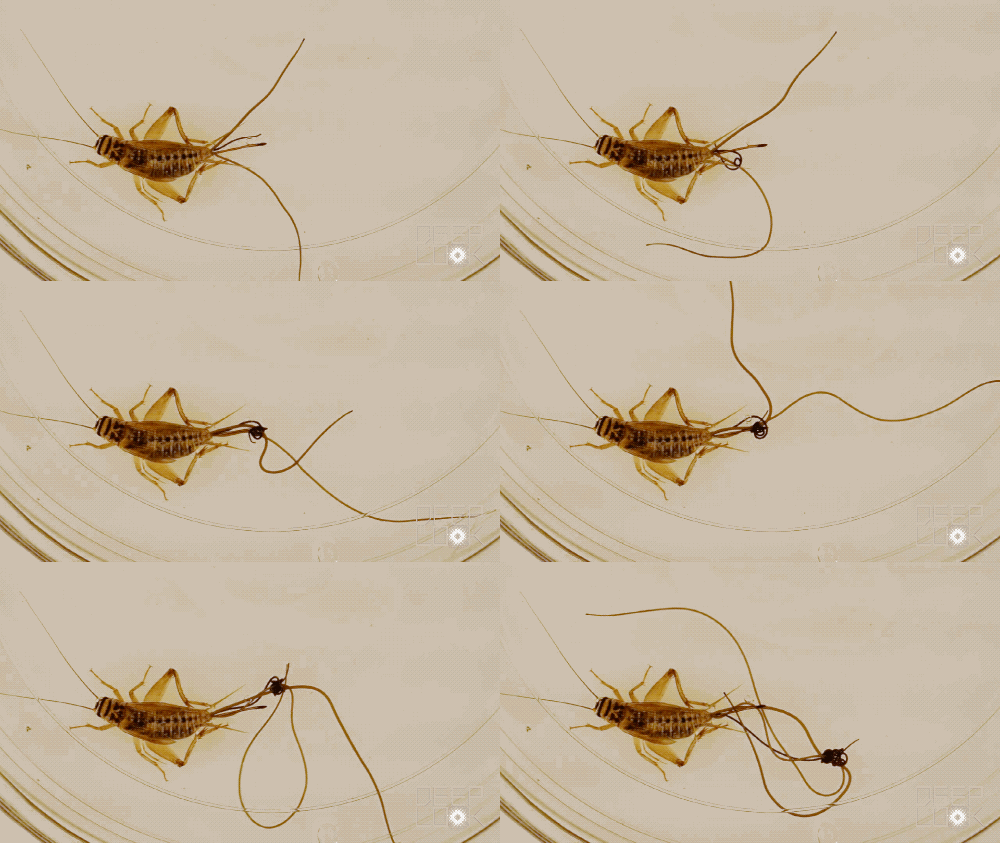

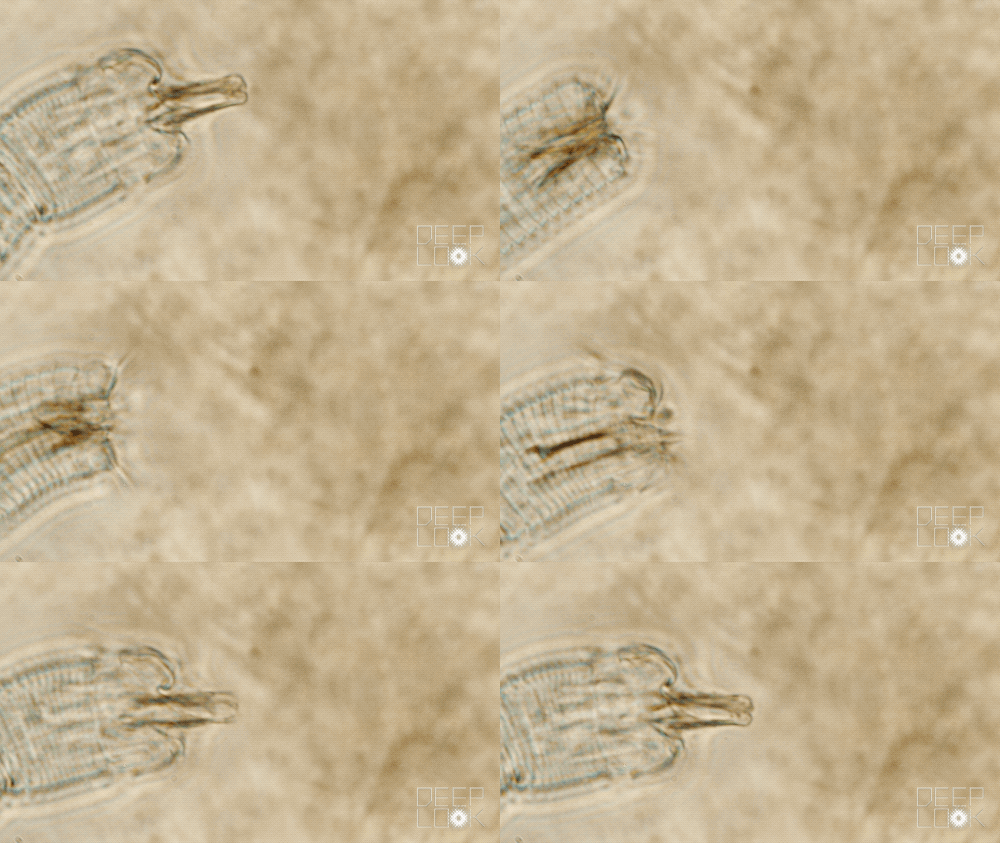

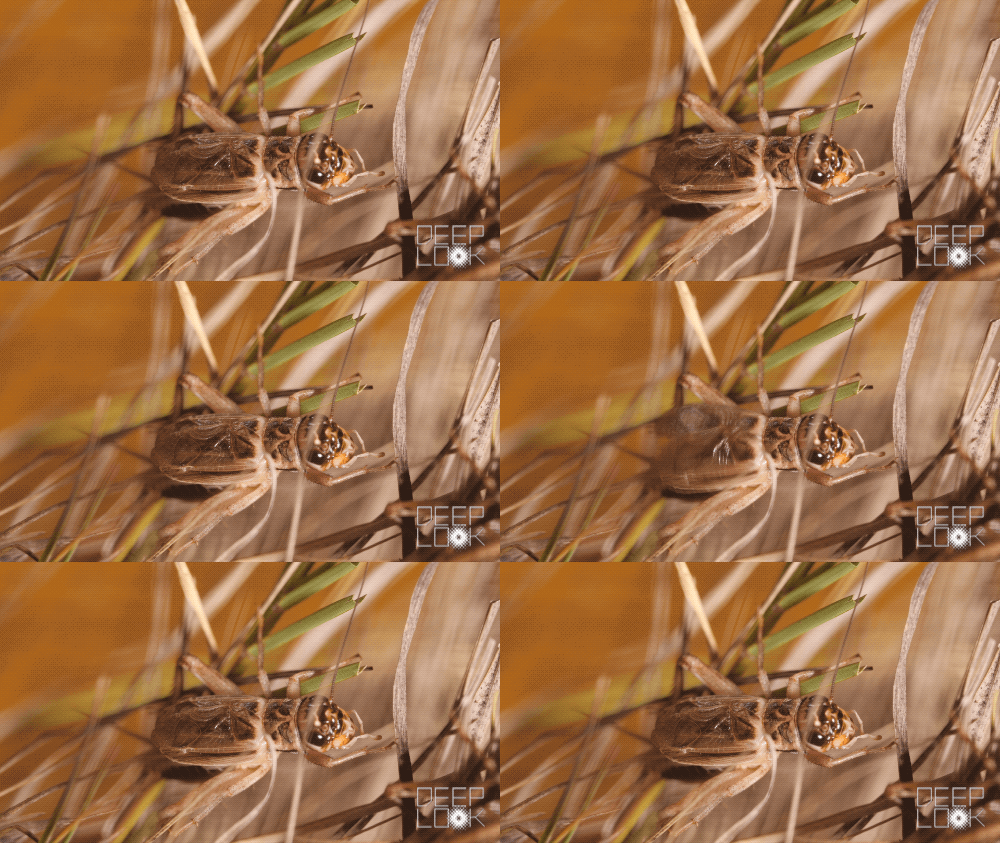
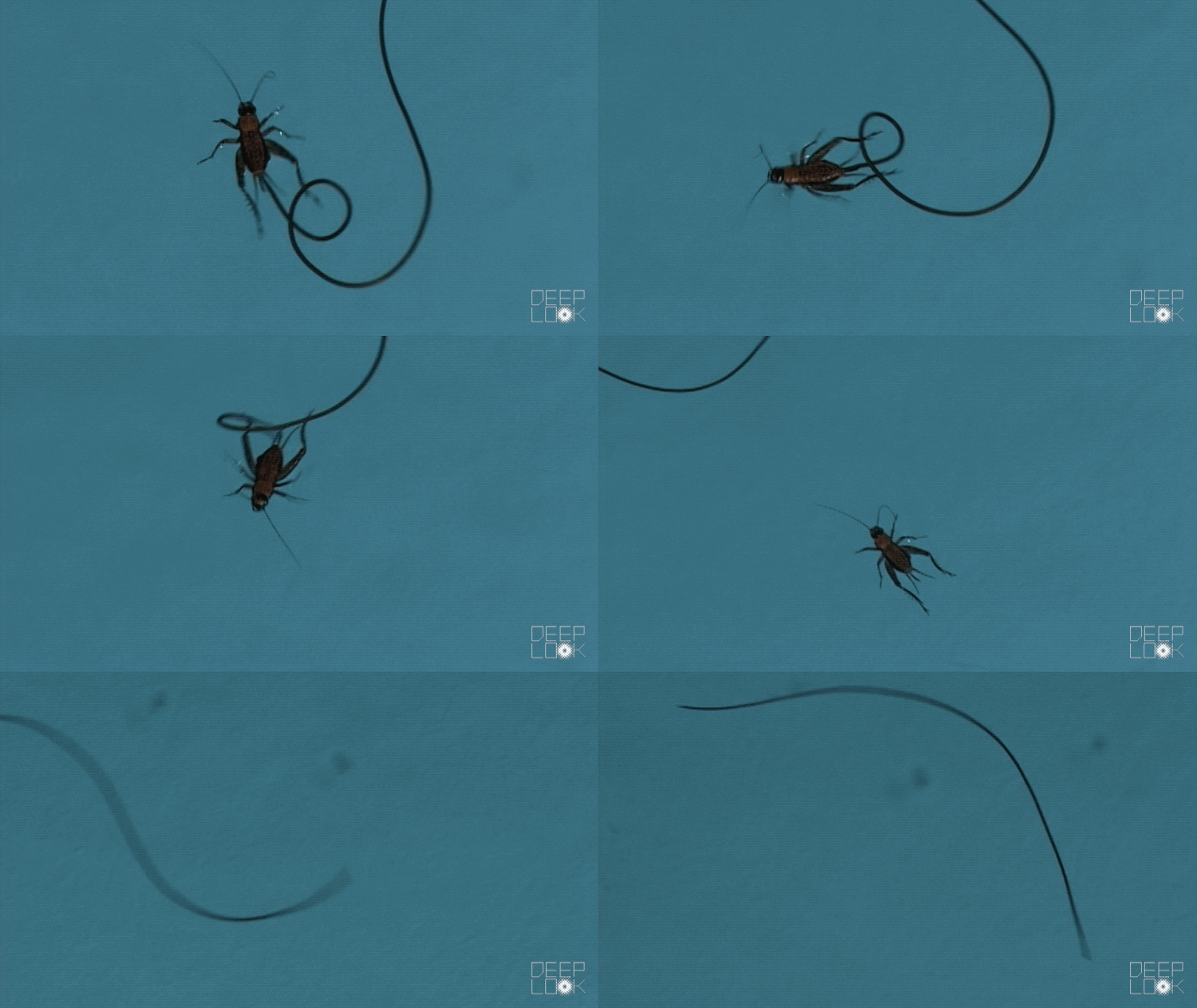
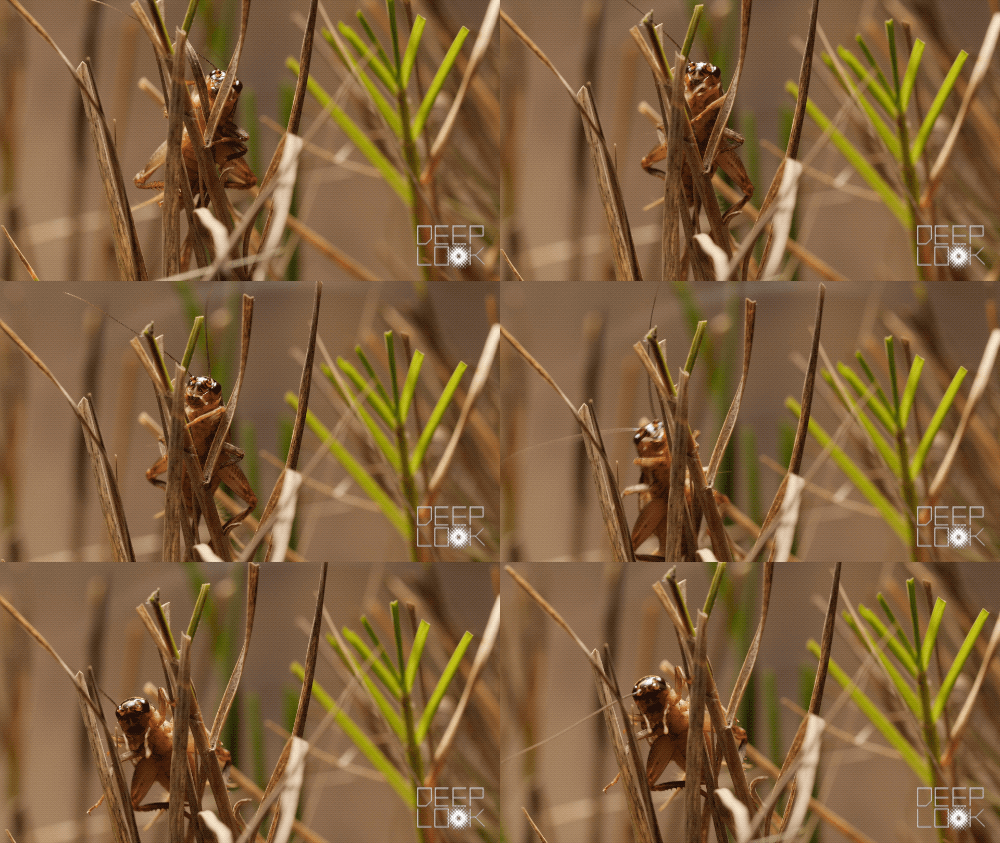
Luckily, they are not a threat to humans -- yet.
Good news: It isn’t interested in infecting or attacking humans.
You didn't watch the vid. What I stated is well-documented.
I don't have to watch it. A parasite cannot make a human being's personality suddenly decide to engage in skydiving. This is sci-fi creep on what that one parasite does to ants or something, and makes them "zombie killers"
Wholly different kingdoms on the animal spectrum there. Don't need to waste my time on your vid. AHHAHA. Silly person.
Reading about them is worse!
https://www.kqed.org/science/1937775/these-hairworms-eat-a-cricket-alive-and-control-its-mind
Luckily, they are not a threat to humans -- yet.
View attachment 301454
You guys are WAY TOO PARANOID!
OMG, killer hair worms that will take over the human race. You guys need to learn how to balance your imagination with reality.