
You are using an out of date browser. It may not display this or other websites correctly.
You should upgrade or use an alternative browser.
You should upgrade or use an alternative browser.
Amazing volatility - Will it last?
- Thread starter Laissez Faire
- Start date

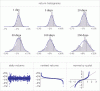
Your assertion that high volatility as defined as 20-40 point moves in the ES with very minor retracements, allowing traders to tightly control risk were not black swan events in 2016 and that high volatility is not a double-edged sword but it is a cash windfall for discretionary day traders are utterly false, you and speedo resorting to ad hominems shows the weakness of your positions.
The question in this thread title was obviously rhetorical. I, like most others know (or should know) that volatility is mean reverting.
1. I never said I'm a discretionary trader, but even for those who are, it goes without saying that days with 10 major swings offer roughly 10 more opportunities per day compared to days with 1 or less major swings.
2. Traders who get chopped up by your so called double-edged volatility will probably not do any better in a low volatility environment where they're chopped up from the market going nowhere.
3. If your execution is good and you have a good system, you shouldn't need more than a 3 point stop for intraday trading. Maximum 5.
If you're consistently being stopped out for 3-5 points, your execution is simply very poor for a DAY TRADER and you should reverse engineer your strategy, because 3-5 points a couple of times per day will make you rich.
Bottom line is that if you don't have a good system or mature market understanding, it doesn't matter if the market is in a high or low volatility environment. In the long run, you'll lose anyway. But for those who've mastered the market and have a good methodology, higher volatility simply mean more opportunity and more money.

The question in this thread title was obviously rhetorical. I, like most others know (or should know) that volatility is mean reverting.
1. I never said I'm a discretionary trader, but even for those who are, it goes without saying that days with 10 major swings offer roughly 10 more opportunities per day compared to days with 1 or less major swings.
2. Traders who get chopped up by your so called double-edged volatility will probably not do any better in a low volatility environment where they're chopped up from the market going nowhere.
3. If your execution is good and you have a good system, you shouldn't need more than a 3 point stop for intraday trading. Maximum 5.
If you're consistently being stopped out for 3-5 points, your execution is simply very poor for a DAY TRADER and you should reverse engineer your strategy, because 3-5 points a couple of times per day will make you rich.
Bottom line is that if you don't have a good system or mature market understanding, it doesn't matter if the market is in a high or low volatility environment. In the long run, you'll lose anyway. But for those who've mastered the market and have a good methodology, higher volatility simply mean more opportunity and more money.
You following Emini ES because you plan someday to trade it or is it just academic to you ?
Also, you monitoring the volatility stats of others (e.g. Oil, Gold, Euro or FX) ?
As a reminder, I do agree with how you're looking at volatility and I posted that earlier chart to show what you saw...volatility has not been the same as usual the past few years. In contrast, its been fluctuating. For example, this year so far...January was huge in volatility in comparison to February and March.
That's why for traders that use strategies that performs well in high volatility conditions...its important to be prepared for months like January whenever they show up because it may be several months before volatility conditions like that return consistently for one month although we usually have 1 - 2 days of good volatility here and there in the low volatility months but not enough to get volatility high overall for the month.
Yet, be careful, just because volatility is low...it can still be good volatility if it moves fast with momentum. For example, if volatility is 14 on the VIX and it moves fast from 14 to 12 in a trend...there will be good volatility in the Emini ES futures. Just the same, if volatility in the VIX is 10 and it trends in the same day to 12 or 13...you're going to see a very strong downtrend day in the Emini ES futures.
Note: I in no way am implying VIX leads the ES nor do I believe a strategy like such is good for those that trade volatility.
The VIX is just an easy quick way of looking at volatility in the Emini ES futures but its no longer as popular as it use to be. Instead, there's other ways such as the way you're looking at volatility although your way is more involved than just taking a quick look at the VIX. Yet, your way can be applied to any trading instruments even trading instruments that don't have something like the VIX and if you're keeping consistent stats...
You can use that information to help with your trade management and risk management.
This is why I strongly believe that any volatility trader or someone that's using a trade method that performs well in high volatility conditions or trending volatility conditions...they should test their trade method of different trading instruments to see which trading instruments performs the best in volatility via their method.
This is very important because there will be days or even months where a trading instrument has its price action consistently in low volatility conditions. On those days, you got to be more focus on discipline, risk management and of course...no over trading just because of being bored.
Last edited:
The question in this thread title was obviously rhetorical. I, like most others know (or should know) that volatility is mean reverting.
1. I never said I'm a discretionary trader, but even for those who are, it goes without saying that days with 10 major swings offer roughly 10 more opportunities per day compared to days with 1 or less major swings.
2. Traders who get chopped up by your so called double-edged volatility will probably not do any better in a low volatility environment where they're chopped up from the market going nowhere.
3. If your execution is good and you have a good system, you shouldn't need more than a 3 point stop for intraday trading. Maximum 5.
If you're consistently being stopped out for 3-5 points, your execution is simply very poor for a DAY TRADER and you should reverse engineer your strategy, because 3-5 points a couple of times per day will make you rich.
Bottom line is that if you don't have a good system or mature market understanding, it doesn't matter if the market is in a high or low volatility environment. In the long run, you'll lose anyway. But for those who've mastered the market and have a good methodology, higher volatility simply mean more opportunity and more money.
I'm not sure how you can make these judgments without being an active trader, why are you writing like you're an authority on ES inatraday price action? I've seen plenty of noise in the ES > 5 points in the past week where scaling in or a 6-8 point stop would be necessary. Have you mastered sim trading recently, is that how you speak with such authority on the ES intraday?
Nice observations and comments as always, wrb. 
I do of course plan to trade it, but when I resumed my studies of the market I decided I wouldn't resume live trading until I had a really, really good methodology and had mastered my market (ES). I've come a long way, so hopefully by end of summer.
Regarding other instruments, I currently don't, although I could. I know one market: ES. It's probably not what you asked or meant, but I'm undecided with regards to the value of intermarket relationships for day trading. For now, I'm focusing on ES strictly.
You following Emini ES because you plan someday to trade it or is it just academic to you ?
Also, you monitoring the volatility stats of others (e.g. Oil, Gold, Euro or FX) ?
I do of course plan to trade it, but when I resumed my studies of the market I decided I wouldn't resume live trading until I had a really, really good methodology and had mastered my market (ES). I've come a long way, so hopefully by end of summer.
Regarding other instruments, I currently don't, although I could. I know one market: ES. It's probably not what you asked or meant, but I'm undecided with regards to the value of intermarket relationships for day trading. For now, I'm focusing on ES strictly.
Nice observations and comments as always, wrb.
I do of course plan to trade it, but when I resumed my studies of the market I decided I wouldn't resume live trading until I had a really, really good methodology and had mastered my market (ES). I've come a long way, so hopefully by end of summer.
Regarding other instruments, I currently don't, although I could. I know one market: ES. It's probably not what you asked or meant, but I'm undecided with regards to the value of intermarket relationships for day trading. For now, I'm focusing on ES strictly.
Unfortunately one can't say they have mastered any particular market until they have scaled up their strategy and displayed consistent profitability in over 1 straight year of live trading. Of the 5% who are not losing money it would be fair to guess that only a very small fraction of that 5% can honestly say they have mastered any market.
Thanks to Q3D for reminding me that time and energy spent posting on ET is mostly wasted.
Bye.
Bye.

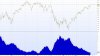
Need filter for volatility if short term trading , dynamic volatility needs a model to ascertain a dynamic position size and dynamic stop loss to keep you in the game , static systems will kill you in this volatile volatility market we currently live in ... many ways of dealing with this , personally i love fast markets
(A static stop loss thats effective today would have got you whipped on almost every trade this year up to mid february ) markets are dynamic and as such so must systems be .....
Last edited:
Since we reached the pre-crash highs from Dec 29/30, wouldn't it be advisable to be back in defense mode? I found this post on StockTwits and it shows how the uptrend since February 11 is about to reverse: http://blog.furiousfutures.com/why-you-should-be-prepared-for-the-coming-downtrend/ If you look at the troughs of that uptrend a break could very well happen.

Seems like April won't be as great as March was.