[Amazing] Cave paintings: Up to 40,000 years Old

[Amazing] Cave paintings: Up to 40,000 years Old

- Many with colours!
- Most inside dark caves!
- In many places!

http://ngm.nationalgeographic.com/2015/01/first-artists/walter-text

altamira-cave-paintings-615.jpg


Wikipedia:

375px-AltamiraBison.jpg


330px-Bestias11.JPG


330px-Laas_Geel.jpg


330px-Bhimbetka_rock_paintng1.jpg


330px-2009_07_09_camino_cielo_paradise_137.jpg


330px-GuaTewet_tree_of_life-LHFage.jpg


Cave painting

https://en.wikipedia.org/wiki/Cave_painting

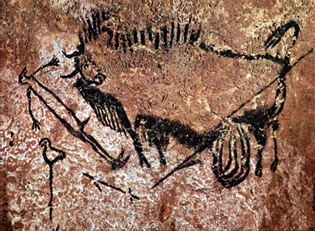
Cave paintings (also known as "parietal art") are painted drawings on cave walls or ceilings, mainly of prehistoric origin, to some 40,000 years ago (around 38,000 BCE) in Eurasia. The exact purpose of the Paleolithic cave paintings is not known. Evidence suggests that they were not merely decorations of living areas since the caves in which they have been found do not have signs of ongoing habitation. They are also often located in areas of caves that are not easily accessible. Some theories hold that cave paintings may have been a way of communicating with others, while other theories ascribe a religious or ceremonial purpose to them. The paintings are remarkably similar around the world, with animals being common subjects that give the most impressive images. Humans mainly appear as images of hands, mostly hand stencils made by blowing pigment on a hand held to the wall.

The earliest known cave paintings/drawings of animals are at least 35,000 years old and are found in Pettakere cave on the island of Sulawesi in Indonesia, according to datings announced in 2014. Previously it was believed that the earliest paintings were in Europe.[1] The earliest figurative paintings in Europe date back to the Aurignacian period, approximately 30,000 to 32,000 years ago, and are found in the Chauvet Cave in France, and in the Coliboaia Cave in Romania.[2] The earliest non-figurative rock art dates back to approximately 40,000 years ago, the date given both to a disk in the El Castillo cave in Cantabria, Spain and a hand stencil in Sulawesi. There are similar later paintings in Africa, Australia and South America, continuing until recent times in some places, though there is a worldwide tendency for open air rock art to succeed paintings deep in caves.

https://en.wikipedia.org/wiki/Lascaux
330px-Lascaux_painting.jpg


300px-Lascaux%2C_Megaloceros.jpg


Lascaux_01.jpg


Also Lascaux:

lascauxmain_UbzfS_1200x0.jpg
 
Last edited:
Those are truly incredible. It's haunting to think about it - the people who made these paintings have long turned to dust, but their mark on the world remains.
 
Those are truly incredible. It's haunting to think about it - the people who made these paintings have long turned to dust, but their mark on the world remains.

Seems they are trying to show off their high technology of their era that they had found. Cave paintings as well as pyramids.

- Painting inside deep dark caves! They had to likely use fire for illumination. Perhaps fire should be good for drying the colour paints they used.

- They seemed knowing their colour paints can be sustainable and long-lasting while encountering environmental changes.

- They also used some painting tools for drawing and spraying paints. High tech - When considering tens of thousand years ago!

- Similar paintings existed in many places across several continents (that could be interconnected as one whole large continent thousands of thousand years ago?). How did they learn from each other through what kind of communications for transferring their painting technologies? Or they invented some very similar painting technologies by themselves individually for each place? Just like pyramids in many places!?

???
 
It is now appears that civilization is at least twice as old as once believed. There is evidence that there was at least one civilization before the end of the last ice age and that what ever brought an end to the ice age also destroyed that civilization. Ocean levels rose 400 feet and in quick bursts. The story of Atlantis flooding according to Plato falls exactly at the same time modern scientists say the last ice age ended. According to the Greenland ice core samples the last ice age ended virtually overnight, something bad happened causing a worldwide catastrophe. The survivors of this early civilization spread out to South America and Egypt eventually stating over. See Graham Hancock (Finger Prints of the Gods) and Robert Shcoch on you tube.
 
Last edited:
https://en.wikipedia.org/wiki/Fingerprints_of_the_Gods

https://en.wikipedia.org/wiki/Robert_M._Schoch

450px-Plates_tect2_en.svg.png

https://en.wikipedia.org/wiki/Plate_tectonics

Also

Rand Flem-Ath: Atlantis Under the Ice / Atlantis Blueprint - 04-13-13 ...
Video for When the Sky Fell: in Search of Atlantis
▶ 1:00:47
Apr 19, 2013 - Uploaded by Where Did the Road Go? Radio
His first book, When the Sky Fell brought the idea to the public eye, and his follow-up, The Atlantis Blueprint ...

when_the_sky_fell-title.jpg
The Flem-Aths make a strong case for Lesser Antarctica being the site of Atlantis. Like the world being turned upside down by disaster, looking at the world with Antarctica on top is a key concept of changing our perceptions of geography and history. It was the only interior title page I considered.

when_the_sky_fell-chapter.jpg
 
Seems they are trying to show off their high technology of their era that they had found. Cave paintings as well as pyramids.

- Painting inside deep dark caves! They had to likely use fire for illumination. Perhaps fire should be good for drying the colour paints they used.

- They seemed knowing their colour paints can be sustainable and long-lasting while encountering environmental changes.

- They also used some painting tools for drawing and spraying paints. High tech - When considering tens of thousand years ago!

- Similar paintings existed in many places across several continents (that could be interconnected as one whole large continent thousands of thousand years ago?). How did they learn from each other through what kind of communications for transferring their painting technologies? Or they invented some very similar painting technologies by themselves individually for each place? Just like pyramids in many places!?

???

Regarding your last question, I think the latter is a more probable explanation, i.e. they came up with these techniques independently (of course, one shouldn't discount the possibility of various tribes/people migrating in search of food over vast distances, we do know that sort of thing occurred pretty regularly).
Speaking of the pyramids, I, personally, don't think that the existence of pyramids in various places all over the world is necessary proof of communication between those places (for example, South America and Egypt). People built pyramids simply because it's the most obviously stable and practical structure they could could come up with that was possible to build with their level of technological development.
 
Regarding your last question, I think the latter is a more probable explanation, i.e. they came up with these techniques independently (of course, one shouldn't discount the possibility of various tribes/people migrating in search of food over vast distances, we do know that sort of thing occurred pretty regularly).
Speaking of the pyramids, I, personally, don't think that the existence of pyramids in various places all over the world is necessary proof of communication between those places (for example, South America and Egypt). People built pyramids simply because it's the most obviously stable and practical structure they could could come up with that was possible to build with their level of technological development.


As I have been many times thinking there must be a way for communications in the old prehistoric age, now I suddenly realised that in case of a wise-man tried to pick up an egg of a flying Dinosaur as his pet to watch it growing up at his home/cave.

With a flying Dinosaur as his pet, it's possible to go/fly to anywhere.

That means the scenes in movies can be true, a man flying with flying Dinosaur.

This could be a very popular/common way of transportation/communication for many people in the old prehistoric age.

LOL

https://en.wikipedia.org/wiki/Dinosaur

Dino_bird_h.jpg
 
For Egyptian Pyramids, it seems hard to find their original construction method/technology, yet.

http://www.livescience.com/32616-how-were-the-egyptian-pyramids-built-.html

aHR0cDovL3d3dy5saXZlc2NpZW5jZS5jb20vaW1hZ2VzL2kvMDAwLzA4NC8xMDEvb3JpZ2luYWwvZ2l6YS1weXJhbWlkcy5qcGc=

The pyramids of Giza were built using techniques that took centuries to develop.
Credit: WitR / Shutterstock.com


https://en.wikipedia.org/wiki/Egyptian_pyramid_construction_techniques

330px-Great_Pyramid_of_Giza_edge.jpg
Average core blocks of the Great Pyramid weigh about 1.5 tons each, and the granite blocks used to roof the burial chambers are estimated to weigh up to 80 tons each.

The logistics of construction at the Giza site are staggering when you think that the ancient Egyptians had no pulleys, no wheels, and no iron tools. Yet, the dimensions of the pyramid are extremely accurate and the site was leveled within a fraction of an inch over the entire 13.1-acre base. This is comparable to the accuracy possible with modern construction methods and laser leveling. That's astounding. With their 'rudimentary tools,' the pyramid builders of ancient Egypt were about as accurate as we are today with 20th-century technology.[51]
 
Last edited:
There was a documentary film I watched about the possibility of irrigation system supplying/feeding water for drinking, planting and gardening in living homes located at the top of a high mountain inside a desert.

After 'pumping' water 'automatically and continuously' to the mountain top, the water then can be used to flow around the whole mountain with small water tracks system.

They guessed the automatic continuous pumping process should be carried out by manual labour, possibly by a large size rotation device/construction driven using human foot.

The film was an attempt (or just guess) of reconstruction how people could possibly carry out this task.

I recall there was no convincing or reliable explanation/conclusion from the film.

Moving water from a lower-level storage tank to a higher-level storage tank is definitely possible, like the following:

Ancient Egyptian irrigation methods
594036972ebd602ca1a643232cd36338.jpg


http://www.waterencyclopedia.com/Po-Re/Pumps-Traditional.html
wsci_04_img0458.jpg
Human-powered devices traditionally were used to move water short distances and up low grades. This irrigation wheel in Japan was still being used in 1958 to irrigate a small plot.
 
Last edited:
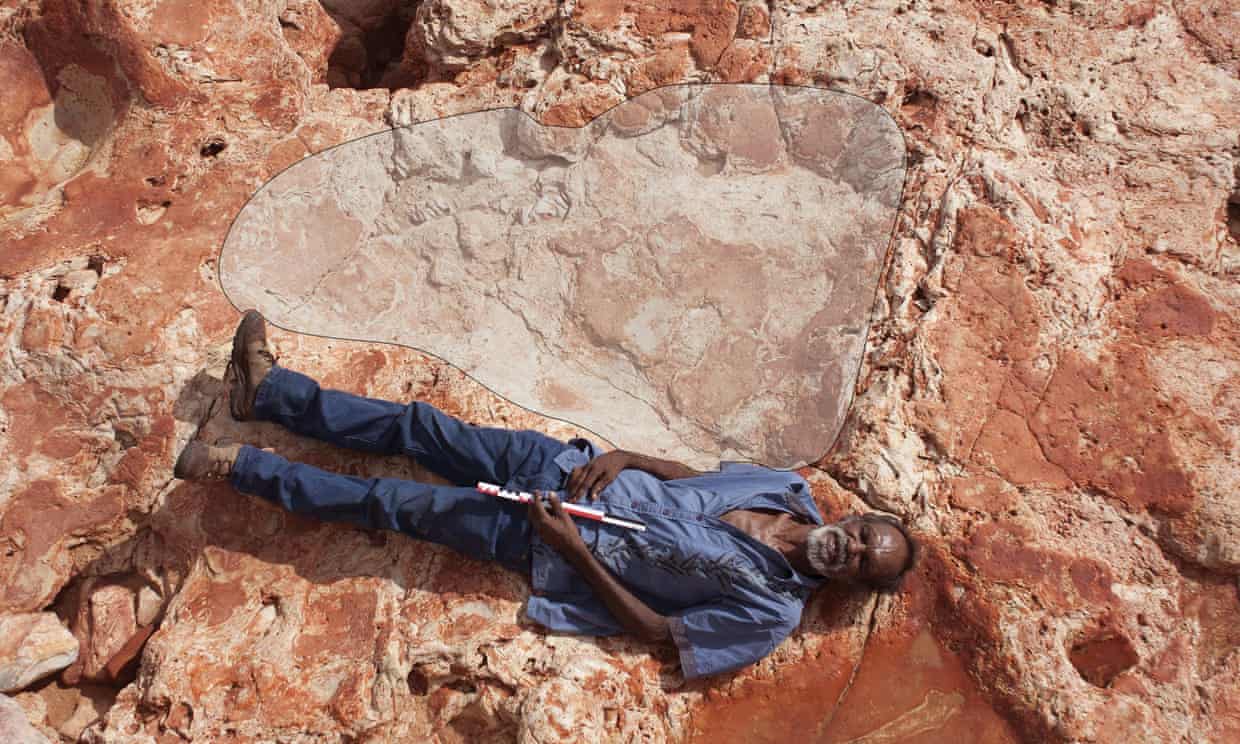
World's largest dinosaur footprints discovered in Western Australia

Newly-discovered prints left by gigantic herbivores are part of a rich collection of tracks belonging to an estimated 21 different types of dinosaur


Hannah Devlin Science correspondent

Tuesday 28 March 2017

https://www.theguardian.com/science...ur-footprints-discovered-in-western-australia

2346.jpg
The prints indicate enormous animals that were probably around 5.3 to 5.5 metres at the hip. Photograph: Damian Kelly/University of Queensland/EPA


4395.jpg
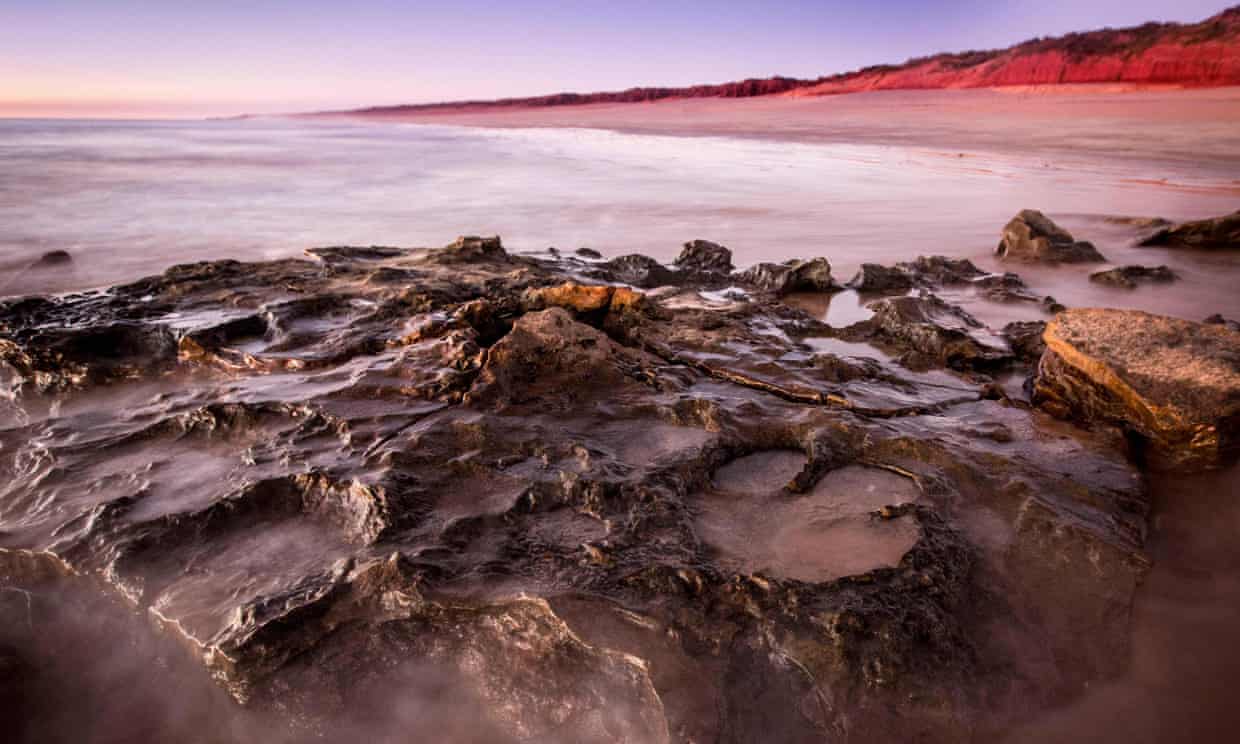
The prints, found along the Kimberley shoreline, belong to about 21 different types of dinosaur, and are thought to be the most diverse collection of prints in the world. Photograph: Damian Kelly/AFP/University of Queensland/Getty Images
 
Back
Top