A Life Devoted to God

According to what I heard on NPR this weekend, psilocybin is the most efficient way by far to find god. All but one of a group taking psilocybin found god, whereas none in a placebo group did. I think you folks struggling with the god concept should spend more time in cow pastures.

https://en.wikipedia.org/wiki/Psilocybin

https://en.wikipedia.org/wiki/Nature

True! Staying in the nature and surrounding by a variety of God's creatures would easily find God closer!

https://en.wikipedia.org/wiki/Origin_of_life

Hopetoun_falls.jpg


Ocean_from_Leblon.jpg


Hawaii_Creek.jpg


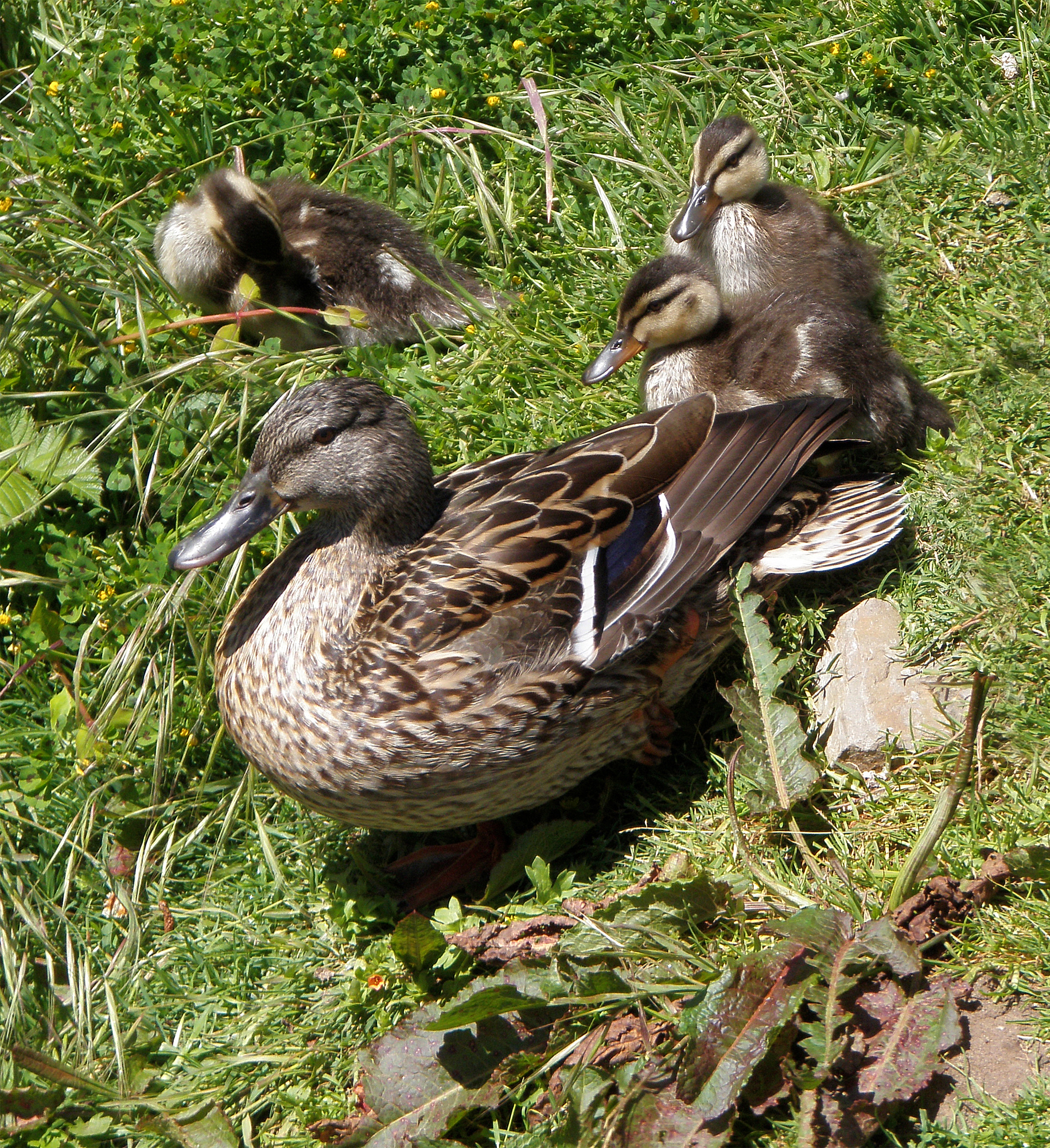
Malards_in_Golden_Gate_Park.jpg


504px-Pinguiculagrandiflora1web.jpg
 
Last edited:
Beautiful photos. I have wondered if some of the biblical myths that were told in many variations throughout antiquity, and then finally became less variable when they were disseminated in written form, might have had their origins in hallucinogens. Certainly that might explain visions such as Joseph Smith's. Or perhaps it was nothing more than natural insanity arising from abnormal brain chemistry as occurs in schizophrenia. I would think it likely that much of the supernatural so commonly a part of the Christian religion today has its origin in schizophrenia.
 
Ever wonder why none of the gods have ever given a formula or equation or something to nudge mankind forward?

No "god" has ever proved himself to be a god.
 
Last edited:
Ever wonder why none of the gods have ever given a formula or equation or something to nudge mankind forward?

Yes, He actually Did! Numerous times!

Q
https://en.wikipedia.org/wiki/Three_wishes_joke

Three men are stranded on a desert island, when a bottle washes up on the shore. When they uncork the bottle, a genie appears and offers three wishes. The first wishes to be taken to Paris. The genie snaps his fingers, and the man suddenly finds himself standing in front of the Eiffel Tower. The second man wishes that he were in Hollywood, and with a snap of the genie's fingers, he finds himself on a Tinseltown movie set. The third man, now alone on the island, looks around and says, "I wish my friends were back."
UQ
 
Last edited:
Beautiful photos. I have wondered if some of the biblical myths that were told in many variations throughout antiquity, and then finally became less variable when they were disseminated in written form, might have had their origins in hallucinogens. Certainly that might explain visions such as Joseph Smith's. Or perhaps it was nothing more than natural insanity arising from abnormal brain chemistry as occurs in schizophrenia. I would think it likely that much of the supernatural so commonly a part of the Christian religion today has its origin in schizophrenia.

I think the holistic philosophy about human spirit was developed in quite a good shape during Stoics' time!

Rationality was heavily promoted!

Meditation was also practiced for peaceful mind!
http://blogs.exeter.ac.uk/stoicismtoday/2013/11/24/audio-recordings-for-stoic-week-2014/
http://blogs.exeter.ac.uk/stoicismtoday/category/stoicism-buddhismmindfulness/

Perhaps back to the future could provide a better answer to humankind!

http://www.elitetrader.com/et/index.php?threads/is-god-mute.292671/page-22#post-4177347

Q https://en.wikipedia.org/wiki/Stoics

Physics and cosmology

According to the Stoics, the universe is a material, reasoning substance, known as God or Nature, which the Stoics divided into two classes, the active and the passive. The passive substance is matter, which "lies sluggish, a substance ready for any use, but sure to remain unemployed if no one sets it in motion."[17] The active substance, which can be called Fate, or Universal Reason (Logos), is an intelligent aether or primordial fire, which acts on the passive matter:

"The universe itself is god and the universal outpouring of its soul; it is this same world's guiding principle, operating in mind and reason, together with the common nature of things and the totality that embraces all existence; then the foreordained might and necessity of the future; then fire and the principle of aether; then those elements whose natural state is one of flux and transition, such as water, earth, and air; then the sun, the moon, the stars; and the universal existence in which all things are contained.
—Chrysippus, in Cicero, De Natura Deorum, i.39"

Everything is subject to the laws of Fate, for the Universe acts according to its own nature, and the nature of the passive matter it governs. The souls of people and animals are emanations from this primordial fire, and are, likewise, subject to Fate:

"Constantly regard the universe as one living being, having one substance and one soul; and observe how all things have reference to one perception, the perception of this one living being; and how all things act with one movement; and how all things are the cooperating causes of all things that exist; observe too the continuous spinning of the thread and the structure of the web.
—Marcus Aurelius, Meditations, iv. 40"

Individual souls are perishable by nature, and can be "transmuted and diffused, assuming a fiery nature by being received into the Seminal Reason (logos spermatikos) of the Universe."[18]

Since right Reason is the foundation of both humanity and the universe, it follows that the goal of life is to live according to Reason, that is, to live a life according to Nature.
...
Christianity

The major difference between the two philosophies (social and spiritual) is Stoicism's pantheism, in which God is never fully transcendent but always immanent. God as the world-creating entity is personalized in Christian thought, but Stoicism equates God with the totality of the universe, which was deeply contrary to Christianity. The only incarnation in Stoicism is that each person has part of the logos within. Stoicism, unlike Christianity, does not posit a beginning or end to the universe.[33]

Stoicism was later regarded by the Fathers of the Church as a "pagan philosophy";[3][4] nonetheless, some of the central philosophical concepts of Stoicism were employed by the early Christian writers. Examples include the terms "logos", "virtue", "Spirit", and "conscience".[33] But the parallels go well beyond the sharing and borrowing of terminology. Both Stoicism and Christianity assert an inner freedom in the face of the external world, a belief in human kinship with Nature or God, a sense of the innate depravity—or "persistent evil"—of humankind,[33] and the futility and temporarity of worldly possessions and attachments. Both encourage Ascesis with respect to the passions and inferior emotions such as lust, envy and anger, so that the higher possibilities of one's humanity can be awakened and developed.

Stoic writings such as the Meditations of Marcus Aurelius have been highly regarded by many Christians throughout the centuries. The Stoic ideal of dispassion is accepted to this day as the perfect moral state by the Eastern Orthodox Church. Saint Ambrose of Milan was known for applying Stoic philosophy to his theology.[citation needed]

Influences

In his letters, St. Paul reflected heavily from his knowledge of Stoic philosophy, using Stoic terms and metaphors to assist his new Gentile converts in their understanding of the revealed word of God.[34]

Stoic influence can also be seen in the works of St. Ambrose, Marcus Minucius Felix, and Tertullian.[35]
UQ

 
Ever wonder why none of the gods have ever given a formula or equation or something to nudge mankind forward?

No "god" has ever proved himself to be a god.
Here is one from the Tathagata.....SN 12.44: The world.
The Blessed One said:
"And what is the origination of the world? Dependent on the eye & forms there arises eye-consciousness. The meeting of the three is contact. From contact as a requisite condition comes feeling. From feeling as a requisite condition comes craving. From craving as a requisite condition comes clinging/sustenance. From clinging/sustenance as a requisite condition comes becoming. From becoming as a requisite condition comes birth. From birth as a requisite condition, then aging & death, sorrow, lamentation, pain, distress, & despair come into play. This is the origination of the world.

Dependent on the ear & sounds there arises ear-consciousness....

Dependent on the nose & aromas there arises nose-consciousness....

Dependent on the tongue & flavors there arises tongue-consciousness....

Dependent on the body & tactile sensations there arises body-consciousness....

Dependent on the intellect & mental qualities there arises intellect-consciousness...."
"And what is the ending of the world? Dependent on the eye & forms there arises eye-consciousness. The meeting of the three is contact. From contact as a requisite condition comes feeling. From feeling as a requisite condition comes craving. Now, from the remainderless cessation & fading away of that very craving comes the cessation of clinging/sustenance. From the cessation of clinging/sustenance comes the cessation of becoming. From the cessation of becoming comes the cessation of birth. From the cessation of birth, then aging & death, sorrow, lamentation, pain, distress, & despair all cease. Such is the cessation of this entire mass of stress & suffering. This is the ending of the world.

Dependent on the ear & sounds there arises ear-consciousness....

Dependent on the nose & aromas there arises nose-consciousness....

Dependent on the tongue & flavors there arises tongue-consciousness....

Dependent on the body & tactile sensations there arises body-consciousness....

Dependent on the intellect & mental qualities there arises intellect-consciousness...."
 
what you state must stem from a very incomplete or low level of understanding or purposeful deceit.

for instance in Christianity, Paul tells us that we are saved by our trust in God keeping his word (my understanding of faith). I have heard that it stated that it is really God's faith that saves us... not our own works and I think that is a good summary of what the point of the new testament is telling us. We are saved because God is faithful to his word. We just have to understand that and ask for it.

We do good works because we have the spirit of God within us making better than we were without Him. In practice, over time, our consciences (or our spirit) does break us down and convict us if we are not on the right path. We know we should be doing the right thing and we can only fight it for so long. You don't need a relationship with God to understand that...


In my view the human spirit is diminished overall by the dogma and faith which claims divine endorsement.
What is it that's so unpalatable to the religious about doing what's right for its own sake, without the need to be commanded.
 
Last edited:
Beautiful photos. I have wondered if some of the biblical myths that were told in many variations throughout antiquity, and then finally became less variable when they were disseminated in written form, might have had their origins in hallucinogens. Certainly that might explain visions such as Joseph Smith's. Or perhaps it was nothing more than natural insanity arising from abnormal brain chemistry as occurs in schizophrenia. I would think it likely that much of the supernatural so commonly a part of the Christian religion today has its origin in schizophrenia.

I guess:Education and poverty were two major issues, historically!

Religious Faith can also be a powerful mass destruction weapons to kill humans on a massive scale in human history!

" https://en.wikipedia.org/wiki/Boxer_Rebellion
Casualties and losses
2,500 foreign soldiers 2,000 Imperial troops[3]
Unknown number of Boxers
32,000 Chinese Christians plus 200 missionaries killed by Boxers in Northern China[4]
100,000 civilians killed by Boxers in total[5]
5,000 civilians killed by foreign soldiers in total "

Q
https://en.wikipedia.org/wiki/Chinese_spirit_possession

Chinese spirit possession is the paranormal/supernatural and sorcerical event in which, allegedly, when Chinese spirits, or gods such as Jade Emperor, Xi Wangmu, Sun Wukong, Dragon King, Nezha, Guanyin, Guan Yu, or other disincarnate or extraterrestrial entities take control of a human body, resulting in noticeable changes in body functions and behaviour. It was alleged that once the spirit possession take place, the practitioners would be granted supernatural powers like Firewalking, handling red-hot steel rods without getting burnt, and withstanding sharp knife attacks without being cut open. The most famous Chinese spirit possession practitioners were to be found in Boxer Rebellion in the 1900s, when boxers claimed to be invulnerable to the cut of a sharp knife, gunshots, and even cannon fire.

Contents

1 History
2 Spirit possession ritual
2.1 Mystical incantations
3 Shaman
4 Paranormal claims
5 See also
6 References

History

The State of Qi had shamans who claimed to be possessed by spirits, and they were criticized as heterodox by Confucians. These spirit possession movements often led peasant rebellions during Imperial Chinese history. The Boxer Rebellion was one of many peasant movements that had shamans who claimed to be possessed by spirits.[1] For the Boxers during the Boxer rebellion, spirit possession was used for protective purposes.[2]


Spirit possession ritual

Larry Clinton Thompson, in his book "William Scott Ament and the Boxer Rebellion: Heroism, Hubris and the ”Ideal Missionary”, has a description of the spirit possession practiced by Chinese boxers:

... whirling and twirling of swords, violent prostrations, and chanting incantations to Taoist and Buddhist spirits. When the spirit possession had been achieved, the boxers would obtain invulnerability and superhuman skills with swords and lance.

[3]

Mystical incantations

(1) Incantation to invite the coming of spirits.
(2) Incantation to provide protection against spear and fire.
(3) Incantation to provide protection against any outside attack.

Spirit possession practitioners claimed that once these incantations were chanted, Chinese spirits would descend to offer protection, so that cannon fire or gunshots would not harm the human body.[4]

Shaman

In Taiwan, shamans who claim to be possessed by ancient spirits still exist. They are known as Jitong. Many people still ask them for advice. Among the "spirits", the Shamans claim they can channel are Chinese historical figures such as Ji Gong, Santaizi, and other spirits, including non-Chinese ones, like Jesus.[5][6]

Paranormal claims

(1) Thunder bolts in the palm (Chinese:五雷掌).
(2) Climbing ladder made of sharp knives (Chinese:上刀山)
(3) Invulnerable to gunshots, cannon fire, and knife attack.
(4) Ability to command divine spirit warriors.


UQ
 
Last edited:
Back
Top