If I keep on losing money year after year, that might be my distant future.

You are using an out of date browser. It may not display this or other websites correctly.
You should upgrade or use an alternative browser.
You should upgrade or use an alternative browser.
29 turning 30. 11 years of trading. First profiting year Journal 1
- Thread starter wabu27
- Start date
8/17 -$101
Well that pissed me off. Woke up late. Missed the morning rapid rise. Waited for an opportunity. Made money with Tesla. $800. Thought about calling it a day but I thought I saw another opportunity. Trade just did not go my way. But it seemed like someone was not letting Tesla fall at the end and just forced it to steadily go up. Lost all of my gains and some more.
AHARHARARFKAOPRGKAPORKG
Tomorrow I'll wake up early and make sure omfg Tesla dropping a little now. That was bad of me. Man I really got to watch myself going all in. Especially later in the day since I feel like I'm 50/50 in the second half of the day.
Well that pissed me off. Woke up late. Missed the morning rapid rise. Waited for an opportunity. Made money with Tesla. $800. Thought about calling it a day but I thought I saw another opportunity. Trade just did not go my way. But it seemed like someone was not letting Tesla fall at the end and just forced it to steadily go up. Lost all of my gains and some more.
AHARHARARFKAOPRGKAPORKG
Tomorrow I'll wake up early and make sure omfg Tesla dropping a little now. That was bad of me. Man I really got to watch myself going all in. Especially later in the day since I feel like I'm 50/50 in the second half of the day.

.8/17 -$101
Well that pissed me off. Woke up late. Missed the morning rapid rise. Waited for an opportunity. Made money with Tesla. $800. Thought about calling it a day but I thought I saw another opportunity. Trade just did not go my way. But it seemed like someone was not letting Tesla fall at the end and just forced it to steadily go up. Lost all of my gains and some more.
AHARHARARFKAOPRGKAPORKG
Tomorrow I'll wake up early and make sure omfg Tesla dropping a little now. That was bad of me. Man I really got to watch myself going all in. Especially later in the day since I feel like I'm 50/50 in the second half of the day.
What chart timeframe are you using now?
Your post made me look at MRNA and TSLA on the 5 minute charts. Very different paths for them today...

...Man I really got to watch myself going all in. Especially later in the day since I feel like I'm 50/50 in the second half of the day.
If you keep going all-in, eventually the 50/50 coin flip is going to come up tails 5 times in a row, when you chose heads. That would be an unpleasant outcome. I.E. Account wipe.
@Slope Trader I use 1 min and 2 min when I enter/exit but use 5,15,30,and 1hr chart as reference to time my entry/exits. For example, if the chart looks like it could go up with 5,15 chart than I may choose go in. However, if there is a sudden rise and it looks like in 30/1hr chart that it would go back down, I would just take my small profit and exit.
@Overnight the 50/50 chance is only during second half of the day. For the first half, I would say my winning percentage is 80-90%.
@Overnight the 50/50 chance is only during second half of the day. For the first half, I would say my winning percentage is 80-90%.
It sounds like what you are saying is that your confidence level can somehow predict what will happen next. Its as if when the trade doesn't go in your direction, it means that you were somehow wrong about entering.
I try to predict what will happen next, and if I feel like my predictions have a high probability of occurring, than my confidence level goes up. So what you said is backwards. And if the trade doesn't go the way I'd hoped, it's obvious my prediction was wrong and I should not have tried to make that particular trade (enter).
When you say you don't go in if you're unsure, unsure of what? unsure of what will happen in the next couple minutes Your ability to read the market? yea Your ability to predict the future direction? yea Perhaps what you mean to say is that if you only did more work and study, you would be able to predict what the market will do next with even more accuracy?
Not really. My personal thought on markets is it is everchanging and studying may help, but it may also put your mind in a fixed box that's outdated. You need to grind each day, each moment, and "feel" the market. Watching the same chart every day for weeks will give you a sense of the patterns it forms.
Your confidence level should only be about knowing what to do and when, and the confidence is in your ability to execute. You are literally trying to predict a future event that hasn't happened yet and you have your self worth somehow tied up in your ability to accurately predict this. This is nuts. Isn't that what daytrading is? Trying to predict what will happen in the next couple minutes based on the patterns it is currently showing? I'm confident I can read a chart. Not all charts - only charts I can read.
You say its tiring to watch the NG trade go sideways. You should have a plan for that. Plan is not trade since I don't see any entry points If it went down instead of up, there should be a plan for that too. Plan is look for opportunities and take it if I see it. I don't care if a chart goes up or down. Even if the plan is to hold and average in as it goes against you, fine, but it shouldn't come as a surprise or cause you pain. I thought you shouldn't ever average losses? I still do it though.. I really shouldn't Imagine how good it would feel if you just did what you had planned to do. No kidding.. staying disciplined is the most difficult thing to master
I think your stress is coming from...
a) trading too large for your account since you clearly want to hold a trade that is working against you (which is fine if you have a plan for that) True. My plan is hold until the chart tells me my predictions were wrong. In which case, I exit.
b) not knowing fully well what you will do when your main thesis doesn't work out (ie. take a small loss, hold and average in, reverse direction Well I know I should just exit when my predictions don't work out. It's sticking with that discipline that's difficult
c) assuming that your confidence level can somehow predict what will happen next. I predict first and if I feel like it's likely I'm right, my confidence level goes up. Sure, there is an element of probability and we are entering trades assuming that we have a better probability of our trade making money vs. losing money. But by saying that you don't go in if you're unsure, it seems to imply that when you do go in, you are sure, and then when it doesn't do what you thought it would, you can't believe that you could be wrong. Of course I go in when I feel "sure" and I don't go in when I'm unsure. I'm always open to the thought that I'll be wrong. I believe the ability to change your perspective in an instant, over and over again, in a split second is an essential trait required for all great traders and anyone that wants to make a living daytrading
Its a bad framework. Well it worked wonders for me on virtual trading. Hoping to turn that into reality right now with real trading. Been losing my money for 11 years too many. Only time will tell if my framework is bad or if it's actually golden and just needed some ripening
Sorry for getting back to you so late. I was so sad the week you asked me the questions that I just didn't want to get back to anyone.
Wabu,
Sent you a PM.
Sent you a PM.
8/19 +$1,343
Balance: $37,675
Made money with MRNA and AMC today. AMC started a lot lower so waited until it looked like it wouldn't go any lower and tried to play the bounce. Same with MRNA. Almost lost half of my gains because I went big on MRNA and it didn't bounce the way I'd hoped and instead went even lower. It did bounce back a little so I made most of my money back but ... tired. It was a long day. Going to call it a day and go back to sleep.
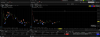
Including a picture of when I entered/exited. I figure this would be more entertaining than my post, which made sense to me when I was writing it but once I re-read it after posting, it's not good writing.
Balance: $37,675
Made money with MRNA and AMC today. AMC started a lot lower so waited until it looked like it wouldn't go any lower and tried to play the bounce. Same with MRNA. Almost lost half of my gains because I went big on MRNA and it didn't bounce the way I'd hoped and instead went even lower. It did bounce back a little so I made most of my money back but ... tired. It was a long day. Going to call it a day and go back to sleep.
Including a picture of when I entered/exited. I figure this would be more entertaining than my post, which made sense to me when I was writing it but once I re-read it after posting, it's not good writing.
Attachments
8/6 -$811
for the week -$9271
Well that was hell of a start to a journal. I dont know whats more surprising. Losing almost 10K in a week or still up 1.5K for the past 4 weeks.
Exited all my positions. Balance was $24799 so added 3K so I can daytrade stocks next week. Going to go back to 1 contracts if i trade futures. That will probably mean 2 or 3 but it will not be all in like how i was all this week. I think I can make 10K again in about 3-5 weeks if i just play it safe. dang this was a bad week.
FYI made back all the losses. I was hoping to make it back in 3-5 weeks but I did it in 2 because I had one lucky day where I made 5K.