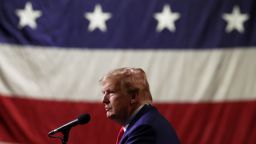
The Associated Press published this photo of Donald Trump today, January 11, 2024, during the closing arguments of his NY civil fraud trial. There is a saying that a picture is worth a thousand words. Take a good look, a damn good look, at his face. That is not the look of man who's confident in any of his boasts, bluster and bravado that he's been peddling during the course of this trial. That's the look of defeat, of being demoralized, broken. Trump's face belies his protestations of innocence, “I’ve done nothing wrong,” it's politically motivated, etc. He now looks all of his 77 years, old, stressed, haggard with worry lines etched in his forehead, sagging jowls, deep furrows at the corner of his lips. There's wisdom in words, what you sow, so shall you reap. Trump may now be reaping the whirlwind of his actions.

You are using an out of date browser. It may not display this or other websites correctly.
You should upgrade or use an alternative browser.
You should upgrade or use an alternative browser.
14th Amendment Time -- It's long overdue to keep insurrectionists off the ballot
- Thread starter gwb-trading
- Start date

The 2024 election is getting even more fun with a former Republican governor of a very red state pointing out that Trump is definitely, unequivocally and totally disqualified from holding ANY office.
There’s Nothing Debatable About the Constitutional Requirements for Becoming President
by Daily Montanan | Jan 14, 2024 | Opinions & Commentary
https://factkeepers.com/theres-noth...tutional-requirements-for-becoming-president/
The fact that the Disqualification Rule of the 14 Amendment has not been previously applied to a presidential candidate does not diminish the materiality or clarity of the constitutional mandate.
Republished with permission from Daily Montanan, by Marc Racicot
There are four qualifications set forth in the U.S. Constitution that must be met before any “Person” can be placed on the ballot and run for the Office of President: 1) you must be a “natural born Citizen;” 2) you must have “attained the age of thirty-five years;” 3) you must have been “fourteen Years a Resident within the United States;” and 4) you cannot have violated the Disqualification Rule of the 14th Amendment which entails having previously sworn an oath to support the Constitution and subsequently engaging in insurrection against it.
There’s nothing mysterious or unusual about meeting these eligibility requirements. They’re mandatory and cannot be waived nor ignored. Throughout history, candidates, including presidential candidates, have been disqualified by elections officials because of their failure to meet pertinent qualifications allowing access to a primary election ballot.
In reference to the 2024 presidential election, it has been argued by some political soothsayers that because the disqualification requirements of the 14th Amendment have rarely been applied, we should just move on, turn a blind eye to the Constitution, ignore the Disqualification Rule, and quietly leave the voters to address, by their votes, the presidential qualification issues in the coming election.
The thing is: That’s simply not a constitutional or legal alternative; not unless the American people are prepared to defy and thereby abrogate the Constitution. The qualifications set forth in the Constitution are not options to be casually noted, arrogantly dismissed or discreetly avoided by self-serving strategists, sanctimonious candidates or timid election officials entrusted by the Montana Constitution to “insure the purity of elections and guard against abuses of the electoral process.”
None of them have the license of the American people to spurn a constitutional imperative that’s plain on its face: If you’ve taken an oath of office to “preserve, protect and defend the Constitution” and you thereafter betray its provisions by engagement in insurrection or rebellion, the 14th Amendment Disqualification Rule forever bars you from seeking that office again.
The fact that the Disqualification Rule has not been previously applied to a presidential candidate does not diminish the materiality or clarity of the constitutional mandate.
If anything at all, the rarity of the application more profoundly reveals that the nation has, mercifully, had to suffer only one president who took an oath to preserve, protect and defend the Constitution and then, as declared by three different tribunals, demonstratively engaged in insurrection against it.
Nor does the limited application of the rule make it more complex than what it is on its face. The words in Section 3 unambiguously mean what they say, and they say what they mean.
So, too, does the likely method of judicial analysis of the Constitution referred to as “originalism,” which, to paraphrase Justice Amy Coney Barrett, interprets “the Constitution as a law,” and “its text as text.” Originalism also makes clear that the text of the Constitution is interpreted “to have the meaning that it had at the time people ratified it.” In other words, the meaning of the words in the Constitution don’t “change over time,” nor is it the prerogative of a judge or justice, when interpreting the Constitution, “to update” the text or “infuse” his or her policy views into that text.
The point of the rule and its application to the 2024 presidential election are unmistakable: It would be sheer lunacy to allow a presidential candidate who once knowingly and purposely betrayed the Constitution, his country and his office the opportunity to engage in the same treacherous conduct a second time around. So thought the framers of the 14th Amendment and the people of this country who approved it in 1868.
Marc Racicot was the 21st governor of Montana, serving from 1993 through 2001. After that, he was the National Republican Party Chairman for two years, and was the head of the committee to re-elect President George W. Bush.
i love it.
it's so clear that only a complete moron wouldn't understand it.
'A wounded animal that is cornered':

Trump took to his Truth Social platform on Saturday and wrote, "Republican Judges are very often afraid to do the right thing. They go out of their way to show they are totally impartial, to the point of making really bad and unfair decisions. Their counterparts, Judges appointed by Democrats, like Biden or Obama, laugh at the stupidity of it all. They go out of their way to follow the party line, they don’t give the opposition a chance. Such a difference — It is so SAD to see!" Trump later lashed out at "Trump-hating" Judge Lewis Kaplan who is overseeing the second E. Jean Carroll defamation trial.
Trump took to his Truth Social platform on Saturday and wrote, "Republican Judges are very often afraid to do the right thing. They go out of their way to show they are totally impartial, to the point of making really bad and unfair decisions. Their counterparts, Judges appointed by Democrats, like Biden or Obama, laugh at the stupidity of it all. They go out of their way to follow the party line, they don’t give the opposition a chance. Such a difference — It is so SAD to see!" Trump later lashed out at "Trump-hating" Judge Lewis Kaplan who is overseeing the second E. Jean Carroll defamation trial.
'Go home to mommy': Trump pouts as protester interrupts him for 'taking millions'
A protester interrupted former President Donald Trump's campaign event just a day before the Iowa caucus.
During a speech in Indianola on Sunday, Trump was speaking about Ron DeSantis when a protester accused him of wrongly "taking millions" as president.
"Thank you, darling," the former president replied. "Thank you. Thank you. That's all right."
"Go home to mommy, your mommy's waiting. Go home to mommy,"
A protester interrupted former President Donald Trump's campaign event just a day before the Iowa caucus.
During a speech in Indianola on Sunday, Trump was speaking about Ron DeSantis when a protester accused him of wrongly "taking millions" as president.
"Thank you, darling," the former president replied. "Thank you. Thank you. That's all right."
"Go home to mommy, your mommy's waiting. Go home to mommy,"
Colorado Voters Tell Supreme Court Trump’s Jan. 6 Insurrection “Will Forever Stain” US History
https://factkeepers.com/colorado-vo...6-insurrection-will-forever-stain-us-history/
The twisted and convoluted appeal filed by Trump's attorneys to the Supreme Court, seeking to overturn his ban from the Colorado ballot has now been answered by the voters bringing the original case.
The plaintiffs seeking to remove former President Donald Trump from Colorado’s 2024 presidential election ballots filed their brief to the U.S. Supreme Court on Jan. 26, 2024. They asked the court to uphold the ruling by Colorado’s highest court that Trump engaged in an insurrection against the United States and, accordingly, should be disqualified from the presidential election under Section 3 of the 14th Amendment.
Trump “refused to accept the will of the over 80 million Americans who voted against him,” the brief filed by Norma Anderson and several other plaintiffs said. “Instead of peacefully ceding power, Trump intentionally organized and incited a violent mob to attack the United States Capitol in a desperate effort to prevent the counting of electoral votes cast against him.”
Anderson, a Republican and former Colorado state lawmaker, and several other plaintiffs had filed suit in September 2023 to keep Trump off the 2024 Colorado ballots. The Colorado Supreme Court’s conclusion that Trump was ineligible to appear on the ballot was appealed by Trump to the U.S. Supreme Court.
The 14th Amendment’s Section 3 bars those who have “engaged in insurrection or rebellion” from holding federal office.
The outcome of the case will likely determine if Trump can appear on ballots in states across the country.
Facts vs. Assertions
Unlike Trump’s brief, which he filed with the Supreme Court on Jan. 18, Anderson primarily focuses on the facts, pointing out that Trump’s brief lacks any meaningful rebuttal of the “most damning evidence against him.”
Some of the “most damning evidence” that Anderson’s brief highlights includes how Trump “deliberately summoned to D.C. an angry and armed crowd who came ready to fight” and that Trump’s speech on the White House Ellipse “explicitly and implicitly incited the angry and armed crowd to imminent lawless violence.”
The Anderson brief describes how the Jan. 6 attackers “injured over 140 law enforcement officers, left one dead, and forced Congress and Vice President (Mike) Pence to flee for their lives.”
In his brief, Trump mainly argued that Section 3 of the 14th Amendment does not apply to the presidency because the president is not an “officer” of the United States under the Constitution. Trump’s brief also argued that Section 3 does not bar a candidate from running for office but rather bars the candidate from holding office, if elected.
And Trump asserted in his brief that “Calling for peace, patriotism, respect for law and order, and directing the Secretary of Defense to do what needs to be done to protect the American people is in no way inciting or participating in an ‘insurrection.’”
‘Monumental’ Case
The Supreme Court will have several issues to consider in this case. The justices will have to address the legal questions presented by Trump, such as whether Section 3 of the 14th Amendment applies to the presidency. And the court will also have to answer mixed questions of law and fact.
Traditionally, the Supreme Court does not delve into questions of fact in the cases it considers—those facts are understood to have been established in lower court decisions. And while I initially stated that the court would not consider such questions in this case, I now join other constitutional scholars who believe the court will likely have to answer what constitutes an insurrection under the 14th Amendment, and whether Trump’s actions—or inactions—sufficiently meet that definition.
Perhaps the justices will turn to the history of the 14th Amendment to answer those questions. As Anderson’s brief points out, Congress and the states ratified the amendment, including Section 3, after the Civil War because they believed that oath-breaking insurrectionists could, if given the power of elected office, dismantle the country’s constitutional system from within. The 39th Congress considered Section 3 a necessary measure of self-defense—ensuring that those who had proven themselves faithless would be deprived of the political power to threaten the future peace and security of the United States.
But Section 3’s text may present the deciding factors for the court. Section 3 clearly states that “No person shall … hold any office, civil or military, under the United States.” It provides no language that appears to prohibit candidates from running for office.
Ultimately, Trump v. Anderson will be a monumental case. Regardless of its outcome, however, Anderson’s brief asserts that the “desecration of the U.S. Capitol by a mob of insurrectionists on January 6, 2021, will forever stain our Nation’s history.”

This article is republished from The Conversation under a Creative Commons license. Read the original article.
https://factkeepers.com/colorado-vo...6-insurrection-will-forever-stain-us-history/
The twisted and convoluted appeal filed by Trump's attorneys to the Supreme Court, seeking to overturn his ban from the Colorado ballot has now been answered by the voters bringing the original case.
The plaintiffs seeking to remove former President Donald Trump from Colorado’s 2024 presidential election ballots filed their brief to the U.S. Supreme Court on Jan. 26, 2024. They asked the court to uphold the ruling by Colorado’s highest court that Trump engaged in an insurrection against the United States and, accordingly, should be disqualified from the presidential election under Section 3 of the 14th Amendment.
Trump “refused to accept the will of the over 80 million Americans who voted against him,” the brief filed by Norma Anderson and several other plaintiffs said. “Instead of peacefully ceding power, Trump intentionally organized and incited a violent mob to attack the United States Capitol in a desperate effort to prevent the counting of electoral votes cast against him.”
Anderson, a Republican and former Colorado state lawmaker, and several other plaintiffs had filed suit in September 2023 to keep Trump off the 2024 Colorado ballots. The Colorado Supreme Court’s conclusion that Trump was ineligible to appear on the ballot was appealed by Trump to the U.S. Supreme Court.
The 14th Amendment’s Section 3 bars those who have “engaged in insurrection or rebellion” from holding federal office.
The outcome of the case will likely determine if Trump can appear on ballots in states across the country.
Facts vs. Assertions
Unlike Trump’s brief, which he filed with the Supreme Court on Jan. 18, Anderson primarily focuses on the facts, pointing out that Trump’s brief lacks any meaningful rebuttal of the “most damning evidence against him.”
Some of the “most damning evidence” that Anderson’s brief highlights includes how Trump “deliberately summoned to D.C. an angry and armed crowd who came ready to fight” and that Trump’s speech on the White House Ellipse “explicitly and implicitly incited the angry and armed crowd to imminent lawless violence.”
The Anderson brief describes how the Jan. 6 attackers “injured over 140 law enforcement officers, left one dead, and forced Congress and Vice President (Mike) Pence to flee for their lives.”
In his brief, Trump mainly argued that Section 3 of the 14th Amendment does not apply to the presidency because the president is not an “officer” of the United States under the Constitution. Trump’s brief also argued that Section 3 does not bar a candidate from running for office but rather bars the candidate from holding office, if elected.
And Trump asserted in his brief that “Calling for peace, patriotism, respect for law and order, and directing the Secretary of Defense to do what needs to be done to protect the American people is in no way inciting or participating in an ‘insurrection.’”
‘Monumental’ Case
The Supreme Court will have several issues to consider in this case. The justices will have to address the legal questions presented by Trump, such as whether Section 3 of the 14th Amendment applies to the presidency. And the court will also have to answer mixed questions of law and fact.
Traditionally, the Supreme Court does not delve into questions of fact in the cases it considers—those facts are understood to have been established in lower court decisions. And while I initially stated that the court would not consider such questions in this case, I now join other constitutional scholars who believe the court will likely have to answer what constitutes an insurrection under the 14th Amendment, and whether Trump’s actions—or inactions—sufficiently meet that definition.
Perhaps the justices will turn to the history of the 14th Amendment to answer those questions. As Anderson’s brief points out, Congress and the states ratified the amendment, including Section 3, after the Civil War because they believed that oath-breaking insurrectionists could, if given the power of elected office, dismantle the country’s constitutional system from within. The 39th Congress considered Section 3 a necessary measure of self-defense—ensuring that those who had proven themselves faithless would be deprived of the political power to threaten the future peace and security of the United States.
But Section 3’s text may present the deciding factors for the court. Section 3 clearly states that “No person shall … hold any office, civil or military, under the United States.” It provides no language that appears to prohibit candidates from running for office.
Ultimately, Trump v. Anderson will be a monumental case. Regardless of its outcome, however, Anderson’s brief asserts that the “desecration of the U.S. Capitol by a mob of insurrectionists on January 6, 2021, will forever stain our Nation’s history.”
This article is republished from The Conversation under a Creative Commons license. Read the original article.
Retired conservative federal judge urges Supreme Court to disqualify Trump from office
https://www.cnn.com/2024/01/29/politics/luttig-conway-supreme-court-trump-insurrection/index.html
A former conservative federal appellate judge is urging the Supreme Court to keep Donald Trump off the ballot, arguing the ex-president’s effort to cling to power after his 2020 election loss was “broader” than South Carolina’s secession from the US that triggered the Civil War.
“Mr. Trump tried to prevent the newly-elected President Biden from governing anywhere in the United States. The South Carolina secession prevented the newly-elected President Lincoln from governing only in that State,” J. Michael Luttig, a former judge on the 4th US Circuit Court of Appeals, told the justices in a friend-of-the-court brief filed Monday.
“Trump incited, and therefore engaged in, an armed insurrection against the Constitution’s express and foundational mandates that require the peaceful transfer of executive power to a newly-elected President,” the brief said. “In doing so, Mr. Trump disqualified himself under Section 3 (of the Constitution).”
Luttig has long been one of the most high-profileconservatives to argue that Trump engaged in an insurrection following his loss in 2020 and that he should as a result be barred from holding office. The former judge played a critical role in the heated fight over the certification of the 2020 presidential election, providing in a series of tweets legal ammunition to help then-Vice President Mike Pence defy Trump’s attempt to overturn the election.
The US Supreme Court agreed earlier this month to review the unprecedented decision from the Colorado Supreme Court that removed him from that state’s ballot. In a 4-3 ruling issued last month, the state court said Trump is constitutionally ineligible to run in 2024 because the 14th Amendment’s ban on insurrectionists holding office covers his conduct on January 6, 2021.
The justices in Washington are set to hear oral arguments in the case on February 8.
Monday’s brief, which was submitted on behalf of several other notable lawyers, including conservative attorney George Conway, urgesthe high court to examine the issue through a textualist lens – meaning they would focus specifically on the words of the disputed constitutional provision.
“Because Section 3 emerged from the hallowed ground of the Civil War, this Court must accord Section 3 its fair meaning, not a narrow construction,” the brief said.
The brief also pushes back on Trump’s argument that the 14th Amendment’s “insurrectionist ban” can only be enforced by Congress after a candidate is elected, with Luttig and the others arguing that enforcement of the provision is instead within the purview of courts.
Trump’s argument, the brief said, “would deprive voters of the ability to make a truly informed decision, because they could not know if they were voting for someone who cannot serve.”
It continued: “And it would risk chaos as courts litigate whether a newly-inaugurated President is disqualified at the same time the country needs a President to be indisputably occupying the office and making enormously consequential decisions – including as commander-in-chief, appointer of cabinet members, leader of the executive branch, vetoer of bills, etc.”
https://www.cnn.com/2024/01/29/politics/luttig-conway-supreme-court-trump-insurrection/index.html
A former conservative federal appellate judge is urging the Supreme Court to keep Donald Trump off the ballot, arguing the ex-president’s effort to cling to power after his 2020 election loss was “broader” than South Carolina’s secession from the US that triggered the Civil War.
“Mr. Trump tried to prevent the newly-elected President Biden from governing anywhere in the United States. The South Carolina secession prevented the newly-elected President Lincoln from governing only in that State,” J. Michael Luttig, a former judge on the 4th US Circuit Court of Appeals, told the justices in a friend-of-the-court brief filed Monday.
“Trump incited, and therefore engaged in, an armed insurrection against the Constitution’s express and foundational mandates that require the peaceful transfer of executive power to a newly-elected President,” the brief said. “In doing so, Mr. Trump disqualified himself under Section 3 (of the Constitution).”
Luttig has long been one of the most high-profileconservatives to argue that Trump engaged in an insurrection following his loss in 2020 and that he should as a result be barred from holding office. The former judge played a critical role in the heated fight over the certification of the 2020 presidential election, providing in a series of tweets legal ammunition to help then-Vice President Mike Pence defy Trump’s attempt to overturn the election.
The US Supreme Court agreed earlier this month to review the unprecedented decision from the Colorado Supreme Court that removed him from that state’s ballot. In a 4-3 ruling issued last month, the state court said Trump is constitutionally ineligible to run in 2024 because the 14th Amendment’s ban on insurrectionists holding office covers his conduct on January 6, 2021.
The justices in Washington are set to hear oral arguments in the case on February 8.
Monday’s brief, which was submitted on behalf of several other notable lawyers, including conservative attorney George Conway, urgesthe high court to examine the issue through a textualist lens – meaning they would focus specifically on the words of the disputed constitutional provision.
“Because Section 3 emerged from the hallowed ground of the Civil War, this Court must accord Section 3 its fair meaning, not a narrow construction,” the brief said.
The brief also pushes back on Trump’s argument that the 14th Amendment’s “insurrectionist ban” can only be enforced by Congress after a candidate is elected, with Luttig and the others arguing that enforcement of the provision is instead within the purview of courts.
Trump’s argument, the brief said, “would deprive voters of the ability to make a truly informed decision, because they could not know if they were voting for someone who cannot serve.”
It continued: “And it would risk chaos as courts litigate whether a newly-inaugurated President is disqualified at the same time the country needs a President to be indisputably occupying the office and making enormously consequential decisions – including as commander-in-chief, appointer of cabinet members, leader of the executive branch, vetoer of bills, etc.”
As I mentioned many times previously it is unlikely that these 14th Amendment cases will cause Trump to get removed from the ballot.
However the ruling by the judge in Colorado is very interesting and convoluted in my opinion. The judge ruled that Donald Trump "engaged in insurrection" but he is not an "officer" and therefore should not be removed from the ballot.
Isn't the Commander in Chief of the U.S. Armed Forces considered an "officer"?
The ruling is twisted IMO -- it would be better to simply declare that Donald Trump did not engage in insurrection -- or go the other (unlikely) route and state Donald Trump did engage in insurrection and must be removed from the ballot under the 14th Amendment. This verdict by the judge seems to be splitting hairs and is likely to be appealing in my opinion.
“After considering the arguments on both sides, the Court is persuaded that ‘officers of the United States,’ did not include the President of the United States,” she wrote. “It appears to the Court that for whatever reason the drafters of Section Three did not intend to include a person who had only taken the Presidential Oath.”
Considering that the President of the Confederacy, Jefferson Davis, was effectively disqualified as an "officer" and was not able to run for political office in the United States should set the standard of who was included based on taking a "presidential oath".
Trump ‘engaged in an insurrection,’ judge says, but should remain on Colorado ballot
https://www.cnn.com/2023/11/17/poli...allot-14th-amendment-insurrection?cid=ios_app
A Colorado judge has ruled that former President Donald Trump “engaged in an insurrection” on January 6, 2021, but rejected an attempt to remove him from the state’s 2024 primary ballot, finding that the 14th Amendment’s “insurrectionist ban” doesn’t apply to presidents.
The major decision issued Friday by Colorado District Judge Sarah Wallace comes after judges in Minnesota and Michigan also refused to remove Trump from that state’s Republican primary ballots.
These three high-profile challenges against Trump, which had the backing of well-funded advocacy groups, have so far failed to remove him from a single ballot, with the 2024 primary season fast approaching.
However, the 102-page ruling in Colorado offered a searing condemnation of Trump’s conduct, labeling him as an insurrectionist who “actively primed the anger of his extremist supporters,” and “acted with the specific intent to incite political violence and direct it at the Capitol.”
Wallace concluded that “Trump engaged in an insurrection on January 6, 2021 through incitement, and that the First Amendment does not protect Trump’s speech” at the Ellipse that day. She also found that Trump “acted with the specific intent to disrupt the Electoral College certification of President Biden’s electoral victory through unlawful means.”
(Much more at above url)
As expected the U.S. Supreme Court is skeptical of attempts to remove Trump from the ballot via the 14th Amendment. This is not surprising IMO.
Justices Appear Skeptical of Arguments to Kick Trump Off State Ballots
The Supreme Court heard arguments about whether the former president’s attempts to subvert the 2020 election disqualify him from again holding office. Justices across the ideological spectrum questioned several aspects of a ruling from the Colorado Supreme Court.
https://www.nytimes.com/live/2024/02/08/us/trump-supreme-court-colorado-ballot
Lol at Kavanaugh. A conviction is not required, oh hallowed one. These chumps want to be literal when they point out "president" is not specifically written in the amendment, but not literal when reading "engaged in", "aided", "comforted", which literally are in there.As expected the U.S. Supreme Court is skeptical of attempts to remove Trump from the ballot via the 14th Amendment. This is not surprising IMO.
Justices Appear Skeptical of Arguments to Kick Trump Off State Ballots
The Supreme Court heard arguments about whether the former president’s attempts to subvert the 2020 election disqualify him from again holding office. Justices across the ideological spectrum questioned several aspects of a ruling from the Colorado Supreme Court.
https://www.nytimes.com/live/2024/02/08/us/trump-supreme-court-colorado-ballot
Opinion: Congress has already disqualified Trump from the ballot
Opinion by Tristan Snell
5 minute read
Published 3:57 AM EST, Thu February 8, 2024
CNN legal analyst breaks down Colorado Supreme Court Trump ruling
01:02 - Source: CNN
Editor’s Note: Tristan Snell is author of the new book “Taking Down Trump: 12 Rules for Prosecuting Donald Trump by Someone Who Did it Successfully.” He is a lawyer and legal commentator who has appeared on MSNBC and CNN, and he served as assistant attorney general for New York State, where he led the investigation of, and civil case against, Trump University. The views expressed here are the writer’s own. Read more opinion on CNN.
CNN —
The Supreme Court on Thursday is weighing the question of whether former President Donald Trump has been disqualified from office by engaging in an insurrection in violation of Section 3 of the 14th Amendment to the Constitution. The constitutional text is clear: Any official who took an oath of office is disqualified if they “have engaged in insurrection” against the Constitution or “given aid or comfort to the enemies thereof.”
The Colorado Supreme Court ruled Trump to be ineligible on this basis. The ruling encompassed both the January 6, 2021, attack on the Capitol itself, which interfered with the certification of the Electoral College vote for president, and the former president’s overall scheme to overturn the 2020 election.
The case now comes to the Supreme Court following Trump’s appeal, and it could determine whether Trump appears on the ballot in up to 35 different states where his eligibility is being challenged.
There are two factual questions at the core of this case: Was January 6 an insurrection and did Trump “engage” in it?
Fortunately, the Supreme Court need not look far for answers to these questions. They can simply look across the street at the Capitol, where majorities of both chambers of Congress already found that January 6 was an insurrection and that Trump not only engaged in it but “incited” it.
This may come as a shock. When, one might ask, did Congress ever hold such votes?
Those votes came in the second impeachment of Trump, in January and February of 2021, in which majorities of both the House and the Senate backed an article of impeachment against Trump for “incitement of insurrection.”
This was a finding of fact, by majorities of our elected representatives, after a full public trial in which Trump was able to mount a defense — and it should be deemed persuasive, if not conclusive, in answering the factual questions before the Supreme Court. Indeed, for the more right-wing justices, who are often fond of pontificating that courts should not make policy judgments and should instead defer to legislatures, one would think that such a clear public pronouncement from Congress on Trump’s engagement in insurrection would be a compelling precedent.
Related article Opinion: Trump is hoping to delay his trial. The Supreme Court shouldn’t take the bait
To be clear, the 14th Amendment does not actually require anyone to have voted to disqualify an insurrectionist, whether that’s a legislature or a jury. It certainly does not require a conviction, as some have tried to argue (and such bastardization of the plain language of a constitutional provision is exactly the opposite of what conservatives normally preach).
Legally, the insurrectionist is disqualified the moment he engages in insurrection. Though “innocent until proven guilty” is a familiar standard in criminal law, it shouldn’t apply to disqualifying someone from public office, since holding office is a privilege, not a right. Indeed, the courts in Colorado found Trump engaged in insurrection, and that alone was legally sufficient for Trump to be ruled ineligible there.
Yet if we are going to look for some additional fact-based determination on whether Trump engaged in insurrection — especially one that can be applied nationally — Congress has already provided us with one, and the Supreme Court should look no further.
The congressional votes regarding Trump should satisfy those who say we should “let the voters decide” rather than applying the Constitution and removing Trump from the ballot; the voters already decided. Our elected representatives convened, heard from both sides and voted that January 6 was an insurrection and that Donald Trump not only engaged in it but incited it. This was the conclusion of 232 of 435 representatives and 57 of 100 senators.
Related article Opinion: Trump’s immunity defeat isn’t the setback it seems to be
Those majorities already represent the will of the American people. True, it was not enough for impeachment, which requires a two-thirds majority in the Senate, but it is more than enough for disqualification, where no supermajority is stipulated and thus a simple majority should suffice.
If the voters change their minds at some future date, the Constitution also provides a way to restore Trump’s eligibility for office: Section 3 of the 14th Amendment allows for a disqualified official to be rehabilitated by a two-thirds vote of each house of Congress.
Without such an effort by Congress, it makes a mockery of both democracy and the Constitution to allow Trump to run again. If he is legally ineligible, he must not be on the 2024 ballot, or else the Constitution is meaningless. We cannot cherry-pick which provisions of the Constitution we feel like enforcing at any given moment and we cannot ignore provisions of the Constitution merely because they yield difficult or inconvenient outcomes.
Therein lies the greatest danger. We must not be fooled by the “let the voters decide” argument. It sounds democratic, but a suspension and circumvention of a clear constitutional provision could be the beginning of the end for our democracy and the rule of law. If any one part of the Constitution is set aside, no part of it is sacred.
If we “let the voters decide” Trump’s eligibility, does that mean we should also “let the voters decide” whether journalists should be jailed, as Trump has called for? Should we “let the voters decide” to strip voting rights from other voters they disagree with? A democracy without a constitution and the rule of law will not remain a democracy for long. Instead, we must apply all the laws as written — including the 14th Amendment.
Get Our Free Weekly Newsletter
The Supreme Court may be wary of disqualifying Trump based solely on their own ruling as a group of unelected judges. But they do not have to do so. They can ground their ruling in the determination that Congress has already made, thus giving their decision both legal and political legitimacy. The Constitution is clear, Congress’ votes are clear and Trump’s disqualification is thus wholly justified. If some people disagree, they can push for Congress to reinstate Trump as provided by the Constitution.
What Congress did, Congress can undo. That is the genius of the 14th Amendment — which the Supreme Court should fully embrace.
Opinion by Tristan Snell
5 minute read
Published 3:57 AM EST, Thu February 8, 2024
CNN legal analyst breaks down Colorado Supreme Court Trump ruling
01:02 - Source: CNN
Editor’s Note: Tristan Snell is author of the new book “Taking Down Trump: 12 Rules for Prosecuting Donald Trump by Someone Who Did it Successfully.” He is a lawyer and legal commentator who has appeared on MSNBC and CNN, and he served as assistant attorney general for New York State, where he led the investigation of, and civil case against, Trump University. The views expressed here are the writer’s own. Read more opinion on CNN.
CNN —
The Supreme Court on Thursday is weighing the question of whether former President Donald Trump has been disqualified from office by engaging in an insurrection in violation of Section 3 of the 14th Amendment to the Constitution. The constitutional text is clear: Any official who took an oath of office is disqualified if they “have engaged in insurrection” against the Constitution or “given aid or comfort to the enemies thereof.”
The Colorado Supreme Court ruled Trump to be ineligible on this basis. The ruling encompassed both the January 6, 2021, attack on the Capitol itself, which interfered with the certification of the Electoral College vote for president, and the former president’s overall scheme to overturn the 2020 election.
The case now comes to the Supreme Court following Trump’s appeal, and it could determine whether Trump appears on the ballot in up to 35 different states where his eligibility is being challenged.
There are two factual questions at the core of this case: Was January 6 an insurrection and did Trump “engage” in it?
Fortunately, the Supreme Court need not look far for answers to these questions. They can simply look across the street at the Capitol, where majorities of both chambers of Congress already found that January 6 was an insurrection and that Trump not only engaged in it but “incited” it.
This may come as a shock. When, one might ask, did Congress ever hold such votes?
Those votes came in the second impeachment of Trump, in January and February of 2021, in which majorities of both the House and the Senate backed an article of impeachment against Trump for “incitement of insurrection.”
This was a finding of fact, by majorities of our elected representatives, after a full public trial in which Trump was able to mount a defense — and it should be deemed persuasive, if not conclusive, in answering the factual questions before the Supreme Court. Indeed, for the more right-wing justices, who are often fond of pontificating that courts should not make policy judgments and should instead defer to legislatures, one would think that such a clear public pronouncement from Congress on Trump’s engagement in insurrection would be a compelling precedent.
Related article Opinion: Trump is hoping to delay his trial. The Supreme Court shouldn’t take the bait
To be clear, the 14th Amendment does not actually require anyone to have voted to disqualify an insurrectionist, whether that’s a legislature or a jury. It certainly does not require a conviction, as some have tried to argue (and such bastardization of the plain language of a constitutional provision is exactly the opposite of what conservatives normally preach).
Legally, the insurrectionist is disqualified the moment he engages in insurrection. Though “innocent until proven guilty” is a familiar standard in criminal law, it shouldn’t apply to disqualifying someone from public office, since holding office is a privilege, not a right. Indeed, the courts in Colorado found Trump engaged in insurrection, and that alone was legally sufficient for Trump to be ruled ineligible there.
Yet if we are going to look for some additional fact-based determination on whether Trump engaged in insurrection — especially one that can be applied nationally — Congress has already provided us with one, and the Supreme Court should look no further.
The congressional votes regarding Trump should satisfy those who say we should “let the voters decide” rather than applying the Constitution and removing Trump from the ballot; the voters already decided. Our elected representatives convened, heard from both sides and voted that January 6 was an insurrection and that Donald Trump not only engaged in it but incited it. This was the conclusion of 232 of 435 representatives and 57 of 100 senators.
Related article Opinion: Trump’s immunity defeat isn’t the setback it seems to be
Those majorities already represent the will of the American people. True, it was not enough for impeachment, which requires a two-thirds majority in the Senate, but it is more than enough for disqualification, where no supermajority is stipulated and thus a simple majority should suffice.
If the voters change their minds at some future date, the Constitution also provides a way to restore Trump’s eligibility for office: Section 3 of the 14th Amendment allows for a disqualified official to be rehabilitated by a two-thirds vote of each house of Congress.
Without such an effort by Congress, it makes a mockery of both democracy and the Constitution to allow Trump to run again. If he is legally ineligible, he must not be on the 2024 ballot, or else the Constitution is meaningless. We cannot cherry-pick which provisions of the Constitution we feel like enforcing at any given moment and we cannot ignore provisions of the Constitution merely because they yield difficult or inconvenient outcomes.
Therein lies the greatest danger. We must not be fooled by the “let the voters decide” argument. It sounds democratic, but a suspension and circumvention of a clear constitutional provision could be the beginning of the end for our democracy and the rule of law. If any one part of the Constitution is set aside, no part of it is sacred.
If we “let the voters decide” Trump’s eligibility, does that mean we should also “let the voters decide” whether journalists should be jailed, as Trump has called for? Should we “let the voters decide” to strip voting rights from other voters they disagree with? A democracy without a constitution and the rule of law will not remain a democracy for long. Instead, we must apply all the laws as written — including the 14th Amendment.
Get Our Free Weekly Newsletter
- Sign up for CNN Opinion’s newsletter
- Join us on Twitter and Facebook
The Supreme Court may be wary of disqualifying Trump based solely on their own ruling as a group of unelected judges. But they do not have to do so. They can ground their ruling in the determination that Congress has already made, thus giving their decision both legal and political legitimacy. The Constitution is clear, Congress’ votes are clear and Trump’s disqualification is thus wholly justified. If some people disagree, they can push for Congress to reinstate Trump as provided by the Constitution.
What Congress did, Congress can undo. That is the genius of the 14th Amendment — which the Supreme Court should fully embrace.