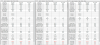
100 % wins over 240 days

its factored to trade 1 lot per 10K .. so actually 40% in 2 years. It exits on the close of each session. So you could go higher on contract size just using 10K, if you did 2 lots it would work out to 8K in 2 years or 80 percent.
And you are 100% sure that your percent calculation method is correct?
I have my doubts... ;-) You better should verify it to be sure...
 
I modified it to trade 2 lots and increased profit targets and instituted stop losses for typical swing trading. My only concern is not being able to test it over multiple years (>5 years), the signals are valid for swing trading also. For 2 lots and holding positions over night, you would need 20K.
swing.png
 
I modified it to trade 2 lots and increased profit targets and instituted stop losses for typical swing trading. My only concern is not being able to test it over multiple years (>5 years), the signals are valid for swing trading also. For 2 lots and holding positions over night, you would need 20K.View attachment 162878
How many trades were done?
And what was the biggest loss? It is unclear to read it from the chart.
Do you see that it didn't make any profit for about 6 months?

My only concern is not being able to test it over multiple years (>5 years)
How come? Where is the problem?
 
Last edited:
Data vendor.. Platform is using tick data. It's only pulling 2 years or less. I like swing trading aspect of it. But goal was to scale up on tick timeframes/day trading not swing trading.
 
I'm aware this was deveoped using a different symbol. Was it developed over an earlier time period? IOW are the performance stats from an in sample period of time or out of sample period of time .........relative to the segment of time over which the idea was initially developed?

the idea was developed using price behavior and not using data from a certain time period. Price behavior over 35 years I guess. But need to verify it using the data.
 
To be honest: nobody would trade a system that wasn't throughly tested.
What you test is just ONE single outcome of the many possible outcomes (ie. market situations).
Professionals (and also researchers) perform 1000s of tests with different data.
For this they use simulated market data, ie. generated data that behaves like market data.
Such data has very similar properties like real market data.

If it interests you then you can use the following algorithm:
http://www.elitetrader.com/et/index...-code-in-c-for-generating-time-series.297370/

And the following link has also useful discussion, info and code for this:
http://stackoverflow.com/questions/...to-generate-realistic-looking-fake-stock-data
 
Last edited:
simulated data doesn't have the inefficiencies that human generated data does. I'm trying to extract inefficiencies generated by human behavior in a price series.

three variants, the first one is only in market for 90 minutes. Its more appealing.
 

Attachments

  • whichone.png
    whichone.png
    690.8 KB · Views: 61
Back
Top