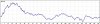
what intellectual property?View attachment 183515 (Each of the last three days the loss has gotten smaller.)
I’m perfectly aware that I could easily be wrong, but I think it’s a settled matter. Going forward my chart setup will be a version of the two charts I posted yesterday, except that the final chart does not look as complicated, which is why I’m not posting its image. (Unfortunately, it might be so simple that other traders could easily figure out exactly out what I’m doing, and though it might be a character flaw, I’m not so magnanimous or altruistic as to publicly share such intellectual property for free.)
The CHFJPY trade unfolded perfectly, but instead of being satisfied when it was time to go to bed, I reentered the position and then retired for the night, given that the pair was still trending southward. However, the rate failed to hit my target before reversing north all the way to 112.47, which stopped me out and took back some of the gains I enjoyed.
Had I been awake later on when price fell back down to 112.23, I would have reentered the position and recouped all of my profits and more, but I was still asleep at that time.
This brings me to a point I want to make in answer to a question someone asked me in another thread. The question was…
“How was your system during EUR fall today? I am really interested how it works on such moves.”
Before I answer the question, let me preface it by saying that I used to try to trade based on what I anticipated the market was going to do. For the most part, that is no longer the case (unless I am going to bed, as happened last night, but even then, I will normally exit all my positions first, but I simply fell victim to overconfidence yesterday because of how well the strategy was working).
I mention this because, just by coincidence, I am currently stuck in a position with EURJPY, and if it does not climb back up to 131. 12 in the next 24 to 48 hours, I’m going to end up having to eat a big loss. The upshot is that the system is now perfected (I hope) so let me share how it should have worked.
Again, I am basically using only two envelopes and three moving averages now—so, so simple! There is no need for any proprietary indicators whatsoever (though I am using one in combination with the lowest moving average because it enhances my ability to clearly see what price is doing—but it is not necessary—and I also have a proprietary indicator version of the final chart, but again, this is totally supplementary).
The point I need to stress is, this approach is 100% hands on! It requires traders to react to price action, in accordance to what the chart is communicating at each moment, because the information conveyed by the charts is timely, accurate, precise and detailed. Let me at least give you a close-up so you can see what I'm talking about…
View attachment 183514
This is the proprietary indicator I coded myself (see above). Note how clearly it communicates when and where the price cycle is reversing direction. Had I been using it when I purchased EURJPY, I would have exited my long position at 131.12 when the cycle began to reverse downward.
If I were still interested in buying the pair, I would have done so again @ 130.82 and exited at 130.90. And if I were still convinced that there was no way the pair could continue to resist the structural pull to the north, I would have entered a long position one last time @ 130.60 and exited with my profit at 130.75.
Of course, I could have continued “riding the waves” in this same manner if I'd wished, but since the general overall day-to-day trend is bearish, I’d probably have been inclined to wait for price to climb back high enough to begin shorting the pair once more.
It’s no surprise that this is all so crystal clear to me in hindsight—but is it going to work in real time??? Given that it was working last night with CHFJPY even BEFORE I was using the above proprietary indicator and its accompanying simple moving average (exiting with profit and then reentering the position to collect some more depending on when price surges and when it pulls back), I think so.
I’ve been demo trading based on the same basic principles since November 2015, with some versions of my implementation yielding an 80% to 100% daily success rate, and others resulting in several days of consecutive losses, as I experienced this week. However, if things go as planned, I’m hoping it will all be worth it, and I will now be able to trade with a ridiculous amount of frequency, and yet maintain my 90%+ success rate.
If this happens, it will be very nice indeed. But if not, I will simply go back to a proven version that is not quite so ambitious.

You are using an out of date browser. It may not display this or other websites correctly.
You should upgrade or use an alternative browser.
You should upgrade or use an alternative browser.
1.8% Profit per Day Compounded over 220 Days
- Thread starter expiated
- Start date
Do you have any bars on that chart? This all reminds me of using this in 1989 and it didn't work then and in real life I doubt will work everyday. Oh, I figured out one of your entries, I did that when it hard trended but found out later in long term it produce larger losing percentages than I wanted. Think about this, you have something radically different than what big/huge traders are using, you will lose, volume drives markets, volume=Push or Interest. Anything that turns on a dime is moving too fast and creates more losses, slow is better, let others play the every turns. But you won't listen to anyone, instead of learning charting, you mainly do TA, better to have charting for most and lite on indicators, Price is King.Today and Monday I was able to realize anywhere from 50¢ to $3.36 in profits, or about 0.5% to 3.4% of $100 (though a significantly higher percentage of my actual current balance).
(I couldn’t sit around and wait for the signal to short AUDUSD yesterday, so I was stopped out of my original position and had to reenter the trade. But rest assured that if I had been able to trade in strict accordance with my system’s guidelines, every single action I took up to that point would have been profitable—a 100% success rate, so that my production would have ranged from $1.50 to $3.36.)
Unfortunately, I thought the market had turned against me later last night after I again sold AUDUSD and shorted NZDUSD as well, so I exited NZDUSD with only 11¢ profit, and accepted a loss from AUDUSD that was slightly more than a dollar. As it turns out however, my original forecast was correct, and had I remained in the trades, I would have eventually collected at least a dollar from each, so that today’s trades would have yielded $3.50.
Accordingly, I performed additional analysis to establish an accurate impression of what constitutes the typical (i.e., expected) short-term price range. I also added a moving average that I ceased using a while ago, but rediscovered yesterday as the BEST indicator of the overall intraday direction of price.
Having the above information, I reevaluated my one-minute chart setup, which led to my categorizing the moving averages I use into three groups: (1) the day-to-day trend, (2) the overall intraday trend, and (3) the short-term intraday trend (see below).
View attachment 183914
I believe my settings are all now as precise and accurate as I can get them, which is probably why every trade I have made since then has been profitable, and why I was able to climb out of the hole I got in last night.
Assuming I get no better at using this system, I would expect to make about $3.00 per day from now on, in which case, my account balance should be back at breakeven within 10 days.
However, as my balance grows, it will soon enable me to enter any two positions simultaneously, then three, and eventually execute multiple trades one after the other. Combine this with the likelihood that I probably will improve my performance at least a little over time, and it’s hard to imagine that my account will not pass $5000 well before 220 days—perhaps even in as few as 150 days or less.
So there is not much to recommend the continuation of these daily updates, other than as a public display of my good fortune—which would be kind of tacky and distasteful. Also, what made this endeavor something of interest to me was my desire to know if it could really be done? In that I am now not only convinced that it can, but believe that this morning I’m actually seeing it happen before my very eyes, the thought of coming here to post numbers each day strikes me as kind of boring (since the “I wonder” component is no longer present).
Moreover, this “journal’s” primary functions, which were to guard against deluding myself into believing things were going okay when they weren’t, and to hopefully supply me with the kind of motivation that would not allow me to fail, are in my view, no longer pertinent. I have fine tuned the system and am now aware of how to maximize its performance, so the only thing that remains is to simply implement it in the same way I’ve been doing this morning.
Of course, the naysayers will warn that it takes a minimum of two or even ten years for me to be able to trust that the system is legit. But if an alien vessel were to drop down out of space and hover over the streets of Los Angeles for a day, that would be plenty enough observation to establish that cars (in the U.S.A at least) travel in the direction which puts the driver’s side of the vehicle closer to the curb than the passenger’s side. It’s totally obvious that this is what’s going on—and unless something completely bizarre happened to turn the entire system totally on its head, the same thing is going to be happening whether it’s a day from the ship’s arrival, or ten years later. Well, I think the tools I’m using as of this moment make things just as obvious when it comes to the direction exchange rates are likely headed in the Forex market.
But before I totally suspend further comment, I want to coin what I’m doing now as the “BATT” system, given that it no longer hinges on multiple simple moving average envelopes.
I think BATT (Biblical Approach to Trading—NOT Bitcoin & Altcoin Trading) is appropriate in that I arrived at this method partly by ignoring those teachers and trainers who claim that a sure way to fail is to opt NOT to use the most popular moving averages (i.e., the 10-, 20-, 50-, 100-, and 200-period moving averages), or to try to use more than one moving average.
Their rationale is that there is no point in watching something if no one else is looking at it, and that it is better to master one moving average than become an apprentice of them all. But experience convinced me that there are benefits to heeding the advice offered in the second half of Proverbs 11:14 and Proverbs 15:22, which extol the wisdom of relying on an abundance of counselors. (My contention is that the use of multiple moving averages makes it that much easier to discern with confidence what the various exchange rates intend to do in the not too distant future—and that the use of non-standard moving averages frees one up to seek out and find the specific/precise moving average or moving averages that do a better job than all others in conveying with absolute accuracy and reliability where price is ultimately going to end up.)
Another biblical principle that guided my quest (or odyssey) was that of “testing everything and holding fast to that which is good,” which is what led me to reject all approaches involving Elliott waves, Fibonacci ratios, harmonic patterns and the like; and to also forego the use of moving average convergence/divergence (MACD), stochastic oscillators, the relative strength index (RSI), the commodity channel index ( CCI), the average directional movement index (ADX) and all other indicators, which I felt failed to live up to their reputations.
And finally, a careful reading of the Bible makes it clear that life is all about relationships. Scripture ranks good relationships as the most important thing in life, emphasizing that right relationships are of first importance; and a similar emphasis formed the foundation of my approach. It wasn’t so much about finding the keys to success. It was more like putting together the puzzle using pieces already at my disposal, assembling them so that each assumed its proper role—about how various moving averages relate to one another in such a manner as to convey or forecast the future of “price” action.
So how did a very simple guy like me, using a handful simple moving averages come up with a winning system? If I am to believe Scripture, it is a mistake to think that “my power and the might of my hand have gotten me this wealth,” so I trust it’s true that it’s not I, but Yahweh, “who gives…power to get wealth.”
Hence, the main question I need to answer now is, assuming that the money I make does begin to grow exponentially (God willing) how am I going to use it in a manner that magnifies Him and honors the Messiah? That’s a question I look forward to answering with earnest expectation.
In any event, good luck to anyone who happens to read this post!
¡Adios!
Your system sounds way too complicated, you going to be saying "could'a, would'a, should'a" mucho.
Good luck.
Good luck

Yes, I believe it is, but by April of 2019 I should know for sure. If it doesn’t work out, I can always go back to my old approach. But if it turns out to be more profitable in the long run, I will be glad to have taken the time to look into it.going from an established system that provides bread and butter to an account that is 100 and cannot go to 250, is that your best course.
I don’t know…none I guess.what intellectual property?
No.Do you have any bars on that chart?
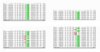
And that’s fine with me, as long as my losses continue to look like this…Think about this, you have something radically different than what big/huge traders are using, you will lose...
But you won't listen to anyone, instead of learning charting, you mainly do TA, better to have charting for most and lite on indicators, Price is King. Your system sounds way too complicated, you going to be saying "could'a, would'a, should'a" mucho.
And that’s fine with me too. In the meantime, I will be satisfied breaking even while I focus the vast majority of my attention on other endeavors, as I am now; or enjoying daily profits from trading full time, as I did in the past (see above images) and will probably do once again after February of next year. I live in the present. I’m not going to give up today’s potentially above average profits out of fear of tomorrow’s "could'a, would'a, should'a" which, for all I know, might never come to pass.
I was just thinking... If the frequency of fluctuations occurring with certain shorter-term moving averages leads to too many head fakes and false positives, why am I telling myself to plot even lower moving averages on my charts. That doesn’t make any sense!
So here’s what I think was going on…
When it comes to the shorter-term moving averages, it is folly to try to trade in both directions. You cannot go back and forth, both buying AND selling using such indicators.
However, you CAN use them very effectively in deciding when to enter and exit trades in ONE direction in accordance with the bias or sentiment established by the longer-term moving averages. THAT is what I was talking about.
I just wanted to clarify this for myself.
So here’s what I think was going on…
When it comes to the shorter-term moving averages, it is folly to try to trade in both directions. You cannot go back and forth, both buying AND selling using such indicators.
However, you CAN use them very effectively in deciding when to enter and exit trades in ONE direction in accordance with the bias or sentiment established by the longer-term moving averages. THAT is what I was talking about.
I just wanted to clarify this for myself.