During the 1st few days 1 loss will wipe out the account, unless youre starting with large diversified account

You are using an out of date browser. It may not display this or other websites correctly.
You should upgrade or use an alternative browser.
You should upgrade or use an alternative browser.
1.8% Profit per Day Compounded over 220 Days
- Thread starter expiated
- Start date

My previous post had an error in that it implied that the crimson-colored swing line is used as a measure of who is in control of the market…the bulls or the bears. In reality, the setup uses three “significant” groups of moving averages—not two.
(It also includes two additional shorter-term frequently fluctuating moving averages for timing entries and exits. But that would be getting into the weeds, and I want to stick with the bigger picture here.)

The above moving averages are the actual lines I’m using. The blue cluster or “legs” tracks the more immediate price direction and includes short-term trends that conflict with the general direction in which price is headed at the intraday level.
The crimson-colored swing line tracks the more immediate price direction at the intraday level without conflicting with the ultimate or eventual intraday destination.
The black cluster serves as the final arbiter of who is in overall control of the market—the bulls or the bears—and therefore confirms when the crimson-colored swing line is in harmony with overall market bias or sentiment (or whatever fundamental factors happen to be controlling price action at the moment). But it can also be a bit lagging, signaling reversals in control somewhat belatedly compared to early warning forecasts suggested by the crimson-colored swing line.
(It also includes two additional shorter-term frequently fluctuating moving averages for timing entries and exits. But that would be getting into the weeds, and I want to stick with the bigger picture here.)
The above moving averages are the actual lines I’m using. The blue cluster or “legs” tracks the more immediate price direction and includes short-term trends that conflict with the general direction in which price is headed at the intraday level.
The crimson-colored swing line tracks the more immediate price direction at the intraday level without conflicting with the ultimate or eventual intraday destination.
The black cluster serves as the final arbiter of who is in overall control of the market—the bulls or the bears—and therefore confirms when the crimson-colored swing line is in harmony with overall market bias or sentiment (or whatever fundamental factors happen to be controlling price action at the moment). But it can also be a bit lagging, signaling reversals in control somewhat belatedly compared to early warning forecasts suggested by the crimson-colored swing line.

Don't tell me there is an error right?
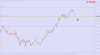
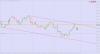
The three lines I have hand drawn on this 60-minute USDJPY candlestick chart represent three key aspects of my Numerical Price Prediction (NPP) Forex Trading Strategy.
View attachment 190428
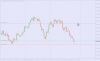
I have entered a long position because the violet-colored “leg” which conveys the direction of the immediate trend, has turned north. However, this is an aggressive entry, because the crimson-colored “swing” (as I call it) is still donning a negative slope, and it is to this line that I assign the greatest amount of significance. It would have therefore been more prudent of me, indeed wiser of me, to wait for the crimson-colored swing to evidence a slight upward hook before entering a long position. The two saving graces that give me hope of this trade nonetheless ending in success, despite my aggressive entry, include the fact that price has already climbed above the swing, and more importantly, that the slope of the black line, which I give final say in terms of overall bias, indicates that the bulls are still firmly in control, meaning that sooner or later, this pair should ultimately be headed north.
I entered a USDJPY long position based on an upward reversal in my short-term violet-colored trend line, stating at the time that the move was aggressive and that it would be wiser to wait for my crimson-colored “swing line” to hook to the north as well. I then abandoned that trade when the piece of self-advice I chose to ignore turned out to be true. I subsequently entered a short position seeking a conservative five pips worth of profit based on my assigning the most significance to the crimson swing line, which was still sloping downward.

As it turns out, I could have realized a gain two or three times that size, so I might eventually prohibit myself from seeking anything less than 10 pips per trade, and I will definitely have to give serious consideration to never again trading against the crimson moving average (only hand-drawn approximations appear in the above image).
As it turns out, I could have realized a gain two or three times that size, so I might eventually prohibit myself from seeking anything less than 10 pips per trade, and I will definitely have to give serious consideration to never again trading against the crimson moving average (only hand-drawn approximations appear in the above image).
Last edited: