Is China Stockpiling Resources to Prepare for War?
May 29, 2024
Is China's Economy Facing Its Own 'Lost Decades'?
By Micah McCartney China News Reporter
https://www.newsweek.com/china-stoc...aiwan-economy-gold-oil-ukraine-russia-1905113
China's rapid accumulation of commodities has drawn global attention and led some analysts to speculate President Xi Jinping's country is girding itself for war over Taiwan.
"Xi seems to have studied the sanctions playbook the West used against Russia over Ukraine and subsequently initiated long-lead protective measures to batten down the hatches of China's economy to resist similar pressure," former Office of Naval Intelligence head Michael Studeman wrote recently on foreign policy analysis website War on the Rocks.
China claims democratic Taiwan as its territory, though Beijing's ruling Chinese Communist Party has never governed there. U.S. officials believe Xi has instructed Chinese forces to be prepared to invade the island by 2027, though opinion in Washington is divided on the reality of this threat.
Among the resources being stockpiled is gold. Gold prices hit record highs in recent months as China's central bank diversified its holdings and consumers turned to the safe haven amid a flagging stock market and the country's strict capital controls.
The People's Bank of China increased its gold reserves for the 18th consecutive month in April, boosting them by 5 percent in dollar terms following an 8 percent rise in March.
"Gold reserves have always been an important part of China's diversified international reserves." Liu Pengyu, spokesperson for the Chinese embassy in the U.S., told Newsweek when asked whether the stockpiling was a sign of preparations for war. "From a long-term and strategic perspective, China dynamically adjusts the allocation of its international reserve portfolio as needed to ensure the safety, liquidity, preservation, and appreciation of international reserves," he added.
Taiwan has not commented publicly on China's stockpiling.
China's buying streak extends to oil as well. Already the world's largest importer, China bought a record 11.3 million barrels per day last year. However, this 10 percent increase came amid increased demand for fuel after the end of China's strict pandemic-era restrictions.
"China is also working to mitigate its exposure to potential food and energy embargoes, building up its strategic petroleum reserves and constructing coal-fired plants with renewed fervor," Studeman said. He added that Xi expects a strong international backlash over a potential invasion of Taiwan and is preparing China to ride it out.
Tensions Rising
Tensions in the Taiwan Strait rose further last week. Chinese forces kicked off two days of drills around Taiwan to punish the island over its inauguration of Beijing-skeptic President Lai Ching-te. China said the exercises served to test the People's Liberation Army's ability to "occupy and control key areas."
Another potential flashpoint is the South China Sea, where China is locked in an escalating territorial dispute with the Philippines, which has a mutual defense treaty with the U.S.
Other analysts have argued China may be poised to use what economists have called an economic "nuclear option," or intentional devaluation of its currency to boost its exports.
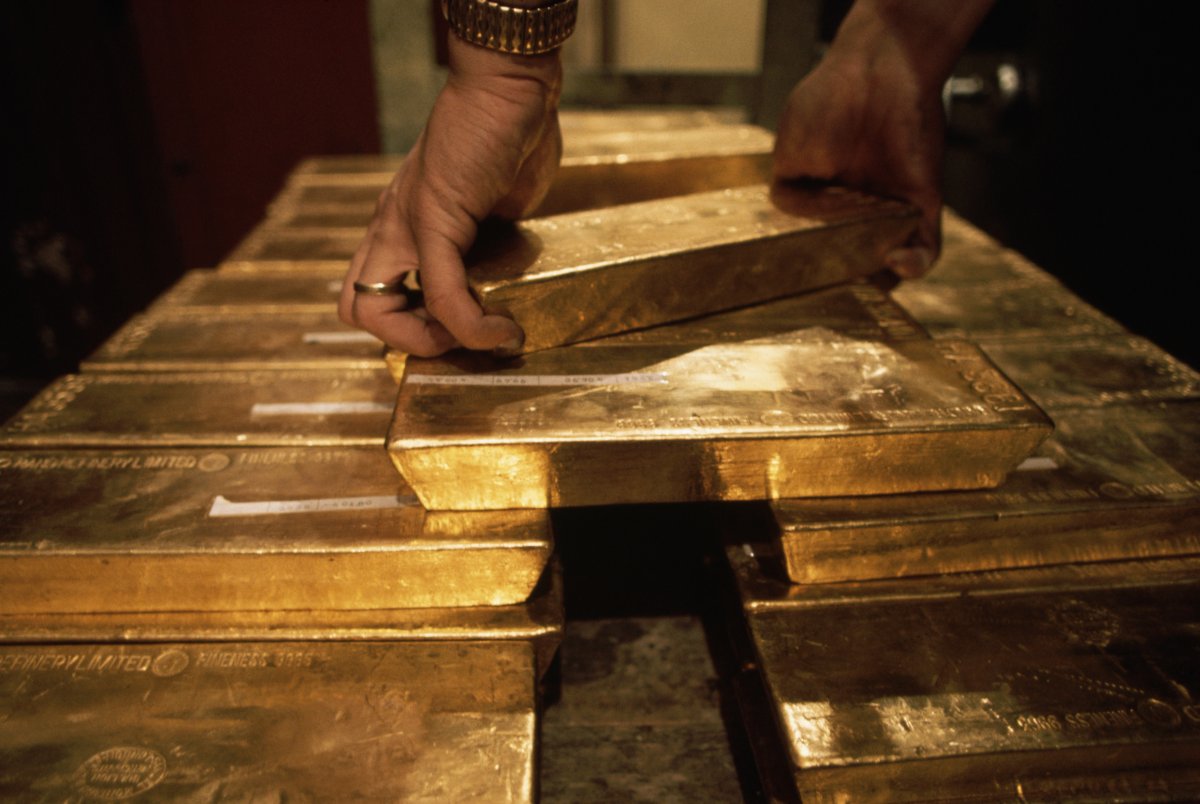
This file photo shows a pile of gold ingots. Gold is among the commodities China has been rapidly buying up as it diversifies away from dollar-denominated assets. Marc Garanger/Getty Images
Still others believe that China's stockpiling of resources does not necessarily signal imminent war over Taiwan, saying that increasing autonomy and reducing the West's ability to weaponize these resources against China is a strategic move in its own right.
"What is likely driving Beijing's acceleration of efforts to improve China's self-reliance and potential sanction resilience is not so much preparation for military adventurism, but rather a reaction to how quickly and how united the West acted to economically punish Russia for its invasion of Ukraine," Nathan Attrill, an analyst at the Australian Strategic Policy Institute, told Newsweek.
"China is much more exposed to the global economy than Russia was, and this gives the West leverage over China that its leaders absolutely do not want," he added.
Under Xi's leadership, the Chinese government has been seeking greater control over resources contributing to its national security and prosperity, Attrill said. "Not just for any future conflict, but to make China strong on its own terms and able to achieve its foreign policy goals without the need to fight."
The theories that stockpiling could be a sign of preparations for war were not new, said Vincent Deluard, director of Global Macro Strategy at financial services company StoneX Group Inc.
He compared the situation with the U.S.'s creation of the Strategic Petroleum Reserve, "when the U.S. becomes dependent on Middle Eastern oil and realizes it could be lost any time."
Autonomy is China's "overriding strategic goal," he added.
May 29, 2024
Is China's Economy Facing Its Own 'Lost Decades'?
By Micah McCartney China News Reporter
https://www.newsweek.com/china-stoc...aiwan-economy-gold-oil-ukraine-russia-1905113
China's rapid accumulation of commodities has drawn global attention and led some analysts to speculate President Xi Jinping's country is girding itself for war over Taiwan.
"Xi seems to have studied the sanctions playbook the West used against Russia over Ukraine and subsequently initiated long-lead protective measures to batten down the hatches of China's economy to resist similar pressure," former Office of Naval Intelligence head Michael Studeman wrote recently on foreign policy analysis website War on the Rocks.
China claims democratic Taiwan as its territory, though Beijing's ruling Chinese Communist Party has never governed there. U.S. officials believe Xi has instructed Chinese forces to be prepared to invade the island by 2027, though opinion in Washington is divided on the reality of this threat.
Among the resources being stockpiled is gold. Gold prices hit record highs in recent months as China's central bank diversified its holdings and consumers turned to the safe haven amid a flagging stock market and the country's strict capital controls.
The People's Bank of China increased its gold reserves for the 18th consecutive month in April, boosting them by 5 percent in dollar terms following an 8 percent rise in March.
"Gold reserves have always been an important part of China's diversified international reserves." Liu Pengyu, spokesperson for the Chinese embassy in the U.S., told Newsweek when asked whether the stockpiling was a sign of preparations for war. "From a long-term and strategic perspective, China dynamically adjusts the allocation of its international reserve portfolio as needed to ensure the safety, liquidity, preservation, and appreciation of international reserves," he added.
Taiwan has not commented publicly on China's stockpiling.
China's buying streak extends to oil as well. Already the world's largest importer, China bought a record 11.3 million barrels per day last year. However, this 10 percent increase came amid increased demand for fuel after the end of China's strict pandemic-era restrictions.
"China is also working to mitigate its exposure to potential food and energy embargoes, building up its strategic petroleum reserves and constructing coal-fired plants with renewed fervor," Studeman said. He added that Xi expects a strong international backlash over a potential invasion of Taiwan and is preparing China to ride it out.
Tensions Rising
Tensions in the Taiwan Strait rose further last week. Chinese forces kicked off two days of drills around Taiwan to punish the island over its inauguration of Beijing-skeptic President Lai Ching-te. China said the exercises served to test the People's Liberation Army's ability to "occupy and control key areas."
Another potential flashpoint is the South China Sea, where China is locked in an escalating territorial dispute with the Philippines, which has a mutual defense treaty with the U.S.
Other analysts have argued China may be poised to use what economists have called an economic "nuclear option," or intentional devaluation of its currency to boost its exports.
This file photo shows a pile of gold ingots. Gold is among the commodities China has been rapidly buying up as it diversifies away from dollar-denominated assets. Marc Garanger/Getty Images
Still others believe that China's stockpiling of resources does not necessarily signal imminent war over Taiwan, saying that increasing autonomy and reducing the West's ability to weaponize these resources against China is a strategic move in its own right.
"What is likely driving Beijing's acceleration of efforts to improve China's self-reliance and potential sanction resilience is not so much preparation for military adventurism, but rather a reaction to how quickly and how united the West acted to economically punish Russia for its invasion of Ukraine," Nathan Attrill, an analyst at the Australian Strategic Policy Institute, told Newsweek.
"China is much more exposed to the global economy than Russia was, and this gives the West leverage over China that its leaders absolutely do not want," he added.
Under Xi's leadership, the Chinese government has been seeking greater control over resources contributing to its national security and prosperity, Attrill said. "Not just for any future conflict, but to make China strong on its own terms and able to achieve its foreign policy goals without the need to fight."
The theories that stockpiling could be a sign of preparations for war were not new, said Vincent Deluard, director of Global Macro Strategy at financial services company StoneX Group Inc.
He compared the situation with the U.S.'s creation of the Strategic Petroleum Reserve, "when the U.S. becomes dependent on Middle Eastern oil and realizes it could be lost any time."
Autonomy is China's "overriding strategic goal," he added.