Opinion
https://www.afr.com/companies/mining/rio-ceo-s-five-lessons-from-boom-time-excess-20191028-p534zx

Rio CEO's five lessons from boom time excess
Big mining's next frontier is the digital world, and growing risk aversion means that shareholders should continue to earn an overweight share of the sector's wealth creation, says Jean-Sebastien Jacques
Matthew StevensColumnist
Oct 28, 2019 — 11.00pm
Now there is a number to warm the cockles of Evy Hambro’s wealth-managing heart.
According to Rio Tinto chief executive Jean-Sebastien Jacques, the top 40 mining houses have returned $US400 billion to shareholders over the past decade.
In a keynote address that opened the festival of mining that is LME Week in London, Jacques contrasted this massive transfer of wealth with the shareholder value that was burned through the misjudgment released through the opening decade of China’s immersion in seaborne commodities markets.
Over the decade to 2010, the top 40 mining cohort spent $US300 billion on capital works as it tried to catch up to China’s shift to import dependence while throwing a further $US600 billion at mergers and acquisitions.
The result was a sustained retreat in shareholder returns ($US140 billion between 2000-10) and an erosion of confidence within and without an industry whose race for additional capacity triggered sloppiness enough to force $US250 billion of impairments.
Brackrock’s Hambro became one of the voices in the investor wilderness who pushed loudly for a more prudent approach to capital allocation and one that preferably delivered shareholders with a greater share of boom time wealth.
Wishful thinking
From 2013 or so, Hambro’s wishful thinking became sectoral orthodoxy and shareholders now sit rewardingly embedded as senior priorities in a host of capital allocation strategies that differ in name more than detail.
As we have noted here often enough, China’s arrival in seaborne raw materials markets required an unprecedented re-basing of mining sector capacity. Fuelled by record prices, the miners responded rapidly to market signals and invested heavily. And yes, mistakes were made and shareholder wealth was occasionally wasted.
But not all was lost through in that era of excessive exuberance. The boom also built a bigger base of supply that will be harvested ever more efficiently over coming generations, making shareholders and nations richer.
And that, in the end, is why the miners have been able to afford the $US400 million of capital returns made mostly through the latter half of this decade.
In his keynote address, Jacques offered his five big lessons from the resources sector’s tumultuous opening to the 21st century.
The first and most important is that “volume growth for the sale of it and mega M&A do not equal value creation”, and there is “real strength in discipline”.
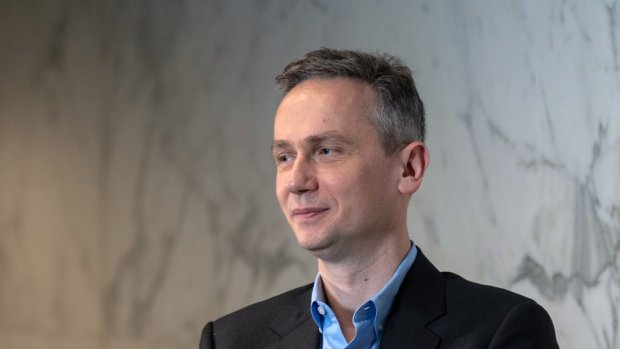
Jean-Sebastien Jacques says miners of the future 'will face greater regulation and scrutiny'. Bloomberg
“With slow global economic growth likely, at least in the years ahead, the appetite for risk-taking in our industry will be low and non-organic growth will be harder to come by,” he forecast.
“All-in-all, I think a different way of looking at ‘growth’ will be needed.''
Jacques offered a three-tiered template for the industry and its investors to measure growth: growth in free cash flow for share, growth through development of new resources, and growth in new profit pools born of innovation.
This risk aversion is likely to demand a new approach to the mega-projects that are such a feature of the resources sector. But when they are necessary they “may need the United Nations of investors to reduce risk and leverage different capabilities,” Jacques said.
The Book of JS
All of that leads neatly to the second big lesson in the Book of JS: China is not just a customer, "It is a major developer, potential partner and competitor''.
“In some ways, we underestimate China as a new entrant in the industry, as a developer and an owner of mines. Who knows who may enter our industry next? Tesla? Google? Alibaba?”
It is worth noting that this idea of sectoral disruption from seemingly unexpected corners of the global economy is a theme that Jacques continues to ponder publicly.
There is familiarity too with the third lesson of our mining times, which is that “big might not necessarily be beautiful”, before offering up the Winu copper discovery in Western Australia’s north-west as a project that might benefit from a more agile approach to project planning.
“In terms of resource development, maybe the majors also need to think more like fast moving juniors,” he said. “Instead of looking for the big bang, maximum NPV (net present value) development options, perhaps we should look to stage-gate investments, starting smaller mines, which can be built quickly and safely with embedded optionality for growth.
“Shorter build means quicker cash flows to shareholders, communities and governments, de-risking additional investment decisions,” he said, before admitting to a level of frustration at the difficulties of forcing evolutionary change on a 146-year-old business.
Lesson four, according to Jacques, is that the industry is going to be defined and redefined by its partnerships and its ability to thrive in a “new sustainability age”. He later nominated broad partnerships as the only effective pathway to climate change mitigation.
“And lastly, we must be better tuned-in to the changing world around us. We must adapt as we have been doing for a century or more, but we need to do it quicker than ever before to stay on the front foot.”
The future will be....
So what does the future of mining look like?
Well, Jacques sees it as an ever more complex place. “There is absolutely no doubt in my mind we will face greater regulation and scrutiny, a war for talent and new competitors,” he said.
“So 2003-2013 were about excess, the late 2010s about discipline, perhaps the 2020s will be more about strength and resilience,” he said, before recommending that the industry “needs to drive its own agenda”.
Interestingly, the man that is building the world’s first thinking mine, that is deploying new bulk mining technologies in Mongolia and that imagines a remotely operated future for a copper mine two kilometres deep below the surface of an Arizona desert said that ”truly transformative” technological change has proven scarce in the mining business.
For the historians out there, Jacques nominated the mechanisation of mining between 1890-1910 and the breakthroughs in aluminium and copper processing through the 1950s as rare examples of tech game-changers.
Until recently, since then it was all about getting bigger and moving ever more tonnes. But the mining world is being tilted on its axis by new technologies and new ways of thinking. Jacques cited automation and China’s low capital model as steps forward, before recommending that “digital platforms” will bring mining to its next frontier.
Scaling down
With that Jacques offered what we can only assume is informed speculation about the way technology will allow Rio Tinto’s Pilbara iron ore business to prosper beyond peak demand in China.
“As demand for some materials remains flat or declines and the circular economy (a new-fangled way of saying recycling) takes hold, the push for scale will change,” he started. “Technology and innovation will play a key role. We are likely to see smaller electric trucks using GPS and AI to move to the right areas of the pit, reducing payloads but potentially increasing speed.
“Rail locos may be replaced by autonomous rail-cars and we can radically reshape the blending we do today and change the way the industry has thought about cut-off grades. This could potentially unlock billions of tonnes of previously uneconomic resources and lead to the mining of waste and tailings.”
As we noted with Rio Tinto’s announcement of a “eureka” moment that might see it mine lithium from the waste dumps created by 100 years of boron mining on California’s Mojave Desert, this would be history repeating itself. To refresh, Rio Tinto’s Australian history started with new technology that allowed the extraction of zinc from waste dumps in Broken Hill.
Future mining will also be a place more attuned to relentless expectations of shareholders, communities and governments. Miners must be seen as “part of the solution”, but the sector’s approach “needs to be based on a pragmatic kind of sustainability” that retains “profitability at its heart”.
“Society expects more of our industry which in turn brings with it a sea change in shareholder expectations and more and more questions on our business model,” Jacques said.
“It is already starting to happen. There is absolutely no doubt we must play our part in reducing emissions for future generations. This requirement is already driving structural changes across our industry, limiting investment in commodities such as thermal coal, or investment in companies who mine coal.''
https://www.afr.com/companies/mining/rio-ceo-s-five-lessons-from-boom-time-excess-20191028-p534zx
Rio CEO's five lessons from boom time excess
Big mining's next frontier is the digital world, and growing risk aversion means that shareholders should continue to earn an overweight share of the sector's wealth creation, says Jean-Sebastien Jacques
Matthew StevensColumnist
Oct 28, 2019 — 11.00pm
Now there is a number to warm the cockles of Evy Hambro’s wealth-managing heart.
According to Rio Tinto chief executive Jean-Sebastien Jacques, the top 40 mining houses have returned $US400 billion to shareholders over the past decade.
In a keynote address that opened the festival of mining that is LME Week in London, Jacques contrasted this massive transfer of wealth with the shareholder value that was burned through the misjudgment released through the opening decade of China’s immersion in seaborne commodities markets.
Over the decade to 2010, the top 40 mining cohort spent $US300 billion on capital works as it tried to catch up to China’s shift to import dependence while throwing a further $US600 billion at mergers and acquisitions.
The result was a sustained retreat in shareholder returns ($US140 billion between 2000-10) and an erosion of confidence within and without an industry whose race for additional capacity triggered sloppiness enough to force $US250 billion of impairments.
Brackrock’s Hambro became one of the voices in the investor wilderness who pushed loudly for a more prudent approach to capital allocation and one that preferably delivered shareholders with a greater share of boom time wealth.
Wishful thinking
From 2013 or so, Hambro’s wishful thinking became sectoral orthodoxy and shareholders now sit rewardingly embedded as senior priorities in a host of capital allocation strategies that differ in name more than detail.
As we have noted here often enough, China’s arrival in seaborne raw materials markets required an unprecedented re-basing of mining sector capacity. Fuelled by record prices, the miners responded rapidly to market signals and invested heavily. And yes, mistakes were made and shareholder wealth was occasionally wasted.
But not all was lost through in that era of excessive exuberance. The boom also built a bigger base of supply that will be harvested ever more efficiently over coming generations, making shareholders and nations richer.
And that, in the end, is why the miners have been able to afford the $US400 million of capital returns made mostly through the latter half of this decade.
In his keynote address, Jacques offered his five big lessons from the resources sector’s tumultuous opening to the 21st century.
The first and most important is that “volume growth for the sale of it and mega M&A do not equal value creation”, and there is “real strength in discipline”.
Jean-Sebastien Jacques says miners of the future 'will face greater regulation and scrutiny'. Bloomberg
“With slow global economic growth likely, at least in the years ahead, the appetite for risk-taking in our industry will be low and non-organic growth will be harder to come by,” he forecast.
“All-in-all, I think a different way of looking at ‘growth’ will be needed.''
Jacques offered a three-tiered template for the industry and its investors to measure growth: growth in free cash flow for share, growth through development of new resources, and growth in new profit pools born of innovation.
This risk aversion is likely to demand a new approach to the mega-projects that are such a feature of the resources sector. But when they are necessary they “may need the United Nations of investors to reduce risk and leverage different capabilities,” Jacques said.
The Book of JS
All of that leads neatly to the second big lesson in the Book of JS: China is not just a customer, "It is a major developer, potential partner and competitor''.
“In some ways, we underestimate China as a new entrant in the industry, as a developer and an owner of mines. Who knows who may enter our industry next? Tesla? Google? Alibaba?”
It is worth noting that this idea of sectoral disruption from seemingly unexpected corners of the global economy is a theme that Jacques continues to ponder publicly.
There is familiarity too with the third lesson of our mining times, which is that “big might not necessarily be beautiful”, before offering up the Winu copper discovery in Western Australia’s north-west as a project that might benefit from a more agile approach to project planning.
“In terms of resource development, maybe the majors also need to think more like fast moving juniors,” he said. “Instead of looking for the big bang, maximum NPV (net present value) development options, perhaps we should look to stage-gate investments, starting smaller mines, which can be built quickly and safely with embedded optionality for growth.
“Shorter build means quicker cash flows to shareholders, communities and governments, de-risking additional investment decisions,” he said, before admitting to a level of frustration at the difficulties of forcing evolutionary change on a 146-year-old business.
Lesson four, according to Jacques, is that the industry is going to be defined and redefined by its partnerships and its ability to thrive in a “new sustainability age”. He later nominated broad partnerships as the only effective pathway to climate change mitigation.
“And lastly, we must be better tuned-in to the changing world around us. We must adapt as we have been doing for a century or more, but we need to do it quicker than ever before to stay on the front foot.”
The future will be....
So what does the future of mining look like?
Well, Jacques sees it as an ever more complex place. “There is absolutely no doubt in my mind we will face greater regulation and scrutiny, a war for talent and new competitors,” he said.
“So 2003-2013 were about excess, the late 2010s about discipline, perhaps the 2020s will be more about strength and resilience,” he said, before recommending that the industry “needs to drive its own agenda”.
Interestingly, the man that is building the world’s first thinking mine, that is deploying new bulk mining technologies in Mongolia and that imagines a remotely operated future for a copper mine two kilometres deep below the surface of an Arizona desert said that ”truly transformative” technological change has proven scarce in the mining business.
For the historians out there, Jacques nominated the mechanisation of mining between 1890-1910 and the breakthroughs in aluminium and copper processing through the 1950s as rare examples of tech game-changers.
Until recently, since then it was all about getting bigger and moving ever more tonnes. But the mining world is being tilted on its axis by new technologies and new ways of thinking. Jacques cited automation and China’s low capital model as steps forward, before recommending that “digital platforms” will bring mining to its next frontier.
Scaling down
With that Jacques offered what we can only assume is informed speculation about the way technology will allow Rio Tinto’s Pilbara iron ore business to prosper beyond peak demand in China.
“As demand for some materials remains flat or declines and the circular economy (a new-fangled way of saying recycling) takes hold, the push for scale will change,” he started. “Technology and innovation will play a key role. We are likely to see smaller electric trucks using GPS and AI to move to the right areas of the pit, reducing payloads but potentially increasing speed.
“Rail locos may be replaced by autonomous rail-cars and we can radically reshape the blending we do today and change the way the industry has thought about cut-off grades. This could potentially unlock billions of tonnes of previously uneconomic resources and lead to the mining of waste and tailings.”
As we noted with Rio Tinto’s announcement of a “eureka” moment that might see it mine lithium from the waste dumps created by 100 years of boron mining on California’s Mojave Desert, this would be history repeating itself. To refresh, Rio Tinto’s Australian history started with new technology that allowed the extraction of zinc from waste dumps in Broken Hill.
Future mining will also be a place more attuned to relentless expectations of shareholders, communities and governments. Miners must be seen as “part of the solution”, but the sector’s approach “needs to be based on a pragmatic kind of sustainability” that retains “profitability at its heart”.
“Society expects more of our industry which in turn brings with it a sea change in shareholder expectations and more and more questions on our business model,” Jacques said.
“It is already starting to happen. There is absolutely no doubt we must play our part in reducing emissions for future generations. This requirement is already driving structural changes across our industry, limiting investment in commodities such as thermal coal, or investment in companies who mine coal.''