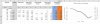
I have a day trading strategy. In the attached photo, you can see its performance trading Nasdaq futures. The top panel is the strategy's cumulative returns in dollars, net of commissions. It has led to a profit of ~$300K over about 24 years. So, I can divide 300K by 24 years by the required capital to get annual returns. Assuming a $20K average required capital during these 24 years, that would equal $300K/24/$20K or 62.5% return on capital.
The bottom panel shows the same strategy performance but in percentage (blue line) (vs the Nasdaq returns (gray line)). For example, if Nasdaq went up by 2% in day and the strategy was long, this curve would go up by 2%. Cumulative percentage returns is about 400 at the end so that would be about 400%/24 or 17% annual returns (vs Nasdaq annual return of 250%/24 or 10.5%)
The maximum draw-downs and their peak vs trough dates and magnitude are also annotated for each curve.
I have a bunch of strategies like this and I am wondering if I should use the dollar curve or percentage curve to compare them. As you can see, the two curves have very different shapes and that's what confuses me. For this example, the dollar curve has a maximum draw-down of 20% (a whopping $49670) in 2021 but the percentage curve only a 9.21% in 2009. For the dollar curve, the magnitude of the ebbs and flows grows as time passes corresponding to the growth in the dollar value of a contract (I think). For example, a $1000 change in the curve at the beginning of the curve would amount to a large change while at the end a very small change given that the cumulative curve is around $300,000. But the percentage curve grows more uniformly.
Also, the huge maximum draw-down in the dollar curve happens in 2021 but note how moderate the decline in the percentage curve is during that period. So, looking at the dollar curve, I would want to go investigate what the strategy did in 2021 to incur that big loss but according to the percentage curve, it was just a moderate decline.
My initial sense is that the percentage change curve is a better metric for comparing strategies. However, different futures have different values and thus different capital requirements as well as commissions. For example, you'd need much more money to trade a Nasdaq contract than a Russell 2000 one. Using the percentage returns curve ignores this fact.
So, in sum, what did I got right and wrong here? Which curve should I use to compare different strategies?


The bottom panel shows the same strategy performance but in percentage (blue line) (vs the Nasdaq returns (gray line)). For example, if Nasdaq went up by 2% in day and the strategy was long, this curve would go up by 2%. Cumulative percentage returns is about 400 at the end so that would be about 400%/24 or 17% annual returns (vs Nasdaq annual return of 250%/24 or 10.5%)
The maximum draw-downs and their peak vs trough dates and magnitude are also annotated for each curve.
I have a bunch of strategies like this and I am wondering if I should use the dollar curve or percentage curve to compare them. As you can see, the two curves have very different shapes and that's what confuses me. For this example, the dollar curve has a maximum draw-down of 20% (a whopping $49670) in 2021 but the percentage curve only a 9.21% in 2009. For the dollar curve, the magnitude of the ebbs and flows grows as time passes corresponding to the growth in the dollar value of a contract (I think). For example, a $1000 change in the curve at the beginning of the curve would amount to a large change while at the end a very small change given that the cumulative curve is around $300,000. But the percentage curve grows more uniformly.
Also, the huge maximum draw-down in the dollar curve happens in 2021 but note how moderate the decline in the percentage curve is during that period. So, looking at the dollar curve, I would want to go investigate what the strategy did in 2021 to incur that big loss but according to the percentage curve, it was just a moderate decline.
My initial sense is that the percentage change curve is a better metric for comparing strategies. However, different futures have different values and thus different capital requirements as well as commissions. For example, you'd need much more money to trade a Nasdaq contract than a Russell 2000 one. Using the percentage returns curve ignores this fact.
So, in sum, what did I got right and wrong here? Which curve should I use to compare different strategies?
Attachments
Last edited: