
You are using an out of date browser. It may not display this or other websites correctly.
You should upgrade or use an alternative browser.
You should upgrade or use an alternative browser.
BPA Free Plastic: Why It Does NOT Protect You | Harvard Professor Joseph Allen
- Thread starter Frederick Foresight
- Start date


Non-BPA-free plastic probably isn't so great either.
https://grist.org/science/bottled-water-nanoplastics-microplastics/
Maybe we should just use glass?

https://grist.org/science/bottled-water-nanoplastics-microplastics/
Bottled water has up to 100 times more plastic particles than previously thought
New research shows that every liter of bottled water contains 240,000 microscopic pieces of plastic.
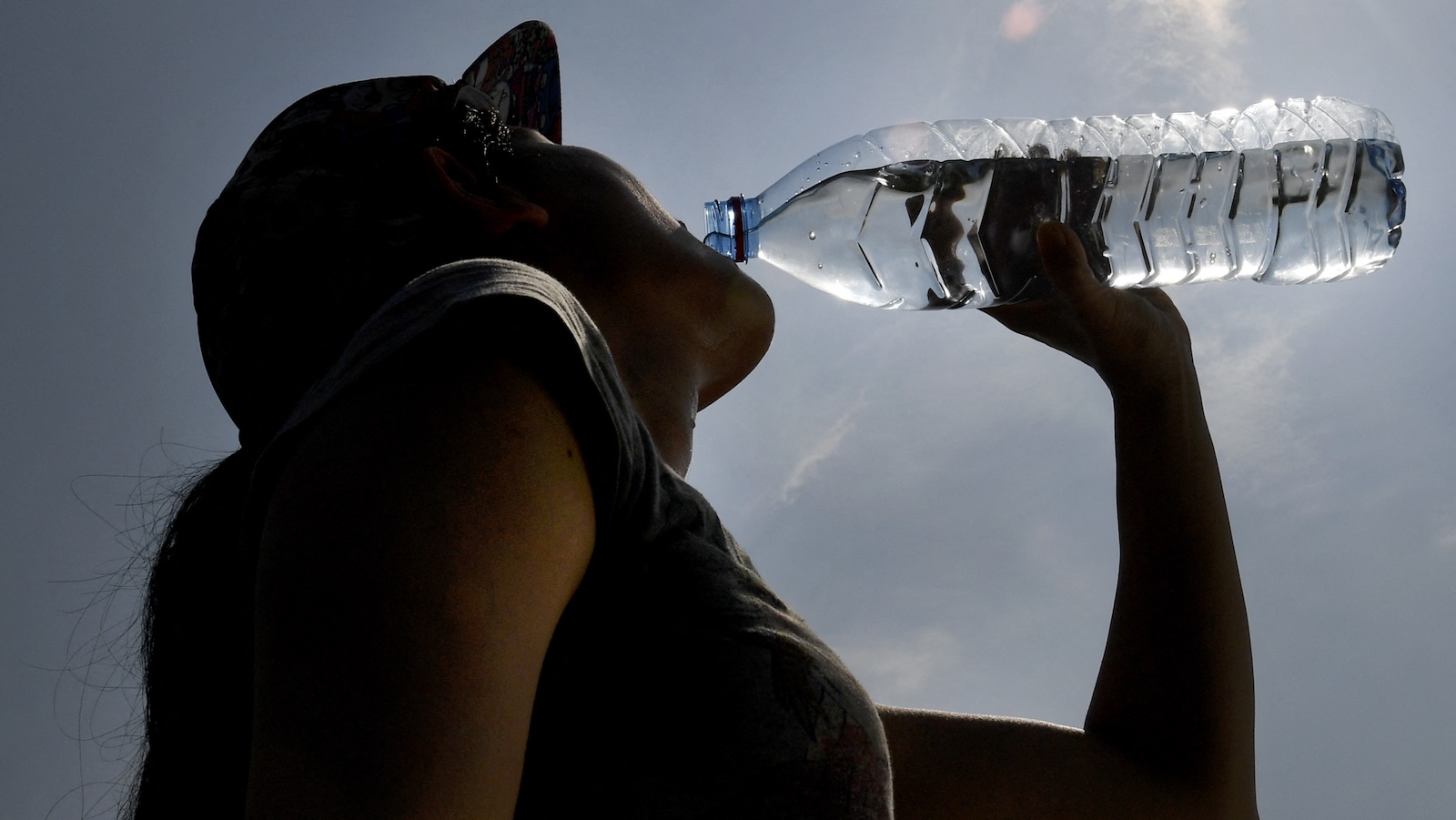
Fred Tanneau / AFP via Getty Images
Joseph WintersStaff Writer
Published
Jan 09, 2024
Topic
Climate + Science
Share/Republish
Copy LinkRepublish
At this point, it’s common knowledge that bottled water contains microplastics — fragments of the insidious material that can be as small as a bacterial cell. But the problem is much worse than previously known: It turns out that bottled water harbors hundreds of thousands of even tinier pieces of the stuff.
A paper published Monday used a novel technique to analyze one-liter samples of bottled water for plastic granules, going down to just 50 to 100 nanometers in length — roughly the width of a virus. They found nearly a quarter of a million of these tiny particles per liter, about 10 to 100 times more than previously published estimates.
“We’ve opened up a whole new world,” Wei Min, one of the paper’s authors and a chemistry professor at Columbia University, told Grist. Until now, scientists lacked a quick and efficient way to identify nanoplastics, hindering research on their health and environmental impacts.
To conduct their analysis, researchers at Columbia and Rutgers universities filtered bottled water from three different brands through an ultrafine membrane. They then shone two lasers, calibrated to recognize the chemical bonds binding the nanoplastic particles, onto the membrane. Then it was a simple matter of counting all the different particles of plastic. They estimated that a typical one-liter bottle contains 240,000 of them.
Sherri Mason, an associate research professor at Penn State Erie who studies microplastics but was not involved in the new research, called the technique “groundbreaking.”
”I was blown away,” she told Grist. “It’s just really good.”
What’s more, the researchers were able to differentiate between types of nanoplastic. To their surprise, most of the particles were not polyethylene terephthalate, or PET — the material most water bottles are made of. Rather, they found more particles of polyamide (a type of nylon) and polystyrene, suggesting that the pollutants are, in a bit of irony, getting into bottled water as a result of the filling and purification process.
Polyamide also made up the bulk of the contamination by mass for two of the bottled water brands; the third brand showed a higher level of PET.
Plastic bottles in a supermarket. Matthew Horwood / Getty Images
The findings have significant implications for human health, since nanoplastics are small enough to pass through the gastrointestinal tract and lungs. After entering the bloodstream, they can lodge in the heart and brain, and can even cross through the placenta to infiltrate unborn babies. It’s not yet clear how the particles impact the body, but toxicologists worry that they could leach chemicals or release pathogens that they picked up while floating around in the environment. Some research suggests potential damage to DNA and the brain, as well as to the immune, reproductive, and nervous systems.
“We know we’re getting exposed, but we don’t know the toxicity of the exposures,” said Beizhan Yan, another of the paper’s co-authors and an environmental chemist at Columbia University. He called for further collaboration with toxicologists and public health researchers to better characterize the risks. For now, he said he opts for tap water whenever possible; it tends to have less plastic contamination.
Wei sees a handful of promising directions for further research. First, his team could expand the number of plastic polymers it can identify using the laser-microscope technique; their most recent paper only looked at seven. They could also look for nanoplastics in other places, like packaged food or wastewater from washing machines, and improve the technology to detect even smaller particles.
“Fifty to 100 nanometers is our current detection limit, but that’s not a hard stop,” Wei said.
Mason said the research should inspire action from U.S. policymakers, who have the power to limit plastic production by supporting the Break Free From Plastic Pollution Act — a federal bill that was reintroduced in Congress for the third time last October — or by endorsing plastic reduction as part of the United Nations’ global plastics treaty.
“I don’t want a plasticized world,” she said. “We need to make it clear to our representatives that we need to chart a new path forward.”
Maybe we should just use glass?
Macropanic Over Nanoplastics?
https://www.mcgill.ca/oss/article/c...th-and-nutrition/macropanic-over-nanoplastics
A study that some scientists have called “trailblazing” detected hundreds of thousands of nanoplastic particles in a liter of bottled water. How rattled should we be?
I keep teasing my analytical chemist colleagues that they are responsible for the anxiety that so many people have about chemicals invading their lives. Hardly a day goes by without some report of phthalates, perfluoroalkyl substances (PFAS), pesticides, dioxins, bisphenol A, or a host of other mischievous “toxins” being detected in our food and water. That detective work is carried out by analytical chemists who continue to devise better and better means to uncover smaller and smaller amounts of contaminants. Amazingly, these days they can detect substances that are present below the part per trillion level!
To have a feel for what a part per trillion means, imagine dissolving a substance the size of a grain of sand in an Olympic size swimming pool. Then you have a concentration of one part per trillion. If you are keen for another analogy, a part per trillion is the width of a credit card relative to the distance between the Earth and the moon. But let’s keep in mind that the mere presence of a substance, even one that at higher concentrations can be shown to be harmful, cannot be equated with the presence of risk. Determining risk is a whole other, extremely challenging, issue. Risk is a function not only of the toxicity of a substance but also of the extent and means of exposure.
A study reporting the presence of nanoplastics in bottled water, just published in the highly reputable Proceedings of the National Academy of Sciences, caused a big splash in the media. Finding 200,000 particles of plastic in a liter of bottle water was bound to generate headlines. But before panicking we better have a look at the details of the study and what nanoplastics are all about. Well, we can’t really have a look because such particles cannot be seen, not even with an optical microscope. Their detection relies on extremely sophisticated methods such as atomic force microscopy, or in the present case, “hyperspectral stimulated Raman scattering microscopy.” That technique is way beyond my understanding, but it can detect particles in the range of 1-100 nanometers, five thousand times smaller than a grain of sand. That is impressive! Especially given that just five years earlier, a study using the methods then available was only able to detect about 300 particles smaller than 100 nanometers in a liter of bottled water.
Now let’s try to get a handle on what finding these hundreds of thousands of particles in water means. Although the ability to detect nanoplastics is relatively recent, we have known since the 1980s about the presence in natural waters of microplastics, defined as particles smaller than half a millimeter. These have numerous sources. Discarded plastic bottles, cutlery, straws, shopping bags, food containers and condoms end up in water systems and break down into microplastics when exposed to sunlight and the pounding of waves. Every time we do laundry, synthetic fibers shed microplastics, as do tires when they rub against the road. These microplastics eventually find their way into our food, water, and even the air we breathe. The question is what they are doing to us. That question is even more pertinent with nanoplastics because these are small enough to invade not only tissues and organs, but individual cells as has been shown in laboratory studies. In mice, nanoplastics interfere with fetal development and increase the risk of Parkinson’s disease. It stands to reason that any foreign substance that can enter cells is a concern.
There is yet another issue with plastic particles floating around in our bodies. Plastic manufacture relies on the use of additives such as antimicrobials, antistatic agents, flame retardants, pigments, light stabilizers, lubricants and plasticizers. Conceivably, trace amounts of these chemicals can leach into our bloodstream, as can some of the residual chemicals from which plastics are manufactured. Bisphenol A (BPA), acrylic acid and styrene fall into this category. Then there is the potential of plastics to attract to their surface any chemicals with which they may come into contact. Pesticides, drug residues, and dioxins, all of which are water contaminants, can adhere to the surface of plastics and be transported into our bodies. Many of these chemicals are known to be toxic in high doses, and some, phthalates and bisphenol A in particular, are “endocrine disruptors,” meaning that they can interfere with the function of hormones even at very low levels.
While nano and microplastics are a source of exposure to phthalates, they are by no means the major exposure. Phthalates are added to many plastics as “plasticizers” to increase flexibility, a requirement for food packaging, medical tubing, vinyl gloves, floor tiles, shower curtains and many toys. They are also added to scented products where they retard the loss of fragrance. Phthalates are ubiquitous, appearing in almost every beverage and food as well as in virtually everyone’s urine and blood. That has prompted extensive research, particularly pertaining to their hormone-like effects. In rodents, they cause developmental problems and are associated with a shorter ano-genital distance in males, suggestive of a feminizing effect. Although the evidence is far from being iron-clad, studies have associated higher levels of endocrine disruptors in the blood with diabetes, cardiovascular disease, birth defects, obesity, certain cancers and infertility. Their presence in our bodies is not welcome.
Now back to our bottled water. Just where the thousands of nanoplastic particles that are swallowed with each gulp come from is a complex matter. Some of course come from the bottle and the cap, but there are also various nanoplastics that stem from the processing the water undergoes. Water flows through plastic pipes, valves and filter membranes that abrade and release nanoplastics. Tap water also goes through processing, so nanoplastics are found there as well, albeit fewer than in bottled water.
The bottom line is that there is no escape from nanoplastics and the chemicals they contain because they are shed from all the plastics that are engrained in our lives. The pharmaceutical, personal care product, sporting equipment, clothing, food production and electronics industries could not exist without the use of plastics. Neither could airplanes, cars, hospitals, cell phones, or sex toys. I suppose we could do without the latter, but not the rest.
There is no doubt that the benefits of plastics greatly outweigh any associated risks, but those risks are not zero. Are they macro, micro or nanorisks? At this point we have to introduce the difference between hazard and risk. Hazard is the innate property of a substance to do harm and cannot be changed. I think we can assume that the chemicals found in plastics at a high enough dose can do some harm. Risk, however, is a function of hazard, but it also takes extent of exposure into account. So, what is our exposure to nanoplastics by drinking a liter of bottled water?
A particle of nanoplastic weighs somewhere between 10-12 and 10-15 grams, let’s say 10-13 ((0.0000000000001 grams) on average. If we have 300,000 nanoparticles in a liter of water, their total weight would be 3 x 10⁻⁸ grams. To put that into perspective, a grain of sand weighs roughly 10-6 grams, so by drinking a liter of bottled water, the weight of plastic consumed would be about one one-hundredth the weight of a grain of sand. Can that be harmful? Almost certainly not. But what if we consume a liter of that water every day? Is it possible that the nanoparticles accumulate in our tissue to an extent that they can cause some sort of harm? We have no data on which to build a theory. In Sherlock Holmes immortal words, “It is a capital mistake to theorize before one has data; insensibly one begins to twist facts to suit theories, instead of theories to suit facts.”
At this point, we just cannot say whether nanoplastics in bottled water pose a risk. My guess is that in comparison with all the other risks we face in life, if there is any, it would be a very minor one. But if the study that hit the headlines with the finding of all those nanoparticles deters some people from buying bottled water, that’s fine with me. The bottles are an environmental disaster. They use up petroleum, a non-renewable resource, pollute natural water systems when they get discarded instead of being recycled, and have no health benefits over filtered tap water.
Indeed, the study by Columbia University researchers can be justly termed “trailblazing” because of the analytical technique they developed to detect such tiny, tiny particles. But as far as toxicity goes, there is no firestorm here. Maybe a few smoldering embers.
https://www.mcgill.ca/oss/article/c...th-and-nutrition/macropanic-over-nanoplastics
A study that some scientists have called “trailblazing” detected hundreds of thousands of nanoplastic particles in a liter of bottled water. How rattled should we be?
I keep teasing my analytical chemist colleagues that they are responsible for the anxiety that so many people have about chemicals invading their lives. Hardly a day goes by without some report of phthalates, perfluoroalkyl substances (PFAS), pesticides, dioxins, bisphenol A, or a host of other mischievous “toxins” being detected in our food and water. That detective work is carried out by analytical chemists who continue to devise better and better means to uncover smaller and smaller amounts of contaminants. Amazingly, these days they can detect substances that are present below the part per trillion level!
To have a feel for what a part per trillion means, imagine dissolving a substance the size of a grain of sand in an Olympic size swimming pool. Then you have a concentration of one part per trillion. If you are keen for another analogy, a part per trillion is the width of a credit card relative to the distance between the Earth and the moon. But let’s keep in mind that the mere presence of a substance, even one that at higher concentrations can be shown to be harmful, cannot be equated with the presence of risk. Determining risk is a whole other, extremely challenging, issue. Risk is a function not only of the toxicity of a substance but also of the extent and means of exposure.
A study reporting the presence of nanoplastics in bottled water, just published in the highly reputable Proceedings of the National Academy of Sciences, caused a big splash in the media. Finding 200,000 particles of plastic in a liter of bottle water was bound to generate headlines. But before panicking we better have a look at the details of the study and what nanoplastics are all about. Well, we can’t really have a look because such particles cannot be seen, not even with an optical microscope. Their detection relies on extremely sophisticated methods such as atomic force microscopy, or in the present case, “hyperspectral stimulated Raman scattering microscopy.” That technique is way beyond my understanding, but it can detect particles in the range of 1-100 nanometers, five thousand times smaller than a grain of sand. That is impressive! Especially given that just five years earlier, a study using the methods then available was only able to detect about 300 particles smaller than 100 nanometers in a liter of bottled water.
Now let’s try to get a handle on what finding these hundreds of thousands of particles in water means. Although the ability to detect nanoplastics is relatively recent, we have known since the 1980s about the presence in natural waters of microplastics, defined as particles smaller than half a millimeter. These have numerous sources. Discarded plastic bottles, cutlery, straws, shopping bags, food containers and condoms end up in water systems and break down into microplastics when exposed to sunlight and the pounding of waves. Every time we do laundry, synthetic fibers shed microplastics, as do tires when they rub against the road. These microplastics eventually find their way into our food, water, and even the air we breathe. The question is what they are doing to us. That question is even more pertinent with nanoplastics because these are small enough to invade not only tissues and organs, but individual cells as has been shown in laboratory studies. In mice, nanoplastics interfere with fetal development and increase the risk of Parkinson’s disease. It stands to reason that any foreign substance that can enter cells is a concern.
There is yet another issue with plastic particles floating around in our bodies. Plastic manufacture relies on the use of additives such as antimicrobials, antistatic agents, flame retardants, pigments, light stabilizers, lubricants and plasticizers. Conceivably, trace amounts of these chemicals can leach into our bloodstream, as can some of the residual chemicals from which plastics are manufactured. Bisphenol A (BPA), acrylic acid and styrene fall into this category. Then there is the potential of plastics to attract to their surface any chemicals with which they may come into contact. Pesticides, drug residues, and dioxins, all of which are water contaminants, can adhere to the surface of plastics and be transported into our bodies. Many of these chemicals are known to be toxic in high doses, and some, phthalates and bisphenol A in particular, are “endocrine disruptors,” meaning that they can interfere with the function of hormones even at very low levels.
While nano and microplastics are a source of exposure to phthalates, they are by no means the major exposure. Phthalates are added to many plastics as “plasticizers” to increase flexibility, a requirement for food packaging, medical tubing, vinyl gloves, floor tiles, shower curtains and many toys. They are also added to scented products where they retard the loss of fragrance. Phthalates are ubiquitous, appearing in almost every beverage and food as well as in virtually everyone’s urine and blood. That has prompted extensive research, particularly pertaining to their hormone-like effects. In rodents, they cause developmental problems and are associated with a shorter ano-genital distance in males, suggestive of a feminizing effect. Although the evidence is far from being iron-clad, studies have associated higher levels of endocrine disruptors in the blood with diabetes, cardiovascular disease, birth defects, obesity, certain cancers and infertility. Their presence in our bodies is not welcome.
Now back to our bottled water. Just where the thousands of nanoplastic particles that are swallowed with each gulp come from is a complex matter. Some of course come from the bottle and the cap, but there are also various nanoplastics that stem from the processing the water undergoes. Water flows through plastic pipes, valves and filter membranes that abrade and release nanoplastics. Tap water also goes through processing, so nanoplastics are found there as well, albeit fewer than in bottled water.
The bottom line is that there is no escape from nanoplastics and the chemicals they contain because they are shed from all the plastics that are engrained in our lives. The pharmaceutical, personal care product, sporting equipment, clothing, food production and electronics industries could not exist without the use of plastics. Neither could airplanes, cars, hospitals, cell phones, or sex toys. I suppose we could do without the latter, but not the rest.
There is no doubt that the benefits of plastics greatly outweigh any associated risks, but those risks are not zero. Are they macro, micro or nanorisks? At this point we have to introduce the difference between hazard and risk. Hazard is the innate property of a substance to do harm and cannot be changed. I think we can assume that the chemicals found in plastics at a high enough dose can do some harm. Risk, however, is a function of hazard, but it also takes extent of exposure into account. So, what is our exposure to nanoplastics by drinking a liter of bottled water?
A particle of nanoplastic weighs somewhere between 10-12 and 10-15 grams, let’s say 10-13 ((0.0000000000001 grams) on average. If we have 300,000 nanoparticles in a liter of water, their total weight would be 3 x 10⁻⁸ grams. To put that into perspective, a grain of sand weighs roughly 10-6 grams, so by drinking a liter of bottled water, the weight of plastic consumed would be about one one-hundredth the weight of a grain of sand. Can that be harmful? Almost certainly not. But what if we consume a liter of that water every day? Is it possible that the nanoparticles accumulate in our tissue to an extent that they can cause some sort of harm? We have no data on which to build a theory. In Sherlock Holmes immortal words, “It is a capital mistake to theorize before one has data; insensibly one begins to twist facts to suit theories, instead of theories to suit facts.”
At this point, we just cannot say whether nanoplastics in bottled water pose a risk. My guess is that in comparison with all the other risks we face in life, if there is any, it would be a very minor one. But if the study that hit the headlines with the finding of all those nanoparticles deters some people from buying bottled water, that’s fine with me. The bottles are an environmental disaster. They use up petroleum, a non-renewable resource, pollute natural water systems when they get discarded instead of being recycled, and have no health benefits over filtered tap water.
Indeed, the study by Columbia University researchers can be justly termed “trailblazing” because of the analytical technique they developed to detect such tiny, tiny particles. But as far as toxicity goes, there is no firestorm here. Maybe a few smoldering embers.
From Consumer Reports
Jan 4, article:
Plastic Chemicals in Foods: What Our Tests Found
The 67 grocery store foods and 18 fast foods CR tested are listed in order of total phthalates per serving. While there is no level that scientists have confirmed as safe, lower levels are better. Our results show that although the chemicals are widespread in our food, levels can vary dramatically even among similar products, so in some cases you may be able to use our chart to choose products with lower levels.
BEVERAGES
TOTAL PHTHALATES PER SERVING (NANOGRAMS)*
Brisk Iced Tea Lemon (can)
7,467
Coca-Cola Original (plastic)
6,167
Lipton Diet Green Tea Citrus (plastic)
4,433
Poland Spring 100% Natural Spring Water (plastic)
4,217
Juicy Juice 100% Juice Apple (plastic)
3,348
Pepsi Cola (can)
2,938
Juicy Juice 100% Juice Apple (cardboard box)
2,260
Gatorade Frost Thirst Quencher Glacier Freeze (plastic)
1,752
Polar Seltzer Raspberry Lime (can)
0
CANNED BEANS:
TOTAL PHTHALATES PER SERVING (NANOGRAMS)*
Hormel Chili With Beans (can)
9,847
Bush’s Chili Red Beans Mild Chili Sauce (can)
6,405
Great Value (Walmart) Baked Beans Original (can)
6,184
Bush’s Baked Beans Original (can)
3,709
Condiments
TOTAL PHTHALATES PER SERVING (NANOGRAMS)*
Mrs. Butterworth’s Syrup Original (plastic)
1,010
Hunt’s Tomato Ketchup (plastic)
574
Sweet Baby Ray’s Barbecue Sauce Original (plastic)
22
DAIRY:
TOTAL PHTHALATES PER SERVING (NANOGRAMS)*
Fairlife Core Power High Protein Milk Shake Chocolate (plastic)
20,452
SlimFast High Protein Meal Replacement Shake Creamy Chocolate (plastic)
16,916
Yoplait Original Low Fat Yogurt French Vanilla (plastic)
10,948
Tuscan Dairy Farms Whole Milk (plastic)
10,932
Ben & Jerry’s Ice Cream Vanilla (paperboard carton)
6,387
Wholesome Pantry (ShopRite) Organic Whole Milk (carton)
4,620
Great Value (Walmart) Ice Cream Homestyle Vanilla (paperboard)
3,068
Jell-O Pudding Snacks Original Chocolate (plastic)
1,756
Sargento Sliced Natural Cheddar Cheese Sharp (plastic)
1,481
Land O’Lakes Butter Salted (paper wrap/cardboard)
581
FAST FOOD.
TOTAL PHTHALATES PER SERVING (NANOGRAMS)*
Wendy’s Crispy Chicken Nuggets (paperboard)
33,980
Moe’s Southwest Grill Chicken Burrito (aluminum foil)
24,330
Chipotle Chicken Burrito (aluminum foil)
20,579
Burger King Whopper With Cheese (paper)
20,167
Burger King Chicken Nuggets (paper bag)
19,782
Wendy’s Dave’s Single With Cheese (aluminum foil/paper wrap)
19,520
McDonald’s Quarter Pounder With Cheese (cardboard)
9,956
Wendy’s Natural-Cut French Fries (paperboard)
8,876
Burger King Classic French Fries (paperboard)
8,512
McDonald’s Chicken McNuggets (cardboard)
8,030
Little Caesars Classic Cheese Pizza (cardboard box)
5,703
McDonald’s French Fries (paperboard)
5,538
McDonald’s Quarter Pounder Hamburger Patty (varied)
5,428
Taco Bell Chicken Burrito (paper wrap)
4,720
Domino’s Hand Tossed Cheese Pizza (cardboard box)
4,356
Wendy’s Dave’s Single Hamburger Patty (varied)
3,629
Burger King Whopper Hamburger Patty (varied)
2,870
Pizza Hut Original Cheese Pan Pizza (cardboard box)
2,718
GRAINS
TOTAL PHTHALATES PER SERVING (NANOGRAMS)*
General Mills Cheerios Original (paperboard box with plastic bag inside)
10,980
Success 10 Minute Boil-in-Bag White Rice (paperboard box with plastic bag insdie)
4,308
Pepperidge Farm Farmhouse Hearty White Bread (plastic bag)
2,184.
MEAT & POULTRY.
TOTAL PHTHALATES PER SERVING (NANOGRAMS)* Perdue Ground Chicken Breast (plastic)9,985
Trader Joe’s Ground Pork 80% Lean 20% Fat (plastic wrap)5,503
Premio Foods Sweet Italian Sausage (foam tray with plastic wrap)4,725
Libby’s Corned Beef (can)4,088
Bar S Chicken Jumbo Franks (plastic)3,295
Stop & Shop Ground Beef 80% Lean 20% Fat (foam tray with plastic wrap)2,729 Applegate Naturals Oven Roasted Turkey Breast (plastic)2,295
Swanson White Premium Chunk Chicken Breast (can)1,376
Johnsonville Smoked Sausage Beef Hot Links (plastic)91
PACKAGED FRUITS ANN VEGETABLES.
TOTAL PHTHALATES PER SERVING (NANOGRAMS)* Del Monte Sliced Peaches in 100% Fruit Juice (can)24,928 Green Giant Cream Style Sweet Corn (can)7,603 Del Monte Fresh Cut Italian Green Beans (can)5,264 Progresso Vegetable Classics Vegetable Soup (can)2,888 Birds Eye Steamfresh Cut Green Beans (plastic bag)907 Hunt’s Tomato Sauce (can)680
PREPARED MEALS
TOTAL PHTHALATES PER SERVING (NANOGRAMS)* Annie’s Organic Cheesy Ravioli (can)53,579 Chef Boyardee Beefaroni Pasta in Tomato and Meat Sauce (can)13,628 Banquet Chicken Pot Pie (paperboard)12,494 Campbell’s Chunky Classic Chicken Noodle Soup (plastic)6,768 Chef Boyardee Big Bowl Beefaroni Pasta in Meat Sauce (plastic)5,064 Campbell’s Chicken Noodle Soup (can)2,848 Red Baron Brick Oven Cheese-Trio Pizza (paperboard box with plastic wrap inside)1,707
SEAFOOD
TOTAL PHTHALATES PER SERVING (NANOGRAMS)* Chicken of the Sea Pink Salmon in Water Skinless Boneless (can)24,321 King Oscar Wild Caught Sardines in Extra Virgin Olive Oil (can)7,792 Snow’s Chopped Clams (can)4,380 StarKist Wild Caught Light Tuna in Water (pouch)1,735 StarKist Chunk Light Tuna in Water (can)1,687 Season Brand Sardines in Water Skinless & Boneless 1258
Jan 4, article:
Plastic Chemicals in Foods: What Our Tests Found
The 67 grocery store foods and 18 fast foods CR tested are listed in order of total phthalates per serving. While there is no level that scientists have confirmed as safe, lower levels are better. Our results show that although the chemicals are widespread in our food, levels can vary dramatically even among similar products, so in some cases you may be able to use our chart to choose products with lower levels.
BEVERAGES
TOTAL PHTHALATES PER SERVING (NANOGRAMS)*
Brisk Iced Tea Lemon (can)
7,467
Coca-Cola Original (plastic)
6,167
Lipton Diet Green Tea Citrus (plastic)
4,433
Poland Spring 100% Natural Spring Water (plastic)
4,217
Juicy Juice 100% Juice Apple (plastic)
3,348
Pepsi Cola (can)
2,938
Juicy Juice 100% Juice Apple (cardboard box)
2,260
Gatorade Frost Thirst Quencher Glacier Freeze (plastic)
1,752
Polar Seltzer Raspberry Lime (can)
0
CANNED BEANS:
TOTAL PHTHALATES PER SERVING (NANOGRAMS)*
Hormel Chili With Beans (can)
9,847
Bush’s Chili Red Beans Mild Chili Sauce (can)
6,405
Great Value (Walmart) Baked Beans Original (can)
6,184
Bush’s Baked Beans Original (can)
3,709
Condiments
TOTAL PHTHALATES PER SERVING (NANOGRAMS)*
Mrs. Butterworth’s Syrup Original (plastic)
1,010
Hunt’s Tomato Ketchup (plastic)
574
Sweet Baby Ray’s Barbecue Sauce Original (plastic)
22
DAIRY:
TOTAL PHTHALATES PER SERVING (NANOGRAMS)*
Fairlife Core Power High Protein Milk Shake Chocolate (plastic)
20,452
SlimFast High Protein Meal Replacement Shake Creamy Chocolate (plastic)
16,916
Yoplait Original Low Fat Yogurt French Vanilla (plastic)
10,948
Tuscan Dairy Farms Whole Milk (plastic)
10,932
Ben & Jerry’s Ice Cream Vanilla (paperboard carton)
6,387
Wholesome Pantry (ShopRite) Organic Whole Milk (carton)
4,620
Great Value (Walmart) Ice Cream Homestyle Vanilla (paperboard)
3,068
Jell-O Pudding Snacks Original Chocolate (plastic)
1,756
Sargento Sliced Natural Cheddar Cheese Sharp (plastic)
1,481
Land O’Lakes Butter Salted (paper wrap/cardboard)
581
FAST FOOD.
TOTAL PHTHALATES PER SERVING (NANOGRAMS)*
Wendy’s Crispy Chicken Nuggets (paperboard)
33,980
Moe’s Southwest Grill Chicken Burrito (aluminum foil)
24,330
Chipotle Chicken Burrito (aluminum foil)
20,579
Burger King Whopper With Cheese (paper)
20,167
Burger King Chicken Nuggets (paper bag)
19,782
Wendy’s Dave’s Single With Cheese (aluminum foil/paper wrap)
19,520
McDonald’s Quarter Pounder With Cheese (cardboard)
9,956
Wendy’s Natural-Cut French Fries (paperboard)
8,876
Burger King Classic French Fries (paperboard)
8,512
McDonald’s Chicken McNuggets (cardboard)
8,030
Little Caesars Classic Cheese Pizza (cardboard box)
5,703
McDonald’s French Fries (paperboard)
5,538
McDonald’s Quarter Pounder Hamburger Patty (varied)
5,428
Taco Bell Chicken Burrito (paper wrap)
4,720
Domino’s Hand Tossed Cheese Pizza (cardboard box)
4,356
Wendy’s Dave’s Single Hamburger Patty (varied)
3,629
Burger King Whopper Hamburger Patty (varied)
2,870
Pizza Hut Original Cheese Pan Pizza (cardboard box)
2,718
GRAINS
TOTAL PHTHALATES PER SERVING (NANOGRAMS)*
General Mills Cheerios Original (paperboard box with plastic bag inside)
10,980
Success 10 Minute Boil-in-Bag White Rice (paperboard box with plastic bag insdie)
4,308
Pepperidge Farm Farmhouse Hearty White Bread (plastic bag)
2,184.
MEAT & POULTRY.
TOTAL PHTHALATES PER SERVING (NANOGRAMS)* Perdue Ground Chicken Breast (plastic)9,985
Trader Joe’s Ground Pork 80% Lean 20% Fat (plastic wrap)5,503
Premio Foods Sweet Italian Sausage (foam tray with plastic wrap)4,725
Libby’s Corned Beef (can)4,088
Bar S Chicken Jumbo Franks (plastic)3,295
Stop & Shop Ground Beef 80% Lean 20% Fat (foam tray with plastic wrap)2,729 Applegate Naturals Oven Roasted Turkey Breast (plastic)2,295
Swanson White Premium Chunk Chicken Breast (can)1,376
Johnsonville Smoked Sausage Beef Hot Links (plastic)91
PACKAGED FRUITS ANN VEGETABLES.
TOTAL PHTHALATES PER SERVING (NANOGRAMS)* Del Monte Sliced Peaches in 100% Fruit Juice (can)24,928 Green Giant Cream Style Sweet Corn (can)7,603 Del Monte Fresh Cut Italian Green Beans (can)5,264 Progresso Vegetable Classics Vegetable Soup (can)2,888 Birds Eye Steamfresh Cut Green Beans (plastic bag)907 Hunt’s Tomato Sauce (can)680
PREPARED MEALS
TOTAL PHTHALATES PER SERVING (NANOGRAMS)* Annie’s Organic Cheesy Ravioli (can)53,579 Chef Boyardee Beefaroni Pasta in Tomato and Meat Sauce (can)13,628 Banquet Chicken Pot Pie (paperboard)12,494 Campbell’s Chunky Classic Chicken Noodle Soup (plastic)6,768 Chef Boyardee Big Bowl Beefaroni Pasta in Meat Sauce (plastic)5,064 Campbell’s Chicken Noodle Soup (can)2,848 Red Baron Brick Oven Cheese-Trio Pizza (paperboard box with plastic wrap inside)1,707
SEAFOOD
TOTAL PHTHALATES PER SERVING (NANOGRAMS)* Chicken of the Sea Pink Salmon in Water Skinless Boneless (can)24,321 King Oscar Wild Caught Sardines in Extra Virgin Olive Oil (can)7,792 Snow’s Chopped Clams (can)4,380 StarKist Wild Caught Light Tuna in Water (pouch)1,735 StarKist Chunk Light Tuna in Water (can)1,687 Season Brand Sardines in Water Skinless & Boneless 1258